Mulberry Twig
- Chinese
- 桑枝
- Pinyin
- Sang Zhi
- Latin
- Ramulus Mori
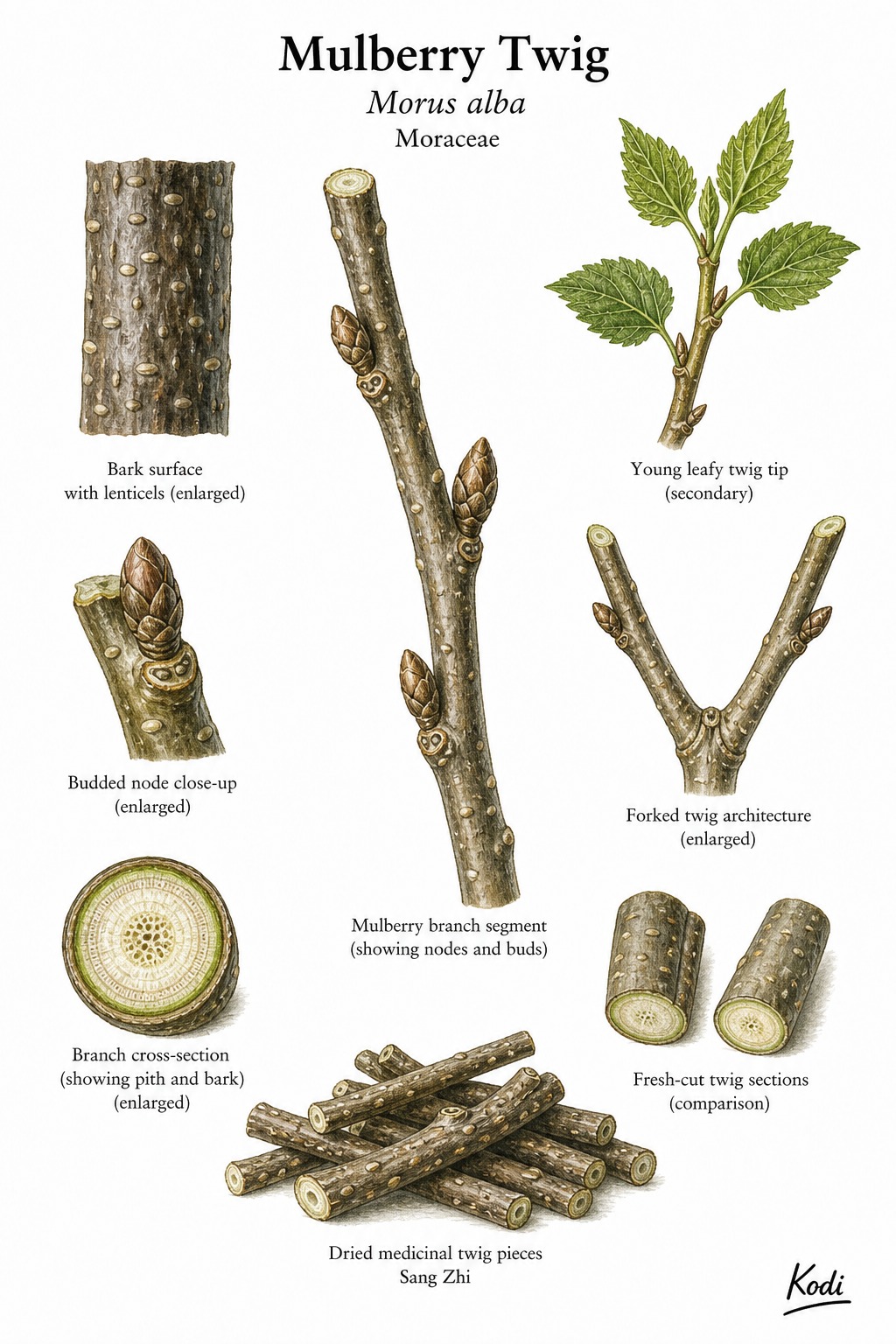
Known in TCM as Sang Zhi (桑枝), this slightly bitter, neutral herb enters the Liver. Traditionally, it dispels Wind-Damp and unblocks the channels and collaterals; treats Bi syndrome (painful obstruction) with joint stiffness, swelling, and muscle spasm, particularly of the shoulders and upper limbs, most often applied for joint pain, rheumatoid arthritis, and edema. Modern research has identified Sangzhi among its active constituents.
Part used: Twig
Also Known As
Latin: Ramulus Mori | Pinyin: Sang Zhi | Chinese: 桑枝
TCM Properties
- Taste
- slightly bitter
- Temperature
- neutral
- Channels
- Liver
Traditional Use
Primary Actions
- Dispels Wind-Damp and unblocks the channels and collaterals; treats Bi syndrome (painful obstruction) with joint stiffness, swelling, and muscle spasm, particularly of the shoulders and upper limbs
- Promotes urination and reduces limb edema
Classical References
- Documented in later Chinese materia medica as a gentle Wind-Damp-dispelling herb with a particular affinity for the upper limbs
Modern Research
Active Compounds
- Sangzhi alkaloids (1-deoxynojirimycin and related iminosugars)
- Flavonoids
Studied Effects
- Sangzhi alkaloids are approved in China as a standardized extract for type 2 diabetes management
- Pharmacokinetic studies show tissue distribution and effects on liver enzyme activity in animal models
- Alpha-glucosidase inhibitory activity supports blood-glucose-lowering use
PubMed References
Safety & Interactions
Cautions
- May potentiate blood-sugar-lowering medications given documented alpha-glucosidase inhibitory activity of its alkaloid constituents
Drug Interactions
- Theoretical additive hypoglycemic effect with antidiabetic medications
Conditions
- Joint Pain Traditional ★★★☆☆ JSON
- Rheumatoid Arthritis Traditional ★★☆☆☆ JSON
- Edema Traditional ★★☆☆☆ JSON
- Diabetes Research ★★☆☆☆ JSON
Frequently Asked Questions
What is Mulberry Twig used for?
Mulberry Twig is traditionally used to Dispels Wind-Damp and unblocks the channels and collaterals; treats Bi syndrome (painful obstruction) with joint stiffness, swelling, and muscle spasm, particularly of the shoulders and upper limbs, Promotes urination and reduces limb edema. Research has investigated its effects on: Sangzhi alkaloids are approved in China as a standardized extract for type 2 diabetes management; Pharmacokinetic studies show tissue distribution and effects on liver enzyme activity in animal models.
What are other names for Mulberry Twig?
Mulberry Twig is also known as Morus alba twig, Mori. In TCM: 桑枝 (Sang Zhi); Ramulus Mori.
Is Mulberry Twig safe during pregnancy?
Mulberry Twig is generally considered safe during pregnancy in normal amounts. Therapeutic or concentrated doses should be discussed with a qualified healthcare provider before use.
Does Mulberry Twig interact with any medications?
Mulberry Twig may interact with: Theoretical additive hypoglycemic effect with antidiabetic medications. Always inform your healthcare provider of any herbal supplements you are taking.