Mulberry Leaf
- Chinese
- 桑叶
- Pinyin
- Sang Ye
- Latin
- Folium Mori
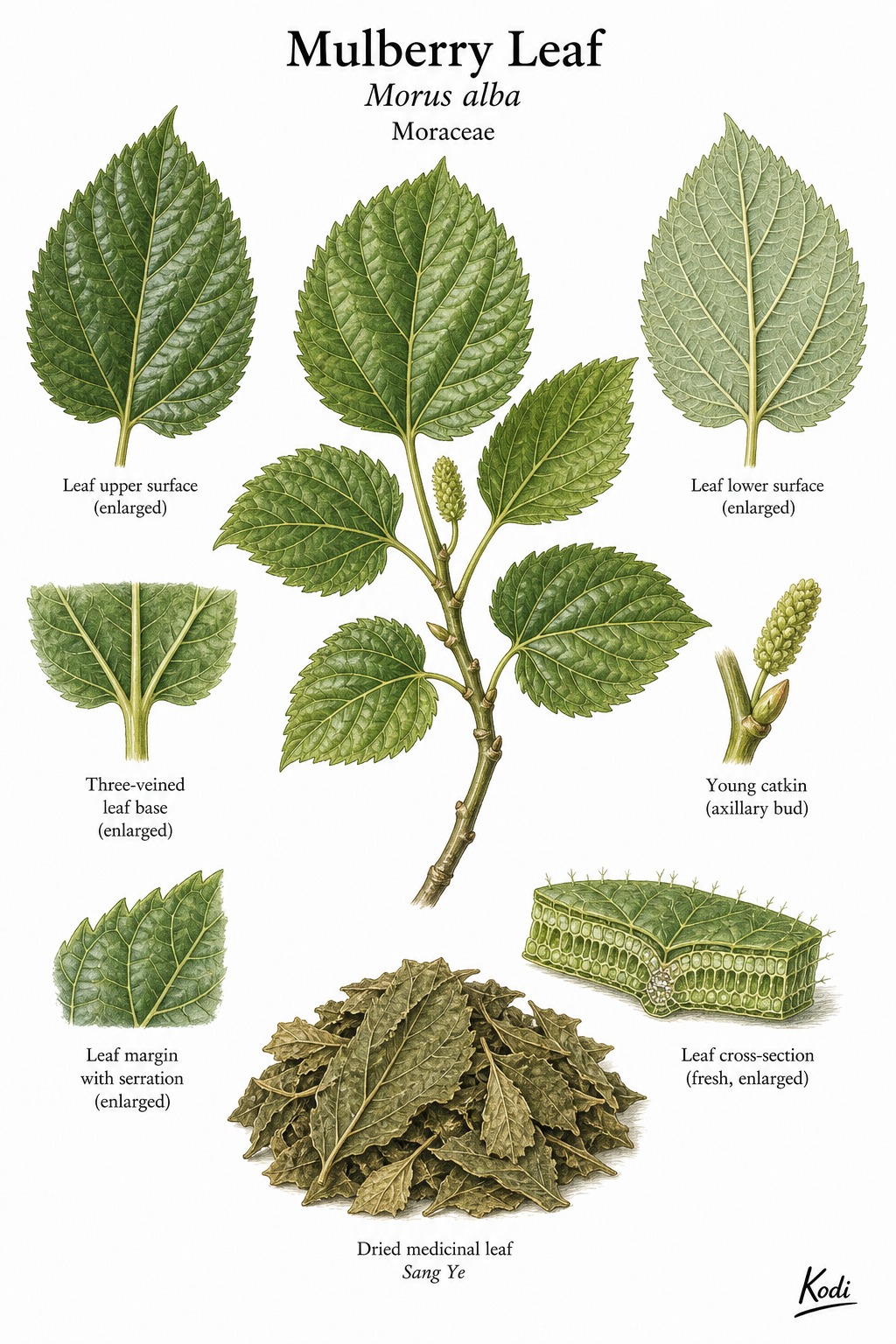
Known in TCM as Sang Ye (桑叶), this sweet and bitter, cold herb enters the Lung and Liver. Traditionally, it disperses Wind-Heat; treats early-stage colds and flu with sore throat, headache, and fever, most often applied for common cold, dry cough, and conjunctivitis. Modern research has identified 1-Deoxynojirimycin among its active constituents.
Part used: Leaf
Also Known As
Latin: Folium Mori | Pinyin: Sang Ye | Chinese: 桑叶
TCM Properties
- Taste
- sweet, bitter
- Temperature
- cold
- Channels
- Lung, Liver
Traditional Use
Primary Actions
- Disperses Wind-Heat; treats early-stage colds and flu with sore throat, headache, and fever
- Clears Lung Heat and moistens Dryness; relieves dry cough from Lung Heat or Dryness
- Clears Liver Fire and brightens the eyes; treats red, irritated, or painful eyes
- Cools the Blood and stops bleeding
Secondary Actions
- Collected after early frost for the highest medicinal quality; used raw for Wind-Heat and honey-fried for Lung-moistening cough
Classic Formulas
- Sang Ju Yin (Mulberry Leaf and Chrysanthemum Drink)
Classical References
- Shen Nong Ben Cao Jing (Divine Farmer's Materia Medica, c. 200 CE) documents Sang Ye among early Wind-Heat-dispersing herbs
Modern Research
Active Compounds
- 1-Deoxynojirimycin (DNJ)
- Flavonoids (quercetin, rutin)
- Chlorogenic acid
Studied Effects
- DNJ is a competitive alpha-glucosidase inhibitor that blocks carbohydrate absorption, producing a hypoglycemic effect
- Mulberry leaf extract and DNJ improve skeletal muscle insulin resistance via activation of the IRS-1/PI3K/Akt pathway in animal models
- Antioxidant and anti-inflammatory activity supports traditional Wind-Heat and Liver Fire clearing use
PubMed References
Safety & Interactions
Cautions
- May potentiate blood-sugar-lowering medications given its alpha-glucosidase inhibitory activity
Drug Interactions
- Theoretical additive hypoglycemic effect with antidiabetic medications
Conditions
- Common Cold Traditional ★★★☆☆ JSON
- Dry Cough Traditional ★★☆☆☆ JSON
- Conjunctivitis Traditional ★★☆☆☆ JSON
- Diabetes Research ★★☆☆☆ JSON
Frequently Asked Questions
What is Mulberry Leaf used for?
Mulberry Leaf is traditionally used to Disperses Wind-Heat; treats early-stage colds and flu with sore throat, headache, and fever, Clears Lung Heat and moistens Dryness; relieves dry cough from Lung Heat or Dryness, Clears Liver Fire and brightens the eyes; treats red, irritated, or painful eyes, Cools the Blood and stops bleeding. Research has investigated its effects on: DNJ is a competitive alpha-glucosidase inhibitor that blocks carbohydrate absorption, producing a hypoglycemic effect; Mulberry leaf extract and DNJ improve skeletal muscle insulin resistance via activation of the IRS-1/PI3K/Akt pathway in animal models.
What are other names for Mulberry Leaf?
Mulberry Leaf is also known as Morus alba, White Mulberry Leaf, Mori. In TCM: 桑叶 (Sang Ye); Folium Mori.
Is Mulberry Leaf safe during pregnancy?
Mulberry Leaf is generally considered safe during pregnancy in normal amounts. Therapeutic or concentrated doses should be discussed with a qualified healthcare provider before use.
Does Mulberry Leaf interact with any medications?
Mulberry Leaf may interact with: Theoretical additive hypoglycemic effect with antidiabetic medications. Always inform your healthcare provider of any herbal supplements you are taking.