Motherwort Fruit
- Chinese
- 茺蔚子
- Pinyin
- Chong Wei Zi
- Latin
- Fructus Leonuri
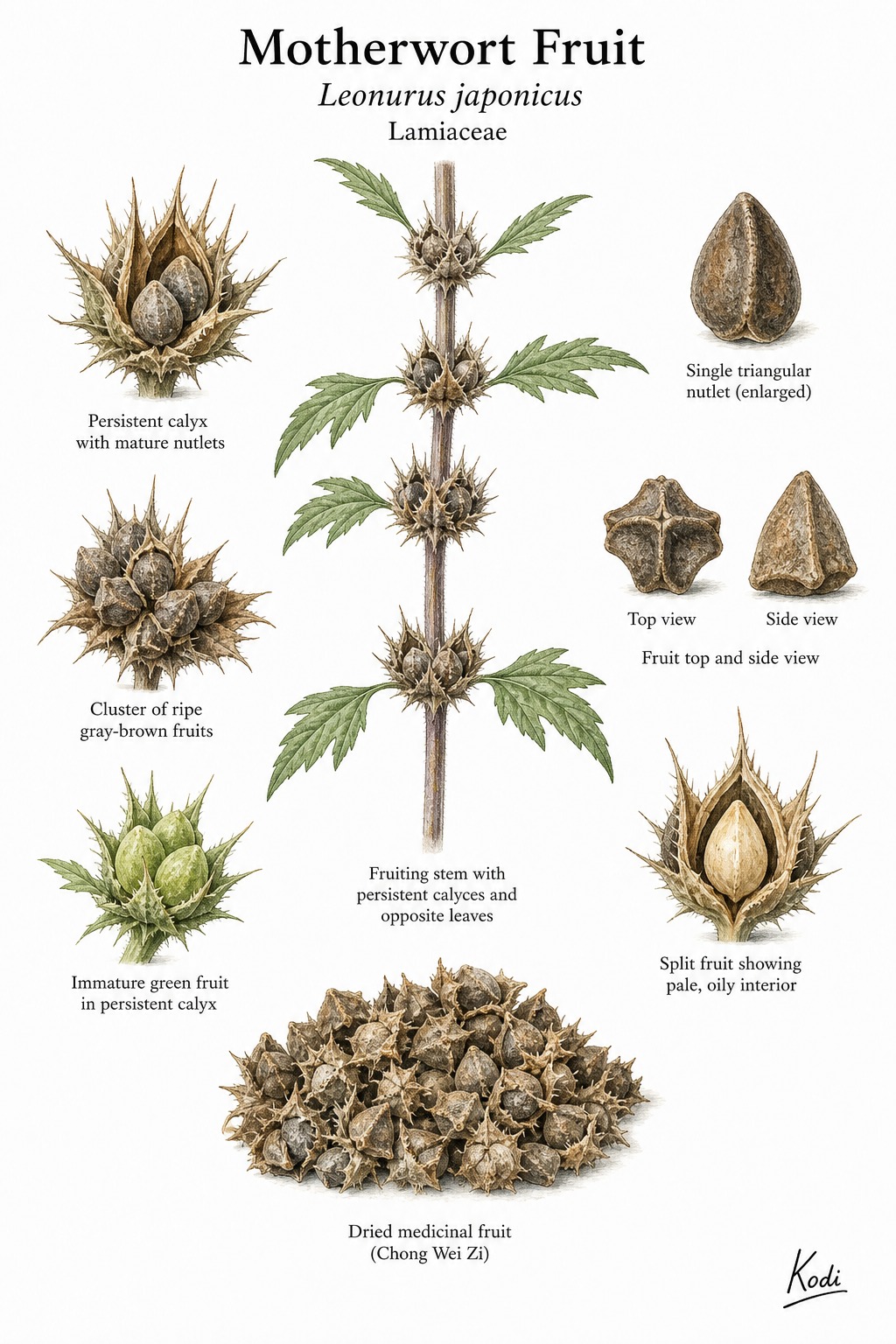
Known in TCM as Chong Wei Zi (茺蔚子), this acrid and bitter, slightly cold herb enters the Liver and Pericardium. Traditionally, it invigorates Blood and regulates menstruation; treats irregular menstruation, dysmenorrhea, and postpartum abdominal pain from Blood stasis, most often applied for dysmenorrhea, menstrual irregularities, and blurred vision. Modern research has identified Leonurine among its active constituents.
Part used: Fruit
Also Known As
Latin: Fructus Leonuri | Pinyin: Chong Wei Zi | Chinese: 茺蔚子
TCM Properties
- Taste
- acrid, bitter
- Temperature
- slightly cold
- Channels
- Liver, Pericardium
Traditional Use
Primary Actions
- Invigorates Blood and regulates menstruation; treats irregular menstruation, dysmenorrhea, and postpartum abdominal pain from Blood stasis
- Clears the Liver and brightens the eyes; used for red, swollen, or painful eyes from Liver Heat
Secondary Actions
- The seed of the same plant that produces Yi Mu Cao (Motherwort herb); shares the Blood-invigorating action but is used with more emphasis on eye complaints
Classical References
- Documented alongside Yi Mu Cao in later Chinese materia medica as the seed form of the same Blood-invigorating gynecological herb
Modern Research
Active Compounds
- Leonurine and related alkaloids (shared with Yi Mu Cao)
- Fatty oils
Studied Effects
- Pharmacology of Leonurus japonicus as a species, including cardiovascular, uterotonic, and neuroprotective alkaloid activity, is well documented; seed-specific studies are less common than whole-herb studies
PubMed References
Safety & Interactions
Contraindications
- Pregnancy
- Continuous or heavy uterine bleeding
- Liver Blood deficiency without stasis
Cautions
- Shares the strong Blood-invigorating action of the parent plant; use cautiously in Blood-deficient patients
Conditions
- Dysmenorrhea Traditional ★★★☆☆ JSON
- Menstrual Irregularities Traditional ★★☆☆☆ JSON
- Blurred Vision Traditional ★★☆☆☆ JSON
- Headache Traditional ★☆☆☆☆ JSON
Frequently Asked Questions
What is Motherwort Fruit used for?
Motherwort Fruit is traditionally used to Invigorates Blood and regulates menstruation; treats irregular menstruation, dysmenorrhea, and postpartum abdominal pain from Blood stasis, Clears the Liver and brightens the eyes; used for red, swollen, or painful eyes from Liver Heat. Research has investigated its effects on: Pharmacology of Leonurus japonicus as a species, including cardiovascular, uterotonic, and neuroprotective alkaloid activity, is well documented; seed-specific studies are less common than whole-herb studies.
What are other names for Motherwort Fruit?
Motherwort Fruit is also known as Leonurus japonicus seed, Leonuri. In TCM: 茺蔚子 (Chong Wei Zi); Fructus Leonuri.
Is Motherwort Fruit safe during pregnancy?
Motherwort Fruit is not recommended during pregnancy.
What are the contraindications for Motherwort Fruit?
Motherwort Fruit should not be used in: Pregnancy; Continuous or heavy uterine bleeding; Liver Blood deficiency without stasis. Consult a qualified healthcare provider before use.