Motherwort
- Chinese
- 益母草
- Pinyin
- Yi Mu Cao
- Latin
- Herba Leonuri
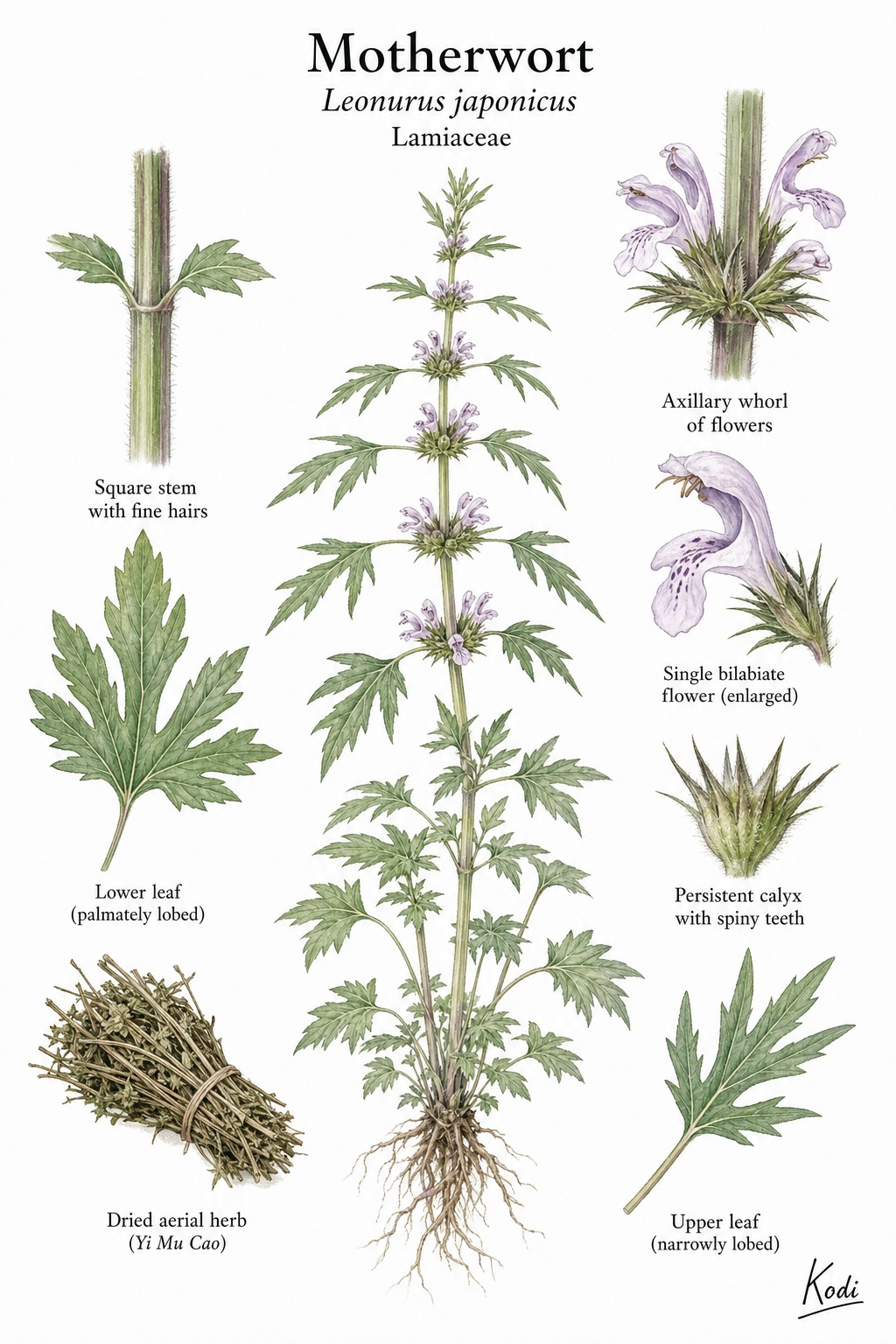
Known in TCM as Yi Mu Cao (益母草), this acrid and bitter, slightly cold herb enters the Liver, Heart, and Bladder. Traditionally, it invigorates Blood and regulates menstruation; treats dysmenorrhea, amenorrhea, and irregular menstruation from Blood stasis, most often applied for dysmenorrhea, amenorrhea, and menstrual irregularities. Modern research has identified Leonurine among its active constituents.
Part used: Whole herb
Also Known As
Latin: Herba Leonuri | Pinyin: Yi Mu Cao | Chinese: 益母草
TCM Properties
- Taste
- acrid, bitter
- Temperature
- slightly cold
- Channels
- Liver, Heart, Bladder
Traditional Use
Primary Actions
- Invigorates Blood and regulates menstruation; treats dysmenorrhea, amenorrhea, and irregular menstruation from Blood stasis
- Promotes urination and reduces edema, particularly edema with a concurrent Blood-stasis component
- Clears Heat and resolves toxicity for sores and skin lesions
Secondary Actions
- A key gynecological herb used before and after childbirth to dispel retained lochia and promote uterine recovery without excessively depleting Blood
Classical References
- Ben Cao Gang Mu (Li Shizhen, 1578) documents Yi Mu Cao as a principal herb for gynecological Blood stasis, its name meaning "Benefit the Mother Herb"
Modern Research
Active Compounds
- Leonurine
- Stachydrine
- Diterpenes and flavones
Studied Effects
- Leonurine demonstrates cardiovascular protective and hypotensive effects in preclinical models
- Leonurine and stachydrine produce uterotonic activity, supporting traditional postpartum use
- Additional studied activities include neuroprotection, anti-inflammatory, and anti-platelet aggregation effects
PubMed References
Safety & Interactions
Contraindications
- Pregnancy (except under practitioner-directed postpartum use)
- Blood deficiency without stasis
Cautions
- Its uterotonic action makes prenatal use inappropriate outside of specific, practitioner-supervised labor-related indications
Conditions
- Dysmenorrhea Traditional ★★★☆☆ JSON
- Amenorrhea Traditional ★★☆☆☆ JSON
- Menstrual Irregularities Traditional ★★★☆☆ JSON
- Edema Traditional ★★☆☆☆ JSON
Frequently Asked Questions
What is Motherwort used for?
Motherwort is traditionally used to Invigorates Blood and regulates menstruation; treats dysmenorrhea, amenorrhea, and irregular menstruation from Blood stasis, Promotes urination and reduces edema, particularly edema with a concurrent Blood-stasis component, Clears Heat and resolves toxicity for sores and skin lesions. Research has investigated its effects on: Leonurine demonstrates cardiovascular protective and hypotensive effects in preclinical models; Leonurine and stachydrine produce uterotonic activity, supporting traditional postpartum use.
What are other names for Motherwort?
Motherwort is also known as Leonurus japonicus, Chinese Motherwort, Leonuri. In TCM: 益母草 (Yi Mu Cao); Herba Leonuri.
Is Motherwort safe during pregnancy?
Motherwort is not recommended during pregnancy.
What are the contraindications for Motherwort?
Motherwort should not be used in: Pregnancy (except under practitioner-directed postpartum use); Blood deficiency without stasis. Consult a qualified healthcare provider before use.