Millet Sprout
- Chinese
- 谷芽
- Pinyin
- Gu Ya
- Latin
- Fructus Setariae Germinatus
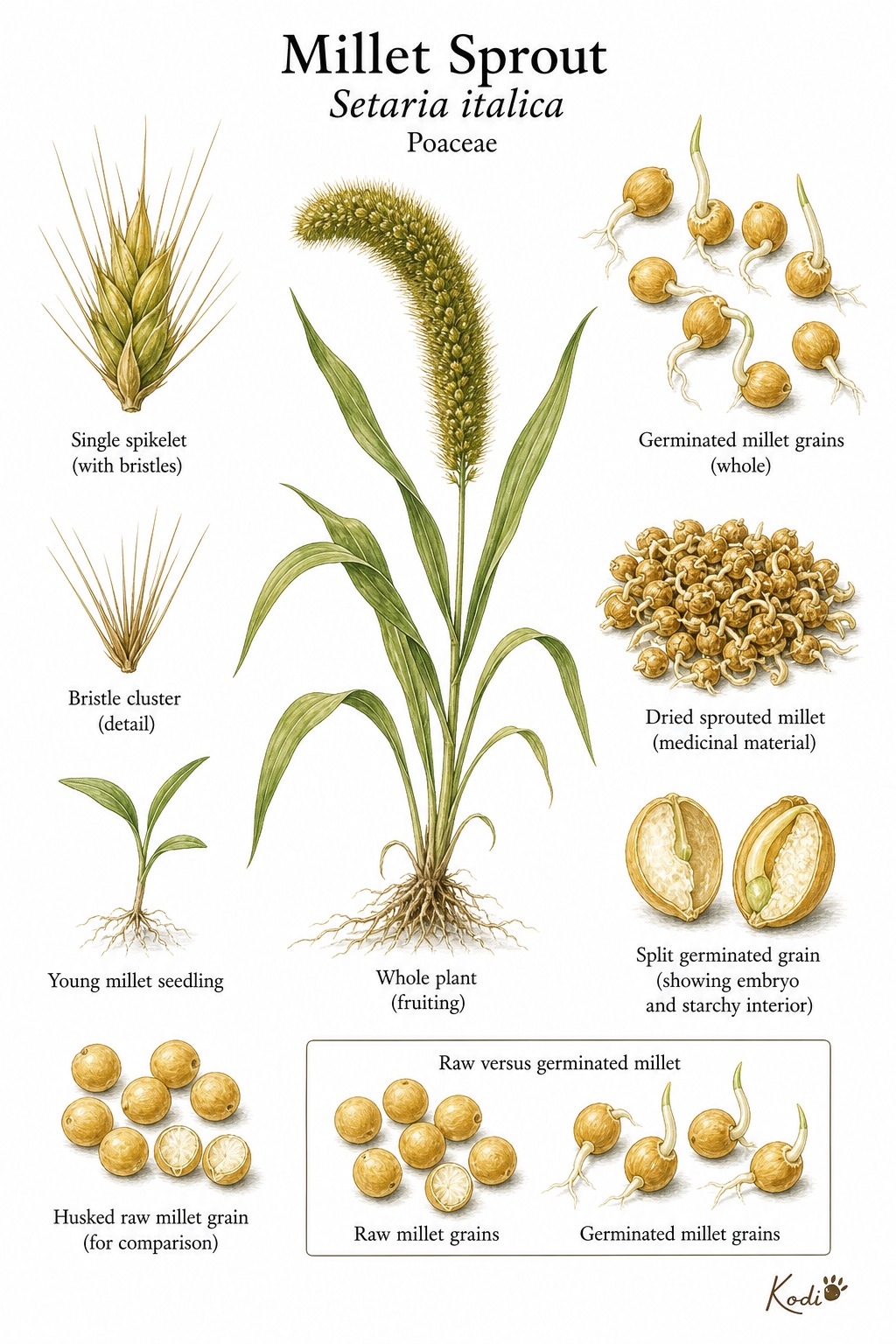
Known in TCM as Gu Ya (谷芽), this sweet, neutral herb enters the Spleen and Stomach. Traditionally, it strengthens the Spleen and opens the Stomach; promotes digestion, particularly of starches and grains, most often applied for poor appetite, indigestion, and digestive weakness. Modern research has identified Amylase among its active constituents.
Part used: Fruit
Also Known As
Latin: Fructus Setariae Germinatus | Pinyin: Gu Ya | Chinese: 谷芽
TCM Properties
- Taste
- sweet
- Temperature
- neutral
- Channels
- Spleen, Stomach
Traditional Use
Primary Actions
- Strengthens the Spleen and opens the Stomach; promotes digestion, particularly of starches and grains
- Harmonizes the Middle Burner for poor appetite and mild food stagnation
Secondary Actions
- One of the gentlest digestive-aid herbs in Chinese medicine, well suited for children, the elderly, and those recovering from illness with a fragile digestion
- Often paired with Mai Ya (Barley Sprout) for broader digestive support
Classical References
- Documented in later Chinese materia medica as a mild grain-based digestive aid, gentler than the stronger food-dispersing herbs
Modern Research
Active Compounds
- Amylase and other germination-derived enzymes
- B vitamins
Studied Effects
- Germination is known to increase enzyme activity and bioavailable nutrients in cereal sprouts generally, consistent with traditional digestive-aid use
- Dedicated modern pharmacological study specific to Setaria italica (foxtail millet) sprout is limited
Conditions
- Poor Appetite Traditional ★★★☆☆ JSON
- Indigestion Traditional ★★☆☆☆ JSON
- Digestive Weakness Traditional ★★☆☆☆ JSON
Frequently Asked Questions
What is Millet Sprout used for?
Millet Sprout is traditionally used to Strengthens the Spleen and opens the Stomach; promotes digestion, particularly of starches and grains, Harmonizes the Middle Burner for poor appetite and mild food stagnation. Research has investigated its effects on: Germination is known to increase enzyme activity and bioavailable nutrients in cereal sprouts generally, consistent with traditional digestive-aid use; Dedicated modern pharmacological study specific to Setaria italica (foxtail millet) sprout is limited.
What are other names for Millet Sprout?
Millet Sprout is also known as Setaria italica (germinated), Rice Sprout. In TCM: 谷芽 (Gu Ya); Fructus Setariae Germinatus.
Is Millet Sprout safe during pregnancy?
Millet Sprout is generally considered safe during pregnancy in normal amounts. Therapeutic or concentrated doses should be discussed with a qualified healthcare provider before use.