Methyl Salicylate
- Chinese
- 水杨酸甲酯
- Pinyin
- Shui Yang Suan Jia Zhi
- Latin
- Methyl Salicylatum
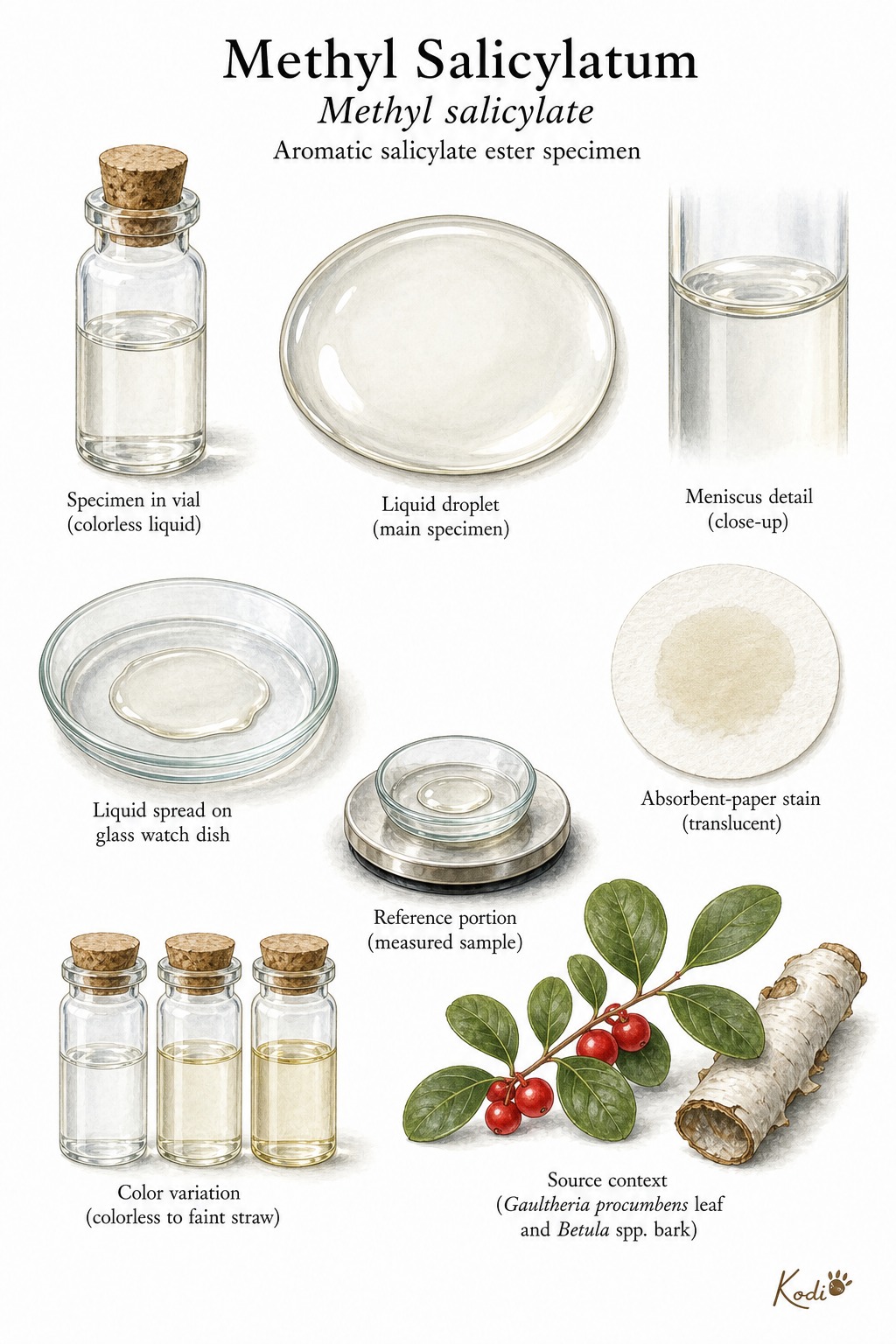
Known in TCM as Shui Yang Suan Jia Zhi (水杨酸甲酯), this acrid, cool herb enters the Liver. Traditionally, it not a classical whole herb; an isolated aromatic ester (naturally occurring in Wintergreen and Gaultheria species, now typically synthesized) used almost exclusively as a topical liniment ingredient, most often applied for joint pain, low back pain, and traumatic injury. Modern research has identified Methyl among its active constituents.
Also Known As
Latin: Methyl Salicylatum | Pinyin: Shui Yang Suan Jia Zhi | Chinese: 水杨酸甲酯
TCM Properties
- Taste
- acrid
- Temperature
- cool
- Channels
- Liver
Traditional Use
Primary Actions
- Not a classical whole herb; an isolated aromatic ester (naturally occurring in Wintergreen and Gaultheria species, now typically synthesized) used almost exclusively as a topical liniment ingredient
- Invigorates Blood and unblocks the channels for external application to sore muscles, joints, and soft-tissue pain
Classical References
- Used in modern Chinese compound topical liniments for musculoskeletal pain, a formulation approach that draws on the Blood-invigorating, channel-opening tradition rather than a specific classical text
Modern Research
Active Compounds
- Methyl salicylate
Studied Effects
- Compound methyl salicylate liniment produced clinically meaningful pain relief in a multicenter real-world study of over 3,500 patients with soft-tissue pain
- Salicylate absorption through the skin is significant; topical use has a well-characterized safety profile with mostly mild local adverse effects
PubMed References
Safety & Interactions
Contraindications
- Oral ingestion
- Broken or irritated skin
- Children (risk of accidental ingestion and severe salicylate poisoning)
Cautions
- Highly concentrated and lipid-soluble; as little as a few milliliters can be fatal if ingested, especially in children
- Topical overuse may cause local burning, irritation, or pruritus
- May potentiate warfarin and other anticoagulants through percutaneous salicylate absorption
Drug Interactions
- Warfarin and other anticoagulants (increased bleeding risk from absorbed salicylate)
Conditions
- Joint Pain Research ★★★☆☆ JSON
- Low Back Pain Research ★★☆☆☆ JSON
- Traumatic Injury Traditional ★★☆☆☆ JSON
Frequently Asked Questions
What is Methyl Salicylate used for?
Methyl Salicylate is traditionally used to Not a classical whole herb; an isolated aromatic ester (naturally occurring in Wintergreen and Gaultheria species, now typically synthesized) used almost exclusively as a topical liniment ingredient, Invigorates Blood and unblocks the channels for external application to sore muscles, joints, and soft-tissue pain. Research has investigated its effects on: Compound methyl salicylate liniment produced clinically meaningful pain relief in a multicenter real-world study of over 3,500 patients with soft-tissue pain; Salicylate absorption through the skin is significant; topical use has a well-characterized safety profile with mostly mild local adverse effects.
What are other names for Methyl Salicylate?
Methyl Salicylate is also known as Wintergreen Oil (synthetic ester), Oil of Wintergreen. In TCM: 水杨酸甲酯 (Shui Yang Suan Jia Zhi); Methyl Salicylatum.
Is Methyl Salicylate safe during pregnancy?
The safety of Methyl Salicylate during pregnancy has not been established. Consult a qualified healthcare provider before use.
What are the contraindications for Methyl Salicylate?
Methyl Salicylate should not be used in: Oral ingestion; Broken or irritated skin; Children (risk of accidental ingestion and severe salicylate poisoning). Consult a qualified healthcare provider before use.
Does Methyl Salicylate interact with any medications?
Methyl Salicylate may interact with: Warfarin and other anticoagulants (increased bleeding risk from absorbed salicylate). Always inform your healthcare provider of any herbal supplements you are taking.