Peppermint
- Chinese
- 薄荷
- Pinyin
- Bo He
- Latin
- Herba Menthae
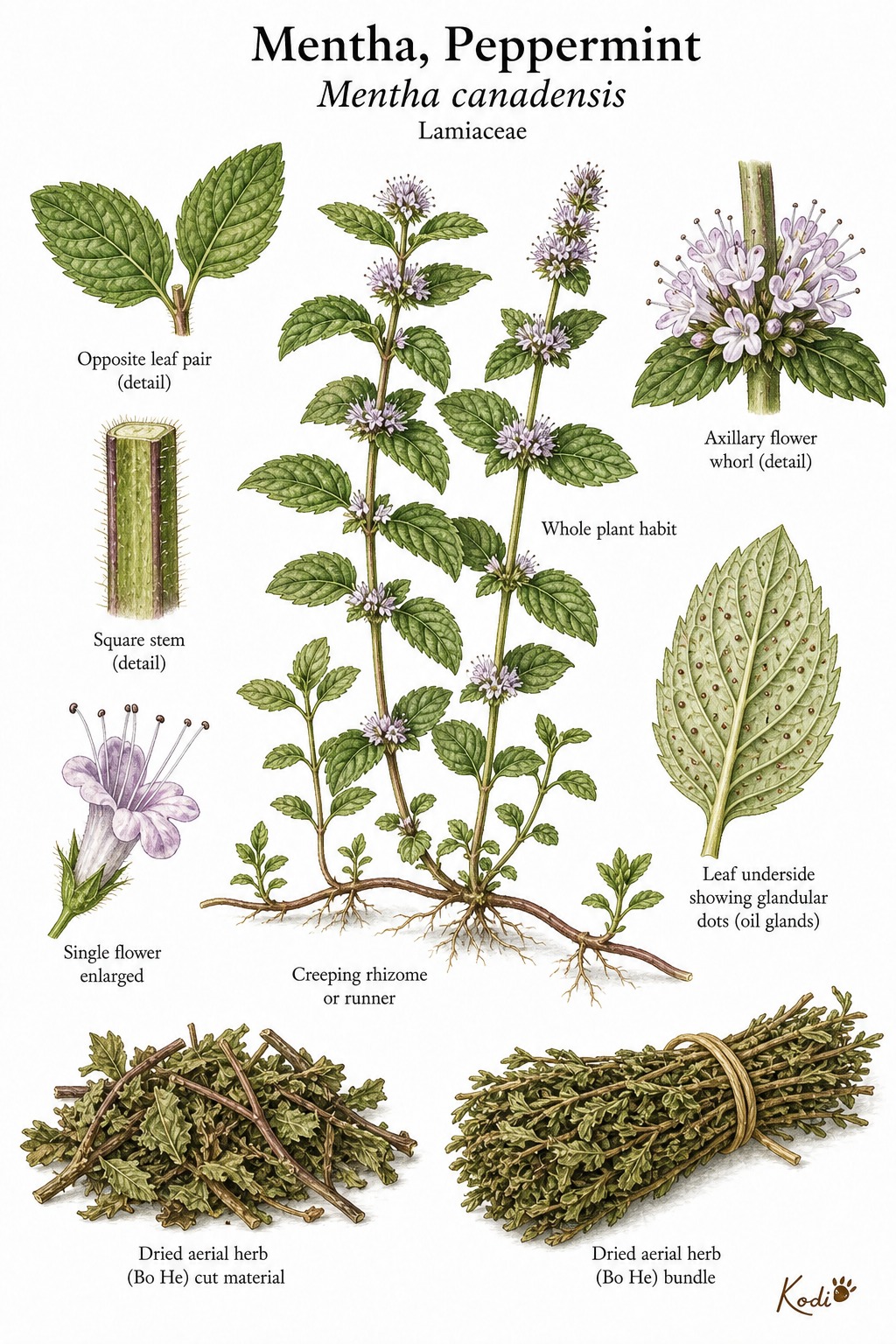
Known in TCM as Bo He (薄荷), this acrid, cool herb enters the Lung and Liver. Traditionally, it disperses Wind-Heat; treats fever, headache, sore throat, and red eyes from external Wind-Heat invasion, most often applied for fever, headache, and sore throat. Modern research has identified Menthol among its active constituents.
Part used: Whole herb
Also Known As
Latin: Herba Menthae | Pinyin: Bo He | Chinese: 薄荷
TCM Properties
- Taste
- acrid
- Temperature
- cool
- Channels
- Lung, Liver
Traditional Use
Primary Actions
- Disperses Wind-Heat; treats fever, headache, sore throat, and red eyes from external Wind-Heat invasion
- Vents rashes and promotes their eruption, speeding resolution of early-stage measles and other exanthems
- Soothes Liver Qi and relieves Qi stagnation manifesting as chest and rib-side distension and emotional constraint
Secondary Actions
- Clears the head and eyes for Wind-Heat headache and eye redness
Classic Formulas
- Yin Qiao San (Honeysuckle and Forsythia Powder)
- Xiao Yao San (Free and Easy Wanderer Powder)
Classical References
- Ben Cao Gang Mu (Li Shizhen, 1578) records Bo He for dispersing Wind-Heat and clearing the head and eyes
Modern Research
Active Compounds
- Menthol
- Menthone
- Volatile aromatic oils
Studied Effects
- Peppermint oil produces a spasmolytic effect on gastrointestinal smooth muscle via calcium channel blockade
- Reduces visceral pain sensitivity through TRPM8 and TRPA1 receptor modulation in the gut
- Clinically effective for irritable bowel syndrome symptom relief in randomized trials
PubMed References
Safety & Interactions
Contraindications
- Qi and Yin deficiency with excessive sweating
- Deficiency-type exterior patterns
Cautions
- Add near the end of decoction (last 3-5 minutes) as volatile oils are lost with prolonged boiling
- Traditionally cautioned during lactation, as it may reduce milk supply
Conditions
- Fever Traditional ★★★☆☆ JSON
- Headache Traditional ★★★☆☆ JSON
- Sore Throat Traditional ★★☆☆☆ JSON
- Liver Qi Stagnation Traditional ★★☆☆☆ JSON
- Indigestion Research ★★☆☆☆ JSON
Frequently Asked Questions
What is Peppermint used for?
Peppermint is traditionally used to Disperses Wind-Heat; treats fever, headache, sore throat, and red eyes from external Wind-Heat invasion, Vents rashes and promotes their eruption, speeding resolution of early-stage measles and other exanthems, Soothes Liver Qi and relieves Qi stagnation manifesting as chest and rib-side distension and emotional constraint. Research has investigated its effects on: Peppermint oil produces a spasmolytic effect on gastrointestinal smooth muscle via calcium channel blockade; Reduces visceral pain sensitivity through TRPM8 and TRPA1 receptor modulation in the gut.
What are other names for Peppermint?
Peppermint is also known as Mentha haplocalyx, Field Mint, Mentha. In TCM: 薄荷 (Bo He); Herba Menthae.
Is Peppermint safe during pregnancy?
Peppermint is generally considered safe during pregnancy in normal amounts. Therapeutic or concentrated doses should be discussed with a qualified healthcare provider before use.
What are the contraindications for Peppermint?
Peppermint should not be used in: Qi and Yin deficiency with excessive sweating; Deficiency-type exterior patterns. Consult a qualified healthcare provider before use.