Medicine Terminalia Fruit
- Chinese
- 诃子
- Pinyin
- He Zi
- Latin
- Fructus Chebulae
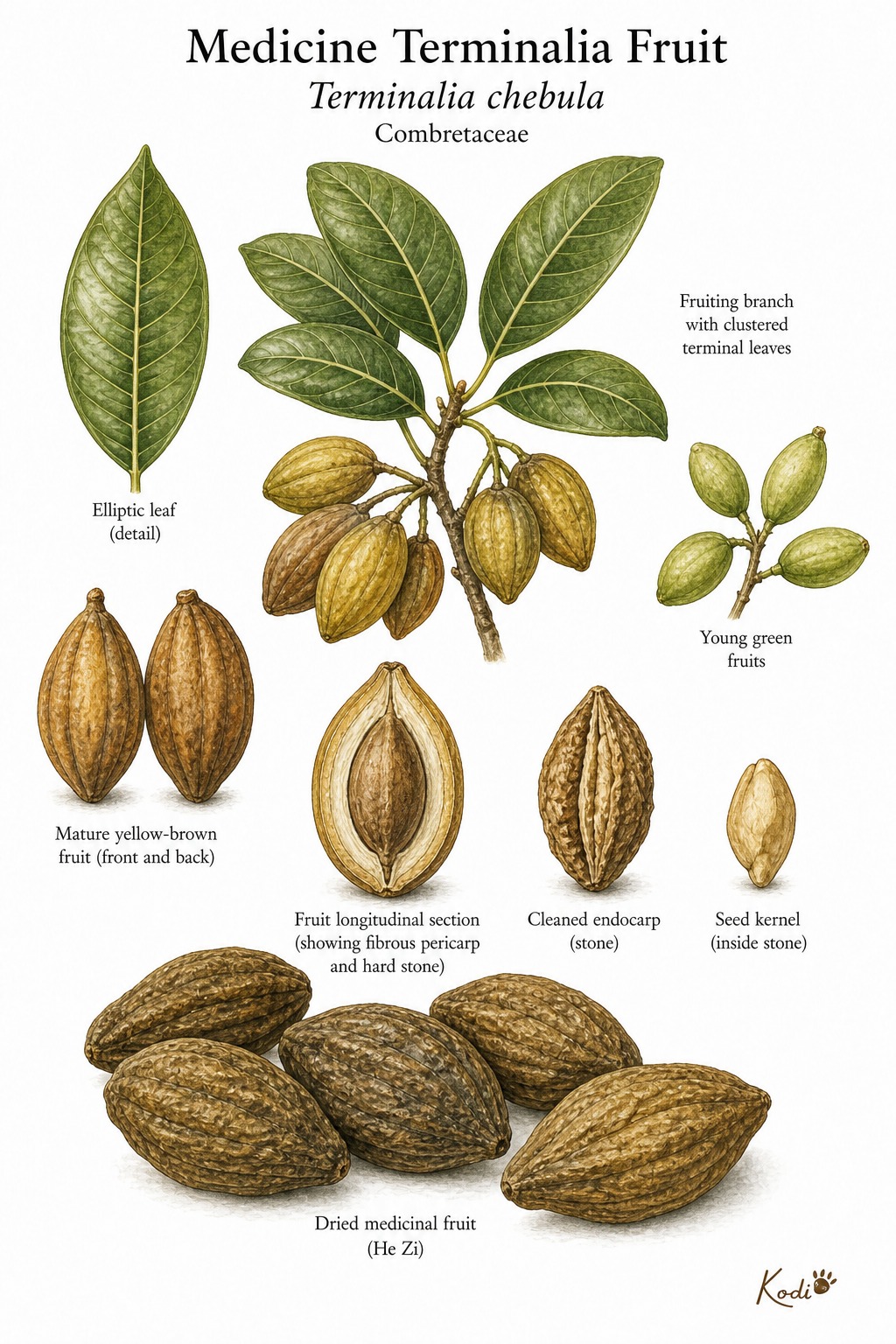
Known in TCM as He Zi (诃子), this bitter and sour and astringent, neutral herb enters the Lung and Large Intestine. Traditionally, it astringes the Intestines and stops diarrhea; treats chronic diarrhea and dysentery, both Hot and Cold pattern, most often applied for diarrhea, dysentery, and cough. Modern research has identified Chebulagic among its active constituents.
Part used: Fruit
Also Known As
Latin: Fructus Chebulae | Pinyin: He Zi | Chinese: 诃子
TCM Properties
- Taste
- bitter, sour, astringent
- Temperature
- neutral
- Channels
- Lung, Large Intestine
Traditional Use
Primary Actions
- Astringes the Intestines and stops diarrhea; treats chronic diarrhea and dysentery, both Hot and Cold pattern
- Astringes the Lung and stops cough; relieves chronic cough with shortness of breath from Lung Qi leakage
- Clears and benefits the throat; used for hoarseness and loss of voice
Secondary Actions
- Baked (煨) preparation warms the Middle, stabilizes the Spleen, and strengthens the astringent, diarrhea-stopping action
Classical References
- Documented in Tang-dynasty materia medica as an imported astringent fruit valued for chronic cough, diarrhea, and voice loss
Modern Research
Active Compounds
- Chebulagic acid
- Chebulinic acid
- Gallic acid
- Ellagic acid
- Tannins
Studied Effects
- Strong antioxidant activity from phenolic and tannic constituents
- Antidiarrheal activity demonstrated by inhibition of gastrointestinal propulsion and fluid secretion in preclinical models
- Antimicrobial, hepatoprotective, and anti-inflammatory activity reported across multiple studies
PubMed References
Safety & Interactions
Contraindications
- Early-stage external Wind-Cold or Wind-Heat cough, where astringing may trap the pathogen
Cautions
- Excess Damp-Heat or food-stagnation diarrhea, due to its astringent, binding nature
Conditions
Frequently Asked Questions
What is Medicine Terminalia Fruit used for?
Medicine Terminalia Fruit is traditionally used to Astringes the Intestines and stops diarrhea; treats chronic diarrhea and dysentery, both Hot and Cold pattern, Astringes the Lung and stops cough; relieves chronic cough with shortness of breath from Lung Qi leakage, Clears and benefits the throat; used for hoarseness and loss of voice. Research has investigated its effects on: Strong antioxidant activity from phenolic and tannic constituents; Antidiarrheal activity demonstrated by inhibition of gastrointestinal propulsion and fluid secretion in preclinical models.
What are other names for Medicine Terminalia Fruit?
Medicine Terminalia Fruit is also known as Terminalia chebula, Chebulic Myrobalan, Haritaki. In TCM: 诃子 (He Zi); Fructus Chebulae.
Is Medicine Terminalia Fruit safe during pregnancy?
The safety of Medicine Terminalia Fruit during pregnancy has not been established. Consult a qualified healthcare provider before use.
What are the contraindications for Medicine Terminalia Fruit?
Medicine Terminalia Fruit should not be used in: Early-stage external Wind-Cold or Wind-Heat cough, where astringing may trap the pathogen. Consult a qualified healthcare provider before use.