Medicinal Evodia Fruit
- Chinese
- 吴茱萸
- Pinyin
- Wu Zhu Yu
- Latin
- Fructus Evodiae
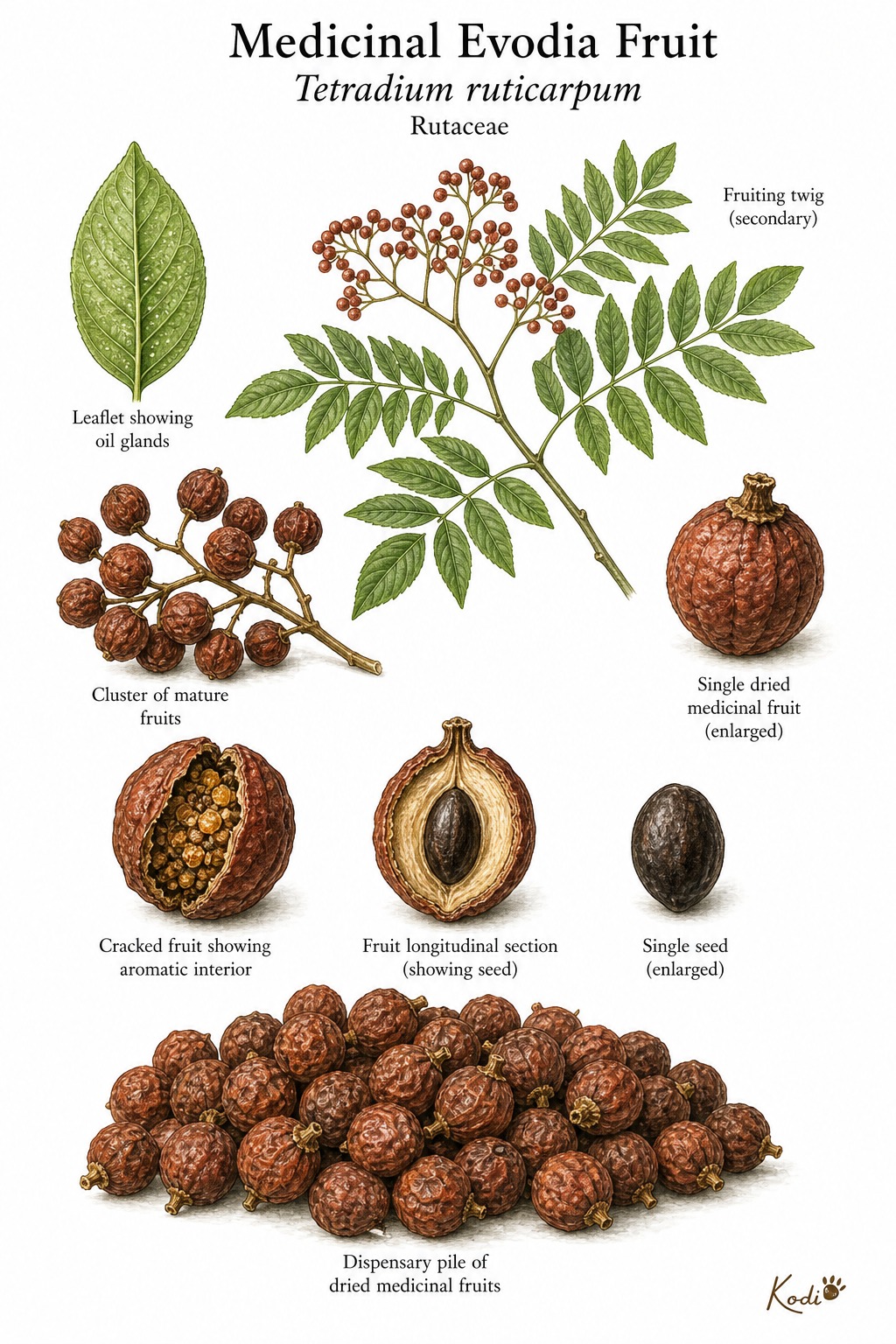
Known in TCM as Wu Zhu Yu (吴茱萸), this acrid and bitter, hot herb enters the Liver, Stomach, Spleen, and Kidney. Traditionally, it warms the Middle and descends rebellious Qi; the principal herb for Cold-pattern vomiting and vertex (top-of-head) headache along the Liver channel, most often applied for headache, nausea, and abdominal pain. Modern research has identified Evodiamine among its active constituents.
Part used: Fruit
Also Known As
Latin: Fructus Evodiae | Pinyin: Wu Zhu Yu | Chinese: 吴茱萸
TCM Properties
- Taste
- acrid, bitter
- Temperature
- hot
- Channels
- Liver, Stomach, Spleen, Kidney
Traditional Use
Primary Actions
- Warms the Middle and descends rebellious Qi; the principal herb for Cold-pattern vomiting and vertex (top-of-head) headache along the Liver channel
- Warms the Spleen and expels Cold-Damp to stop diarrhea
- Redirects rebellious Stomach Qi downward for acid reflux and epigastric pain from Liver-Stomach disharmony
Secondary Actions
- Used topically, ground and mixed with vinegar, as a folk remedy applied to the soles (Yongquan point) to draw Heat downward
Classic Formulas
- Wu Zhu Yu Tang (Evodia Decoction)
Classical References
- Shang Han Lun (Treatise on Cold Damage, Zhang Zhongjing, c. 200 CE) includes Wu Zhu Yu Tang for vomiting with vertex headache from Stomach Cold or Liver-Stomach disharmony
Modern Research
Active Compounds
- Evodiamine
- Rutaecarpine
- Evocarpine
- Hydroxyevodiamine
Studied Effects
- Rutaecarpine shows cardiovascular protective effects, reducing myocardial infarct size in ischemia-reperfusion models
- Evodiamine and rutaecarpine activate TRPV1 channels, contributing to antinociceptive effects
- Both alkaloids inactivate CYP3A4, creating potential for drug-drug interactions
PubMed References
Safety & Interactions
Contraindications
- Heat patterns from Yin deficiency
Cautions
- Hot, acrid, and irritating; used only in small doses (1.5-4.5g) for short periods
- Evodiamine and rutaecarpine inactivate CYP3A4, creating potential interactions with CYP3A4-metabolized medications
Drug Interactions
- Potential interaction with CYP3A4-metabolized medications via cytochrome inactivation
Conditions
- Headache Traditional ★★★☆☆ JSON
- Nausea Traditional ★★★☆☆ JSON
- Abdominal Pain Traditional ★★☆☆☆ JSON
- Diarrhea Traditional ★★☆☆☆ JSON
- Dysmenorrhea Traditional ★☆☆☆☆ JSON
Frequently Asked Questions
What is Medicinal Evodia Fruit used for?
Medicinal Evodia Fruit is traditionally used to Warms the Middle and descends rebellious Qi; the principal herb for Cold-pattern vomiting and vertex (top-of-head) headache along the Liver channel, Warms the Spleen and expels Cold-Damp to stop diarrhea, Redirects rebellious Stomach Qi downward for acid reflux and epigastric pain from Liver-Stomach disharmony. Research has investigated its effects on: Rutaecarpine shows cardiovascular protective effects, reducing myocardial infarct size in ischemia-reperfusion models; Evodiamine and rutaecarpine activate TRPV1 channels, contributing to antinociceptive effects.
What are other names for Medicinal Evodia Fruit?
Medicinal Evodia Fruit is also known as Evodia rutaecarpa, Tetradium ruticarpum. In TCM: 吴茱萸 (Wu Zhu Yu); Fructus Evodiae.
Is Medicinal Evodia Fruit safe during pregnancy?
Medicinal Evodia Fruit is not recommended during pregnancy.
What are the contraindications for Medicinal Evodia Fruit?
Medicinal Evodia Fruit should not be used in: Heat patterns from Yin deficiency. Consult a qualified healthcare provider before use.
Does Medicinal Evodia Fruit interact with any medications?
Medicinal Evodia Fruit may interact with: Potential interaction with CYP3A4-metabolized medications via cytochrome inactivation. Always inform your healthcare provider of any herbal supplements you are taking.