Manyflower Gueldenstaedtid Herb
- Chinese
- 甜地丁
- Pinyin
- Tian Di Ding
- Latin
- Herba Gueldenstaedtiae Multiflorae
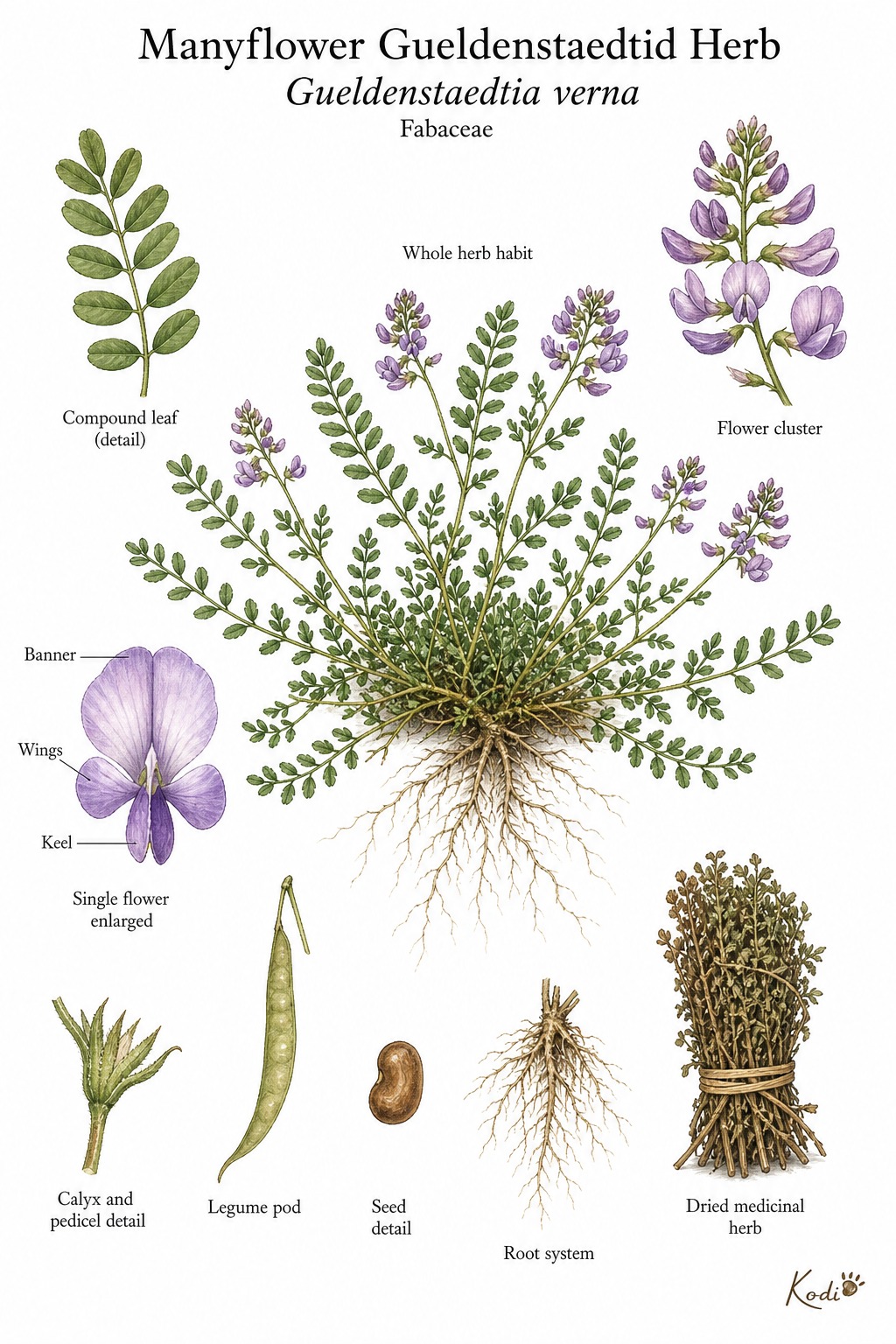
Known in TCM as Tian Di Ding (甜地丁), this bitter and acrid, cold herb enters the Heart and Liver. Traditionally, it clears Heat and resolves toxicity; treats deep-rooted boils, furuncles, and carbuncles with red swelling and burning pain, most often applied for carbuncle, furunculosis, and abscess. Modern research has identified Triterpenoid among its active constituents.
Part used: Whole herb
Also Known As
Latin: Herba Gueldenstaedtiae Multiflorae | Pinyin: Tian Di Ding | Chinese: 甜地丁
TCM Properties
- Taste
- bitter, acrid
- Temperature
- cold
- Channels
- Heart, Liver
Traditional Use
Primary Actions
- Clears Heat and resolves toxicity; treats deep-rooted boils, furuncles, and carbuncles with red swelling and burning pain
- Cools Blood and reduces swelling; used for acute suppurative infections, including early-stage appendicitis
Secondary Actions
- One of several distinct herbs traded under the common name Di Ding; not interchangeable with Zi Hua Di Ding (Viola), Ku Di Ding (Corydalis bungeana), or Guang Di Ding (Gentiana)
Classical References
- Distinguished in regional Chinese materia medica trade from other Di Ding herbs by its legume-family origin and cold, detoxifying properties
Modern Research
Active Compounds
- Triterpenoid glycosides
- Flavonoids
Studied Effects
- Isolated triterpenoid glycoside and flavonoid constituents show anti-inflammatory activity in preclinical study
PubMed References
Safety & Interactions
Cautions
- Spleen-Stomach Cold-Deficiency, due to its cold nature
- Do not substitute for or confuse with other herbs traded as "Di Ding"
Conditions
- Carbuncle Traditional ★★★☆☆ JSON
- Furunculosis Traditional ★★★☆☆ JSON
- Abscess Traditional ★★☆☆☆ JSON
- Appendicitis Traditional ★☆☆☆☆ JSON
Frequently Asked Questions
What is Manyflower Gueldenstaedtid Herb used for?
Manyflower Gueldenstaedtid Herb is traditionally used to Clears Heat and resolves toxicity; treats deep-rooted boils, furuncles, and carbuncles with red swelling and burning pain, Cools Blood and reduces swelling; used for acute suppurative infections, including early-stage appendicitis. Research has investigated its effects on: Isolated triterpenoid glycoside and flavonoid constituents show anti-inflammatory activity in preclinical study.
What are other names for Manyflower Gueldenstaedtid Herb?
Manyflower Gueldenstaedtid Herb is also known as Gueldenstaedtia verna, Gueldenstaedtia multiflora, Sweet Di Ding. In TCM: 甜地丁 (Tian Di Ding); Herba Gueldenstaedtiae Multiflorae.
Is Manyflower Gueldenstaedtid Herb safe during pregnancy?
The safety of Manyflower Gueldenstaedtid Herb during pregnancy has not been established. Consult a qualified healthcare provider before use.