Magnetite
- Chinese
- 磁石
- Pinyin
- Ci Shi
- Latin
- Magnetitum
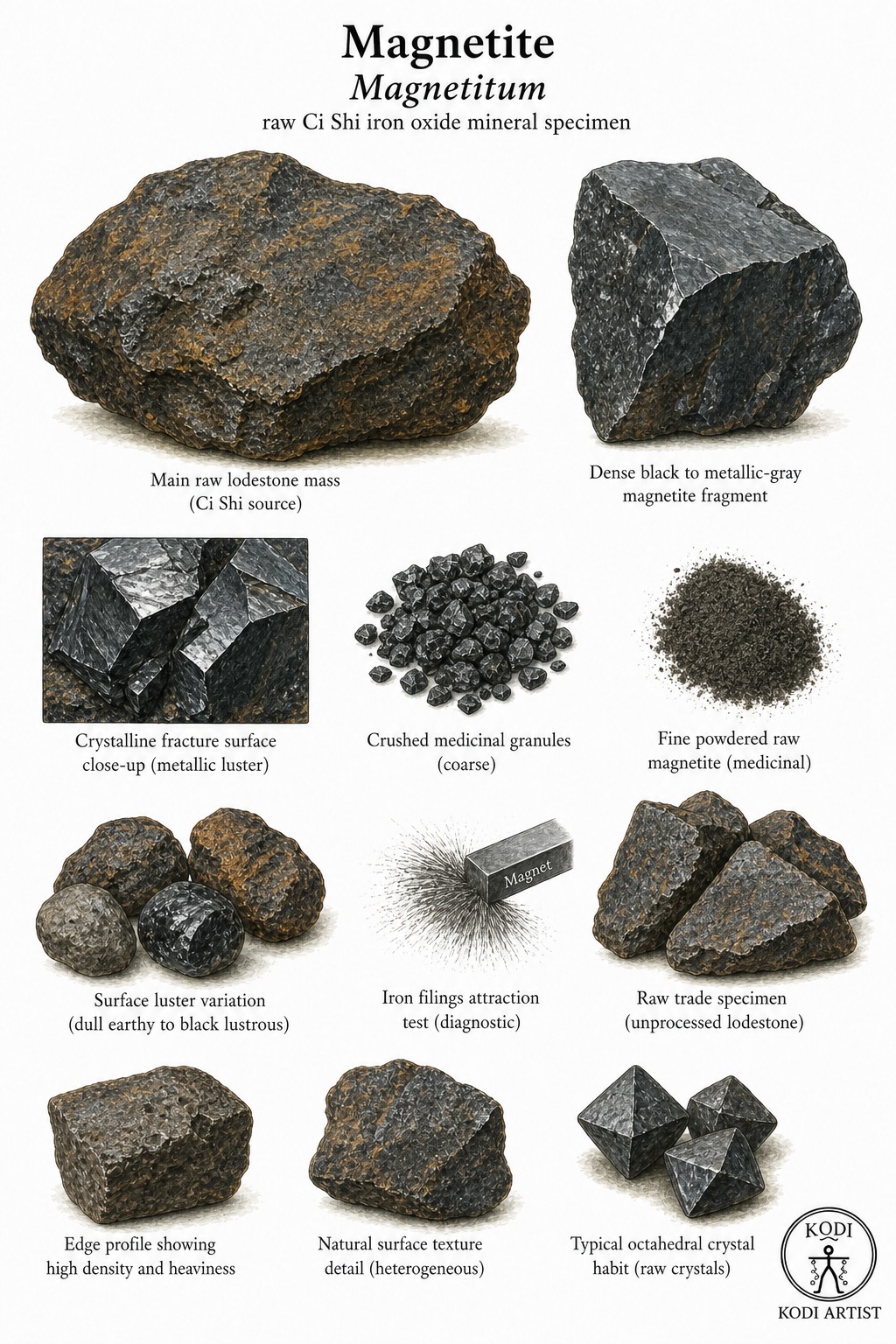
Known in TCM as Ci Shi (磁石), this acrid and salty, cold herb enters the Heart, Liver, and Kidney. Traditionally, it anchors floating Liver Yang and calms the Spirit; treats dizziness, tinnitus, and insomnia from Liver Yang rising disturbing the Heart, most often applied for dizziness, tinnitus, and insomnia. Modern research has identified Iron(II,III) among its active constituents.
Part used: Magnetite
Also Known As
Latin: Magnetitum | Pinyin: Ci Shi | Chinese: 磁石
TCM Properties
- Taste
- acrid, salty
- Temperature
- cold
- Channels
- Heart, Liver, Kidney
Traditional Use
Primary Actions
- Anchors floating Liver Yang and calms the Spirit; treats dizziness, tinnitus, and insomnia from Liver Yang rising disturbing the Heart
- Improves hearing and vision and nourishes Kidney Essence; used for Kidney-deficient tinnitus, deafness, and blurred vision
- Assists the Kidney in grasping Qi; relieves wheezing and dyspnea from Kidney failing to grasp Qi
Classic Formulas
- Er Long Zuo Ci Wan (Tonify the Kidney and Benefit the Ears Pill)
Classical References
- Shen Nong Ben Cao Jing (Divine Farmer's Materia Medica, c. 200 CE) records Ci Shi for deafness and joint pain
- Traditionally calcined and quenched in vinegar before use to improve absorption and moderate its harsh mineral nature
Modern Research
Active Compounds
- Iron(II,III) oxide (Fe3O4)
- Trace mineral elements
Studied Effects
- Mineral composition studied mainly for quality-control and heavy-metal safety screening rather than pharmacological mechanism
- Traditional sedative and anti-vertigo use lacks dedicated modern clinical trial support
Safety & Interactions
Contraindications
- Long-term or high-dose use, due to potential iron accumulation and heavy-metal contamination risk in mineral materials
Cautions
- Use only the calcined, vinegar-quenched processed form, not raw ore
- Source from quality-controlled suppliers given documented heavy-metal contamination risk in mineral Chinese medicinals
Conditions
Frequently Asked Questions
What is Magnetite used for?
Magnetite is traditionally used to Anchors floating Liver Yang and calms the Spirit; treats dizziness, tinnitus, and insomnia from Liver Yang rising disturbing the Heart, Improves hearing and vision and nourishes Kidney Essence; used for Kidney-deficient tinnitus, deafness, and blurred vision, Assists the Kidney in grasping Qi; relieves wheezing and dyspnea from Kidney failing to grasp Qi. Research has investigated its effects on: Mineral composition studied mainly for quality-control and heavy-metal safety screening rather than pharmacological mechanism; Traditional sedative and anti-vertigo use lacks dedicated modern clinical trial support.
What are other names for Magnetite?
Magnetite is also known as Lodestone, Iron Oxide (Fe3O4). In TCM: 磁石 (Ci Shi); Magnetitum.
Is Magnetite safe during pregnancy?
The safety of Magnetite during pregnancy has not been established. Consult a qualified healthcare provider before use.
What are the contraindications for Magnetite?
Magnetite should not be used in: Long-term or high-dose use, due to potential iron accumulation and heavy-metal contamination risk in mineral materials. Consult a qualified healthcare provider before use.