Lotus Seed
- Chinese
- 莲子
- Pinyin
- Lian Zi
- Latin
- Semen Nelumbinis
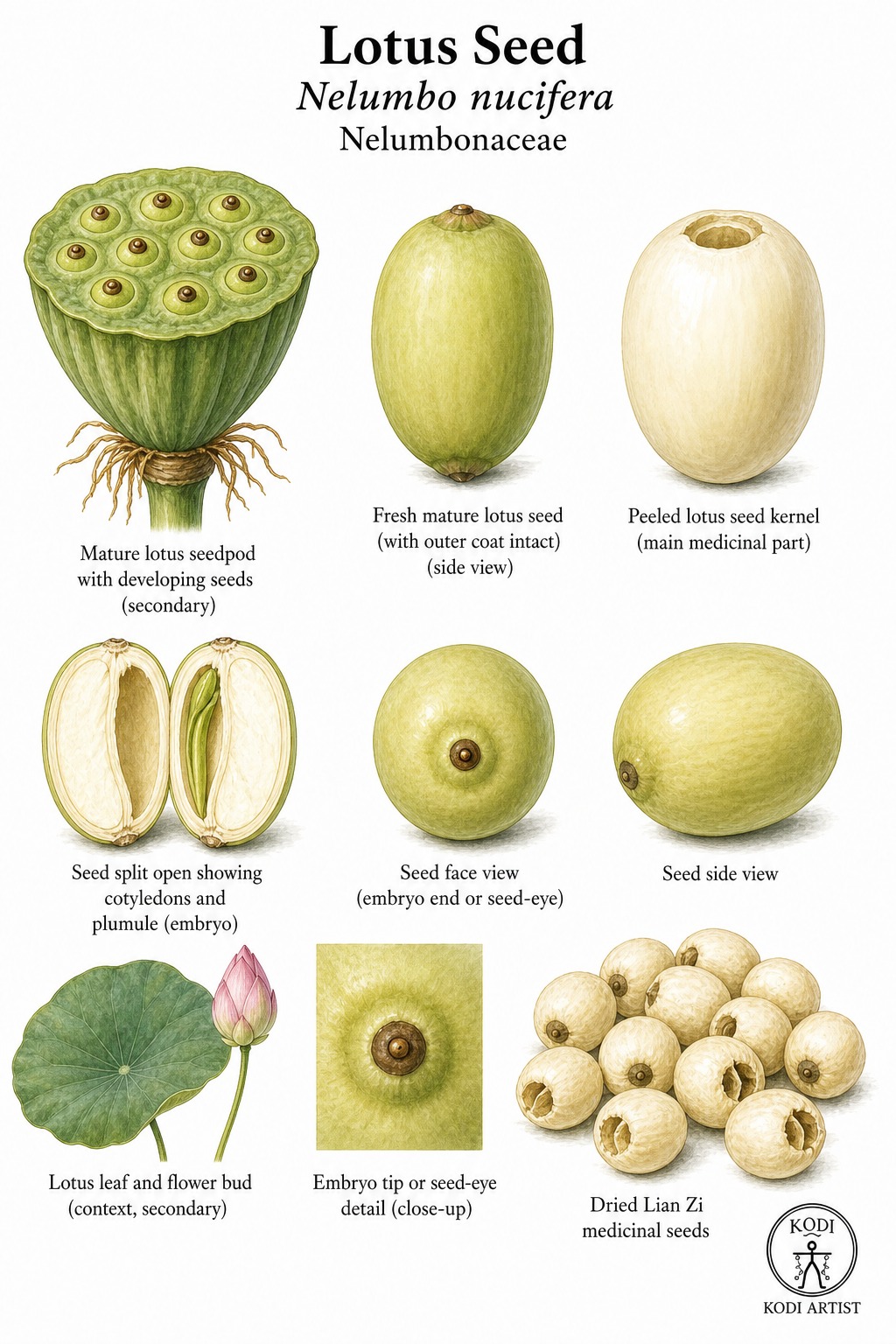
Known in TCM as Lian Zi (莲子), this sweet and astringent, neutral herb enters the Heart, Kidney, and Spleen. Traditionally, it tonifies the Spleen and binds the intestines; treats chronic diarrhea and poor appetite from Spleen deficiency, most often applied for diarrhea, leukorrhea, and insomnia. Modern research has identified Flavonoid among its active constituents.
Part used: Seed
Also Known As
Latin: Semen Nelumbinis | Pinyin: Lian Zi | Chinese: 莲子
TCM Properties
- Taste
- sweet, astringent
- Temperature
- neutral
- Channels
- Heart, Kidney, Spleen
Traditional Use
Primary Actions
- Tonifies the Spleen and binds the intestines; treats chronic diarrhea and poor appetite from Spleen deficiency
- Tonifies the Kidney and secures Essence; stabilizes leukorrhea, spermatorrhea, and premature ejaculation from Kidney instability
- Nourishes the Heart and calms the Spirit; treats irritability, palpitations, and insomnia from Heart-Kidney disharmony
Secondary Actions
- Widely used as a food-medicine in tonic soups and congee
Classic Formulas
- Gui Pi Tang (Restore the Spleen Decoction)
- Qing Xin Lian Zi Yin (Clear the Heart Lotus Seed Drink)
Classical References
- Shen Nong Ben Cao Jing (Divine Farmer's Materia Medica, c. 200 CE) lists lotus seed among the upper-class tonics
- Ben Cao Gang Mu (Li Shizhen, 1578) describes its role in tonifying the Spleen, securing Essence, and nourishing the Heart
Modern Research
Active Compounds
- Flavonoid C-glycosides and O-glycosides
- Alkaloids (neferine, nuciferine, liensinine)
- Polysaccharides
- Phenolic acids
Studied Effects
- Strong free-radical scavenging activity demonstrated in DPPH and nitric oxide assays
- Antioxidant, anti-inflammatory, hypoglycemic, and anticancer activity reported across multiple studies
- Investigated as a functional food ingredient for chronic disease prevention
PubMed References
Safety & Interactions
Cautions
- Excess Heat, constipation, or abdominal distension due to its astringent, binding nature
Conditions
- Diarrhea Traditional ★★☆☆☆ JSON
- Leukorrhea Traditional ★★☆☆☆ JSON
- Insomnia Traditional ★★☆☆☆ JSON
- Palpitations Traditional ★★☆☆☆ JSON
- Poor Appetite Traditional ★☆☆☆☆ JSON
Frequently Asked Questions
What is Lotus Seed used for?
Lotus Seed is traditionally used to Tonifies the Spleen and binds the intestines; treats chronic diarrhea and poor appetite from Spleen deficiency, Tonifies the Kidney and secures Essence; stabilizes leukorrhea, spermatorrhea, and premature ejaculation from Kidney instability, Nourishes the Heart and calms the Spirit; treats irritability, palpitations, and insomnia from Heart-Kidney disharmony. Research has investigated its effects on: Strong free-radical scavenging activity demonstrated in DPPH and nitric oxide assays; Antioxidant, anti-inflammatory, hypoglycemic, and anticancer activity reported across multiple studies.
What are other names for Lotus Seed?
Lotus Seed is also known as Nelumbo nucifera, Nelumbinis. In TCM: 莲子 (Lian Zi); Semen Nelumbinis.
Is Lotus Seed safe during pregnancy?
Lotus Seed is generally considered safe during pregnancy in normal amounts. Therapeutic or concentrated doses should be discussed with a qualified healthcare provider before use.