Lotus Receptacle
- Chinese
- 莲房
- Pinyin
- Lian Fang
- Latin
- Receptaculum Nelumbinis
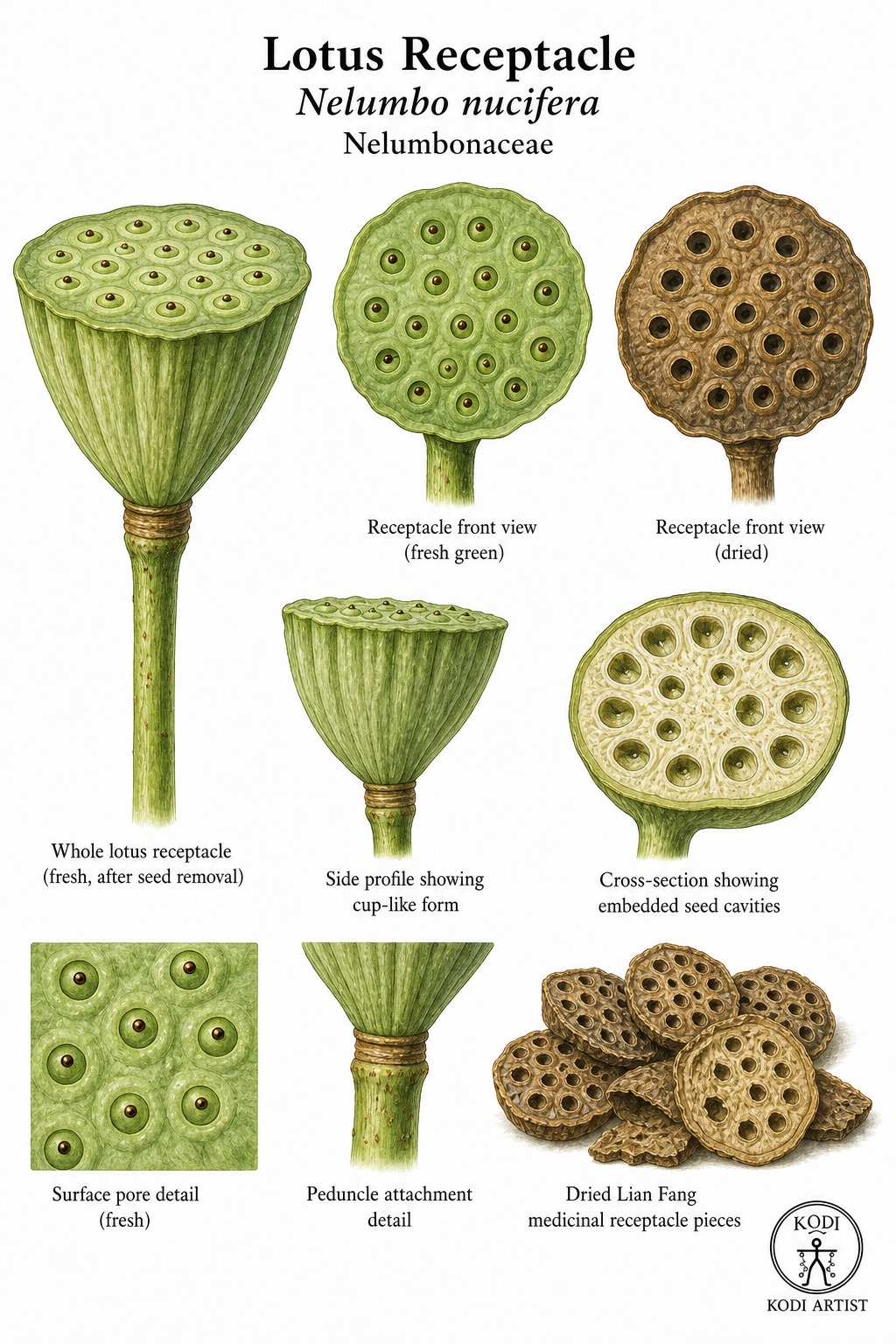
Known in TCM as Lian Fang (莲房), this bitter and astringent, warm herb enters the Liver. Traditionally, it invigorates Blood and dispels Blood stasis; used for fixed pain and masses from Blood stagnation, most often applied for blood stasis, abdominal pain, and traumatic injury. Modern research has identified Flavonoids among its active constituents.
Part used: Receptacle
Also Known As
Latin: Receptaculum Nelumbinis | Pinyin: Lian Fang | Chinese: 莲房
TCM Properties
- Taste
- bitter, astringent
- Temperature
- warm
- Channels
- Liver
Traditional Use
Primary Actions
- Invigorates Blood and dispels Blood stasis; used for fixed pain and masses from Blood stagnation
- Stops bleeding by removing stasis; applied for postpartum abdominal pain with retained lochia and for uterine bleeding with a stasis component
Secondary Actions
- Charred receptacle (Lian Fang Tan) used for a stronger hemostatic effect
Classical References
- Documented in later Chinese materia medica among Blood-invigorating materials used for postpartum stasis and traumatic injury
Modern Research
Active Compounds
- Flavonoids
- Tannins
- Alkaloids (shared with other Nelumbo nucifera plant parts)
Studied Effects
- Limited part-specific pharmacological study; phytochemical profile overlaps with other Nelumbo nucifera tissues studied for antioxidant activity
PubMed References
Safety & Interactions
Contraindications
- Pregnancy, due to Blood-invigorating action
Cautions
- Blood deficiency without stasis
Conditions
- Blood Stasis Traditional ★★★☆☆ JSON
- Abdominal Pain Traditional ★★☆☆☆ JSON
- Traumatic Injury Traditional ★☆☆☆☆ JSON
Frequently Asked Questions
What is Lotus Receptacle used for?
Lotus Receptacle is traditionally used to Invigorates Blood and dispels Blood stasis; used for fixed pain and masses from Blood stagnation, Stops bleeding by removing stasis; applied for postpartum abdominal pain with retained lochia and for uterine bleeding with a stasis component. Research has investigated its effects on: Limited part-specific pharmacological study; phytochemical profile overlaps with other Nelumbo nucifera tissues studied for antioxidant activity.
What are other names for Lotus Receptacle?
Lotus Receptacle is also known as Nelumbo nucifera seed pod, Lotus Seed Pod, Nelumbinis. In TCM: 莲房 (Lian Fang); Receptaculum Nelumbinis.
Is Lotus Receptacle safe during pregnancy?
Lotus Receptacle is not recommended during pregnancy.
What are the contraindications for Lotus Receptacle?
Lotus Receptacle should not be used in: Pregnancy, due to Blood-invigorating action. Consult a qualified healthcare provider before use.