Longtube Ground Ivy Herb
- Chinese
- 连钱草
- Pinyin
- Lian Qian Cao
- Latin
- Herba Glechomae Longitubae
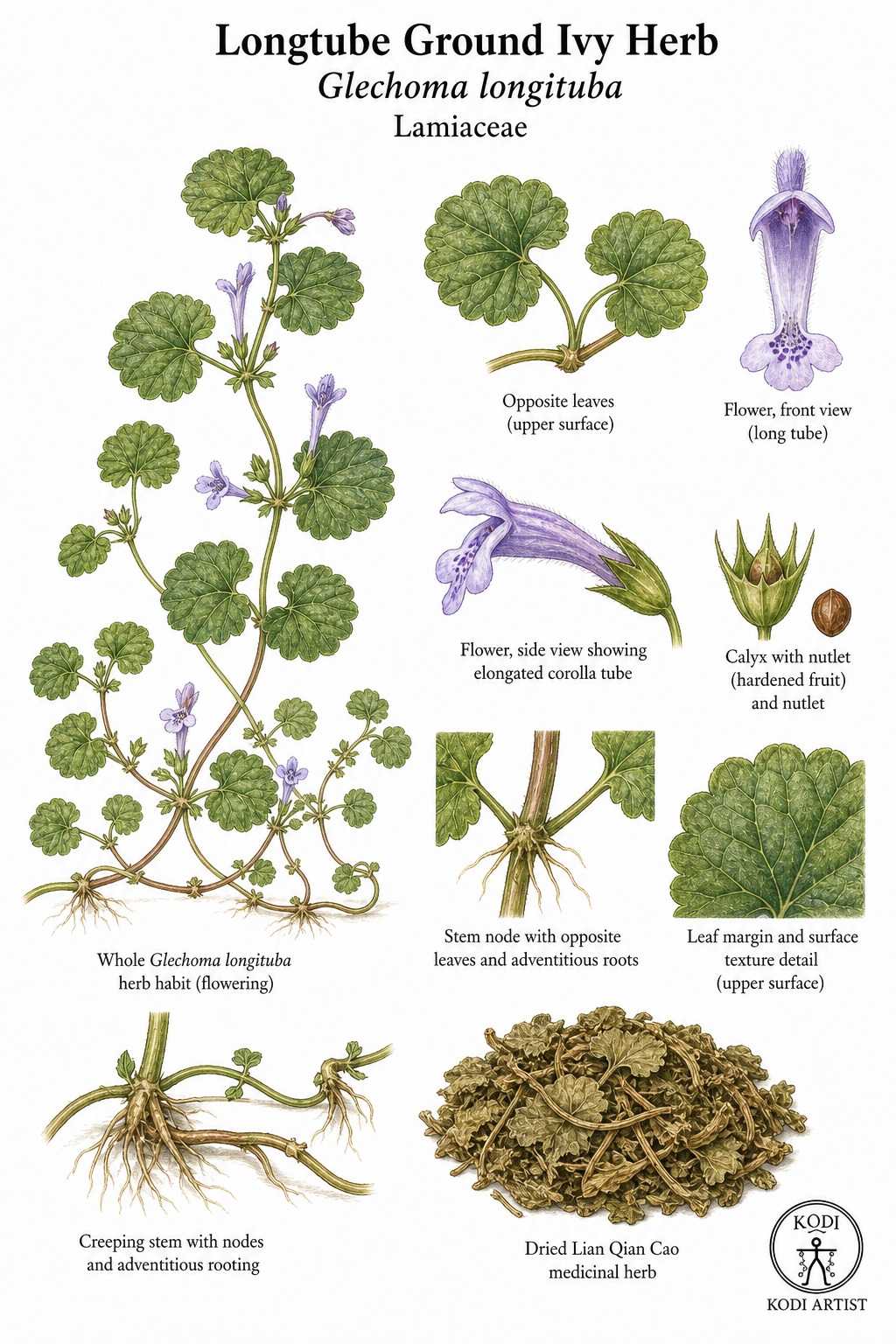
Known in TCM as Lian Qian Cao (连钱草), this acrid and slightly bitter, slightly cold herb enters the Liver, Kidney, and Bladder. Traditionally, it clears Damp-Heat and promotes urination; treats painful urinary stranguria and helps pass small urinary and gallbladder stones, most often applied for urolithiasis, jaundice, and traumatic injury. Modern research has identified Rosmarinic among its active constituents.
Part used: Whole herb
Also Known As
Latin: Herba Glechomae Longitubae | Pinyin: Lian Qian Cao | Chinese: 连钱草
TCM Properties
- Taste
- acrid, slightly bitter
- Temperature
- slightly cold
- Channels
- Liver, Kidney, Bladder
Traditional Use
Primary Actions
- Clears Damp-Heat and promotes urination; treats painful urinary stranguria and helps pass small urinary and gallbladder stones
- Clears Heat and resolves toxicity; used for jaundice due to Damp-Heat
- Invigorates Blood and reduces swelling; applied for traumatic injury, sores, and boils
Secondary Actions
- Traditionally applied topically for insect bites and minor wounds
Classical References
- Documented in regional Chinese materia medica traditions for treating urinary and gallbladder stones and Damp-Heat jaundice
Modern Research
Active Compounds
- Rosmarinic acid and derivatives
- Terpenoids (monoterpenoids, sesquiterpene lactones)
- Flavonoids
- Ursolic acid
Studied Effects
- Hepatoprotective activity demonstrated in cholestatic liver injury models
- Anti-inflammatory activity through inhibition of NF-κB, COX-2, and iNOS pathways
- Antioxidant activity attributed to polyphenolic constituents
PubMed References
Safety & Interactions
Contraindications
- Pregnancy, due to Blood-invigorating action
Cautions
- Cold-natured; use cautiously with Spleen-Stomach Yang deficiency or cold-pattern diarrhea
Conditions
- Urolithiasis Traditional ★★★☆☆ JSON
- Jaundice Traditional ★★☆☆☆ JSON
- Traumatic Injury Traditional ★★☆☆☆ JSON
- Urinary Tract Infection Traditional ★★☆☆☆ JSON
Frequently Asked Questions
What is Longtube Ground Ivy Herb used for?
Longtube Ground Ivy Herb is traditionally used to Clears Damp-Heat and promotes urination; treats painful urinary stranguria and helps pass small urinary and gallbladder stones, Clears Heat and resolves toxicity; used for jaundice due to Damp-Heat, Invigorates Blood and reduces swelling; applied for traumatic injury, sores, and boils. Research has investigated its effects on: Hepatoprotective activity demonstrated in cholestatic liver injury models; Anti-inflammatory activity through inhibition of NF-κB, COX-2, and iNOS pathways.
What are other names for Longtube Ground Ivy Herb?
Longtube Ground Ivy Herb is also known as Glechoma longituba, Glechoma hederacea var. longituba, Ground Ivy. In TCM: 连钱草 (Lian Qian Cao); Herba Glechomae Longitubae.
Is Longtube Ground Ivy Herb safe during pregnancy?
Longtube Ground Ivy Herb is not recommended during pregnancy.
What are the contraindications for Longtube Ground Ivy Herb?
Longtube Ground Ivy Herb should not be used in: Pregnancy, due to Blood-invigorating action. Consult a qualified healthcare provider before use.