Long-Nosed Pit Viper
- Chinese
- 蕲蛇
- Pinyin
- Qi She
- Latin
- Agkistrodon acutus
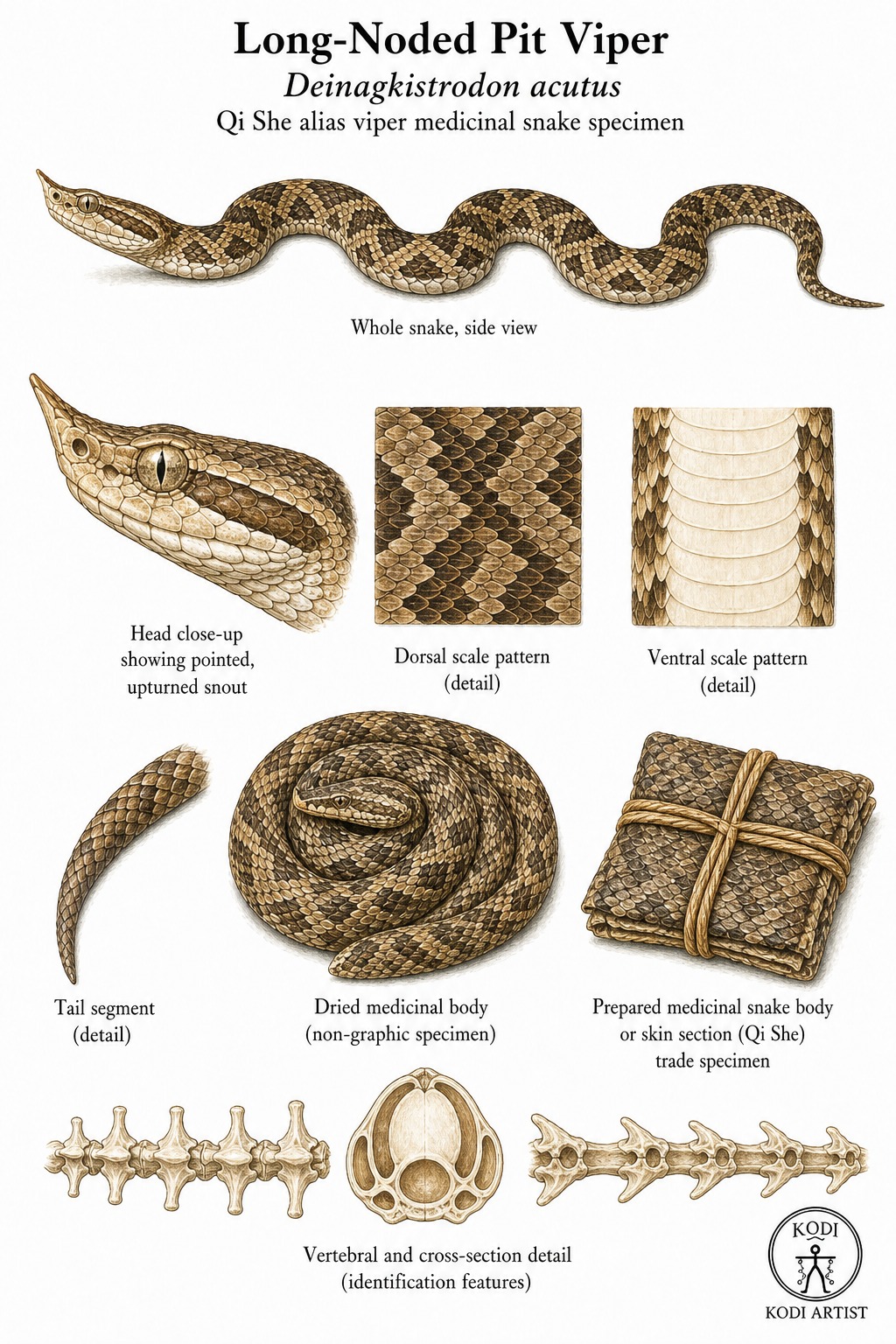
Known in TCM as Qi She (蕲蛇), this sweet and salty, warm herb enters the Liver. Traditionally, it dispels Wind-Damp and stops pain; a principal herb for Bi syndrome (painful obstruction), including chronic wind-damp arthralgia and numbness, most often applied for rheumatism, joint pain, and facial paralysis. Modern research has identified Venom among its active constituents.
Also Known As
Latin: Agkistrodon acutus | Pinyin: Qi She | Chinese: 蕲蛇
TCM Properties
- Taste
- sweet, salty
- Temperature
- warm
- Channels
- Liver
Traditional Use
Primary Actions
- Dispels Wind-Damp and stops pain; a principal herb for Bi syndrome (painful obstruction), including chronic wind-damp arthralgia and numbness
- Extinguishes internal Wind and stops spasm; used for tetany, convulsions, and facial or hemiplegic paralysis following Wind-stroke
- Resolves toxicity for skin lesions; used for scabies, sores, and toxic swellings
Secondary Actions
- Traditionally combined with other Wind-dispelling materials for stubborn skin disease such as leprosy and severe tinea
Classic Formulas
- Qi She Jiu (Long-Nosed Pit Viper medicinal wine)
Classical References
- First recorded in the Kai Bao Ben Cao (973 CE)
- Ben Cao Gang Mu (Li Shizhen, 1578) describes Qi She as penetrating to the bone to expel Wind and stop convulsions, naming it the premier herb for Wind-Damp Bi and tetany
Modern Research
Active Compounds
- Venom proteins (phospholipase A2, snaclec, thrombin-like enzymes, metalloproteinases)
- Antithrombotic peptides
Studied Effects
- Venom-derived antithrombin and antithrombotic components studied for anticoagulant potential
- Hematotoxic and neurotoxic effects documented in envenomation research, informing processing and dosage safety limits for medicinal preparations
PubMed References
Safety & Interactions
Contraindications
- Pregnancy, due to strong Wind-dispelling and Blood-moving action
- Blood disorders or bleeding tendency
Cautions
- Traditionally used only as a processed, detoxified preparation (wine-steeped or decocted); never raw venom or fresh tissue
- Sourced from a conservation-threatened species; verify legal, regulated sourcing
- Not for long-term or high-dose use owing to inherent toxicity
Drug Interactions
- Theoretical potentiation of anticoagulant or antiplatelet medications given venom-derived antithrombotic compounds; avoid combining without practitioner supervision
Conditions
- Rheumatism Traditional ★★★☆☆ JSON
- Joint Pain Traditional ★★★☆☆ JSON
- Facial Paralysis Traditional ★★☆☆☆ JSON
- Epilepsy Traditional ★☆☆☆☆ JSON
Frequently Asked Questions
What is Long-Nosed Pit Viper used for?
Long-Nosed Pit Viper is traditionally used to Dispels Wind-Damp and stops pain; a principal herb for Bi syndrome (painful obstruction), including chronic wind-damp arthralgia and numbness, Extinguishes internal Wind and stops spasm; used for tetany, convulsions, and facial or hemiplegic paralysis following Wind-stroke, Resolves toxicity for skin lesions; used for scabies, sores, and toxic swellings. Research has investigated its effects on: Venom-derived antithrombin and antithrombotic components studied for anticoagulant potential; Hematotoxic and neurotoxic effects documented in envenomation research, informing processing and dosage safety limits for medicinal preparations.
What are other names for Long-Nosed Pit Viper?
Long-Nosed Pit Viper is also known as Deinagkistrodon acutus, Five-Pace Pit Viper, Hundred Pace Pit Viper, Sharp-Nosed Viper. In TCM: 蕲蛇 (Qi She); Agkistrodon acutus.
Is Long-Nosed Pit Viper safe during pregnancy?
Long-Nosed Pit Viper is not recommended during pregnancy.
What are the contraindications for Long-Nosed Pit Viper?
Long-Nosed Pit Viper should not be used in: Pregnancy, due to strong Wind-dispelling and Blood-moving action; Blood disorders or bleeding tendency. Consult a qualified healthcare provider before use.
Does Long-Nosed Pit Viper interact with any medications?
Long-Nosed Pit Viper may interact with: Theoretical potentiation of anticoagulant or antiplatelet medications given venom-derived antithrombotic compounds; avoid combining without practitioner supervision. Always inform your healthcare provider of any herbal supplements you are taking.