European Grape Fruit
- Chinese
- 葡萄
- Pinyin
- Pu Tao
- Latin
- Fructus Vitis Viniferae
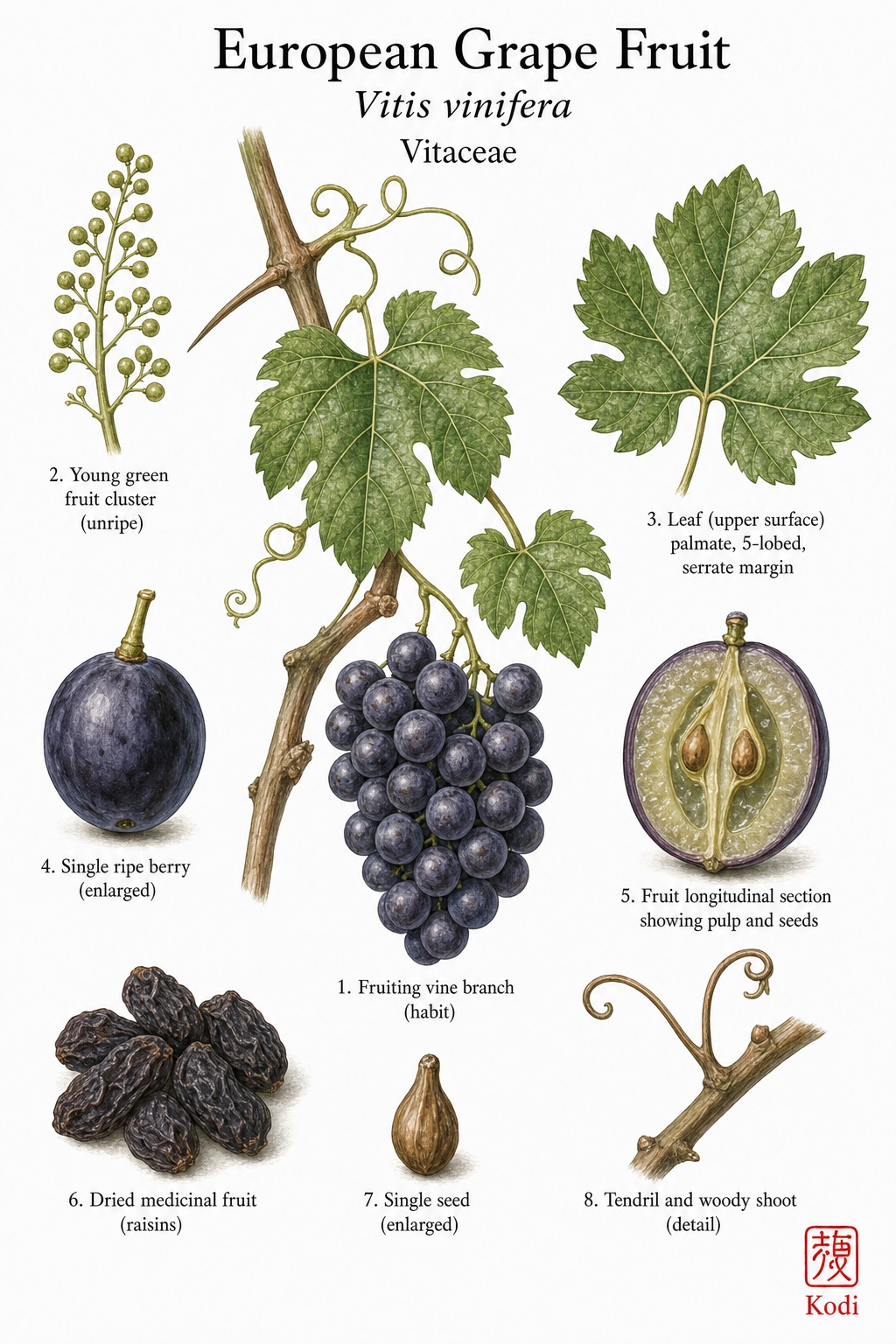
Known in TCM as Pu Tao (葡萄), this sweet and sour, neutral herb enters the Lung, Spleen, and Kidney. Traditionally, it tonifies qi and blood - Pu Tao is used as a mild restorative fruit for fatigue, weakness, palpitations, and depleted constitution after illness or overwork, most often applied for fatigue, anemia, and cough. Modern research has identified Resveratrol among its active constituents.
Part used: Fruit
Also Known As
Latin: Fructus Vitis Viniferae | Pinyin: Pu Tao | Chinese: 葡萄
TCM Properties
- Taste
- sweet, sour
- Temperature
- neutral
- Channels
- Lung, Spleen, Kidney
Traditional Use
Primary Actions
- Tonifies qi and blood - Pu Tao is used as a mild restorative fruit for fatigue, weakness, palpitations, and depleted constitution after illness or overwork.
- Generates fluids and moistens dryness - traditional use includes thirst, dry mouth, and deficiency cough when fluids have been damaged.
- Strengthens the sinews and bones - it is sometimes included in tonic-food and medicinal-wine traditions for weak legs, low back fatigue, and rheumatic aching.
- Promotes urination - gentle diuretic use appears in traditional guidance for edema and damp accumulation.
Secondary Actions
- Pu Tao is more often treated as a nourishing food-medicine ingredient than as a high-priority acute treatment herb, so it commonly appears in wines, syrups, pastes, and recovery diets.
- Its mild nature makes it suitable as supportive therapy, but it should not be confused with stronger blood tonics or stronger damp-draining medicinals.
Classic Formulas
- Pu Tao Jiu - medicinal wine tradition for weakness, sore sinews, and chronic depletion.
- Tonic fruit combinations with Da Zao or Long Yan Rou are traditional food-herb approaches for mild qi-blood weakness and convalescence.
- Thirst-relieving preparations use Pu Tao when summer-heat or chronic dryness has consumed fluids without creating intense internal cold.
Classical References
- TCMWiki describes Pu Tao as sweet, sour, and neutral, entering the Lung, Spleen, and Kidney to tonify qi and blood, strengthen tendons and bones, and induce diuresis.
- Later Chinese dietetic tradition places Pu Tao among the gentler fruit medicinals that support recovery and dryness without the complexity of harsher herbs.
Modern Research
Active Compounds
- Resveratrol - widely discussed polyphenol in grape pharmacology and functional-food research
- Procyanidins - oligomeric flavanols especially associated with seed and vascular studies
- Anthocyanins and flavonoids - antioxidant pigments and polyphenols prominent in colored grape varieties
- Organic acids and phenolic acids - supportive compounds contributing to fruit chemistry and food use
Studied Effects
- A 2016 review summarized the pharmacological effects of Vitis vinifera and its bioactive constituents, including antioxidant, cardioprotective, and metabolic research themes (PMID 27196869).
- A 2003 experimental study reported cardioprotective effects of grape-seed procyanidins in an ischemia-reperfusion model, contributing to long-standing cardiovascular interest in grape constituents (PMID 15134376).
- A 2024 study examined antioxidant and anticancer activity of Vitis vinifera extracts in breast-cell lines, illustrating the continued predominance of preclinical grape research (PMID 38398737).
PubMed References
- Review of the Pharmacological Effects of Vitis vinifera (Grape) and its Bioactive Constituents: An Update. (2016)
- Procyanidins from Vitis vinifera seeds display cardioprotection in an experimental model of ischemia-reperfusion damage. (2003)
- Antioxidant and Anticancer Activity of Vitis vinifera Extracts in Breast Cell Lines. (2024)
Safety & Interactions
Contraindications
- Marked Spleen deficiency with loose stools when sweet damp-forming foods are not tolerated
- Situations that require strict control of concentrated sugars or fruit extracts
Cautions
- Fresh grapes, raisin-like preparations, wines, and standardized extracts are not interchangeable in dose or pharmacology.
- Because Pu Tao is sweet and moistening, heavy overuse may aggravate dampness or loose stools in sensitive patients.
- MSK page not found - drug interaction data not available from Memorial Sloan Kettering integrative medicine database
Conditions
Frequently Asked Questions
What is European Grape Fruit used for?
European Grape Fruit is traditionally used to Tonifies qi and blood - Pu Tao is used as a mild restorative fruit for fatigue, weakness, palpitations, and depleted constitution after illness or overwork., Generates fluids and moistens dryness - traditional use includes thirst, dry mouth, and deficiency cough when fluids have been damaged., Strengthens the sinews and bones - it is sometimes included in tonic-food and medicinal-wine traditions for weak legs, low back fatigue, and rheumatic aching., Promotes urination - gentle diuretic use appears in traditional guidance for edema and damp accumulation.. Research has investigated its effects on: A 2016 review summarized the pharmacological effects of Vitis vinifera and its bioactive constituents, including antioxidant, cardioprotective, and metabolic research themes (PMID 27196869).; A 2003 experimental study reported cardioprotective effects of grape-seed procyanidins in an ischemia-reperfusion model, contributing to long-standing cardiovascular interest in grape constituents (PMID 15134376)..
What are other names for European Grape Fruit?
European Grape Fruit is also known as Vitis. In TCM: 葡萄 (Pu Tao); Fructus Vitis Viniferae.
Is European Grape Fruit safe during pregnancy?
The safety of European Grape Fruit during pregnancy has not been established. Consult a qualified healthcare provider before use.
What are the contraindications for European Grape Fruit?
European Grape Fruit should not be used in: Marked Spleen deficiency with loose stools when sweet damp-forming foods are not tolerated; Situations that require strict control of concentrated sugars or fruit extracts. Consult a qualified healthcare provider before use.