Kochia Fruit
- Chinese
- 地肤子
- Pinyin
- Di Fu Zi
- Latin
- Fructus Kochiae
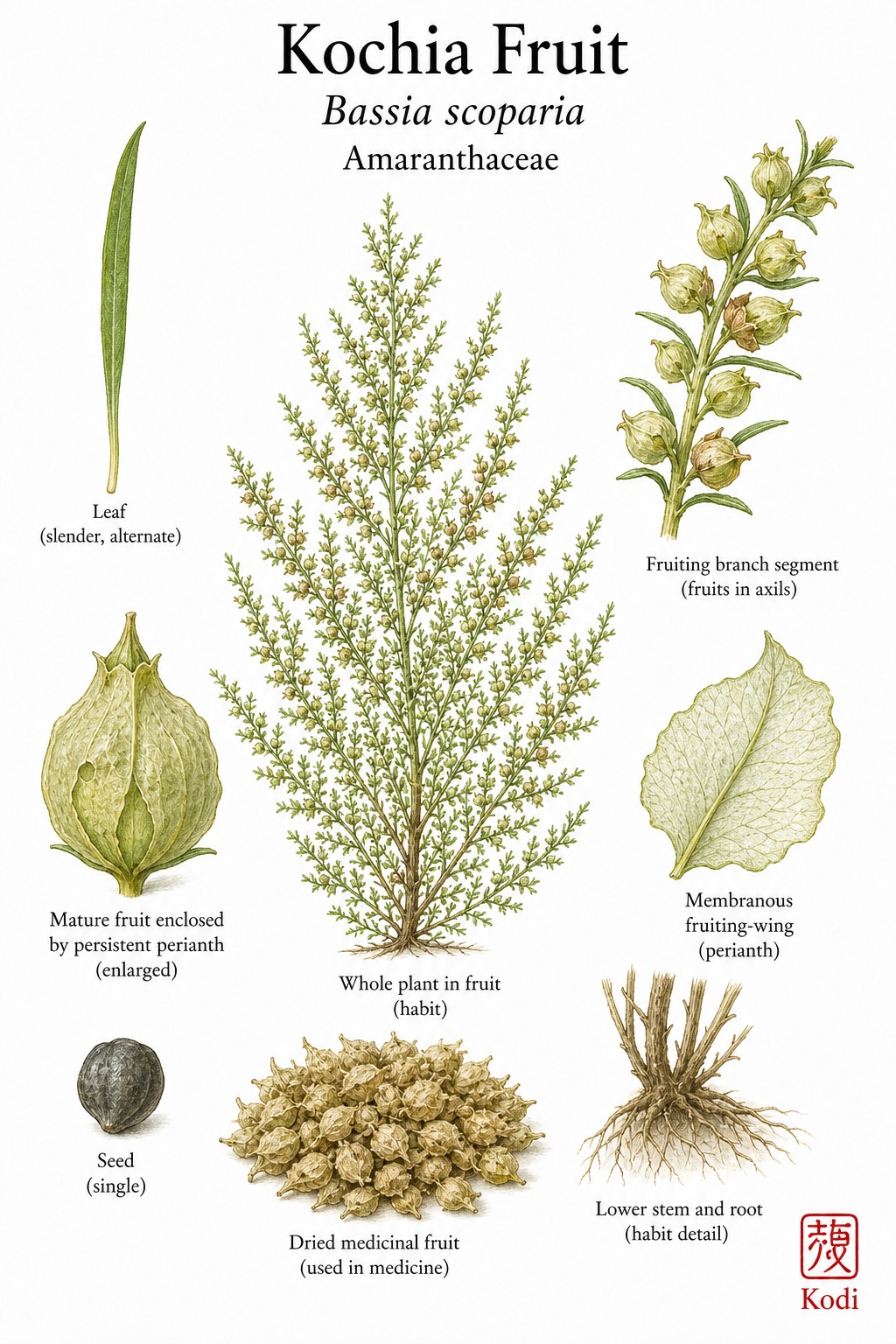
Known in TCM as Di Fu Zi (地肤子), this bitter and sweet, cold herb enters the Kidney and Bladder. Traditionally, it clears damp-heat from the lower burner - Di Fu Zi is used for difficult, painful, or dribbling urination and other damp-heat urinary patterns, most often applied for urinary tract infection, leucorrhea, and eczema. Modern research has identified Triterpenoid among its active constituents.
Part used: Fruit
Also Known As
Latin: Fructus Kochiae | Pinyin: Di Fu Zi | Chinese: 地肤子
TCM Properties
- Taste
- bitter, sweet
- Temperature
- cold
- Channels
- Kidney, Bladder
Traditional Use
Primary Actions
- Clears damp-heat from the lower burner - Di Fu Zi is used for difficult, painful, or dribbling urination and other damp-heat urinary patterns.
- Dispels wind from the skin and stops itching - it is a classic choice for eczema, urticaria, vulvar itching, and damp-heat skin irritation.
- Helps damp-heat leukorrhea - traditional use extends to lower-burner discharge patterns when heat and dampness irritate the genitourinary tract.
Secondary Actions
- Di Fu Zi is milder as a heat-clearing diuretic than some stronger stranguria-relieving herbs, which is why it is often paired rather than used alone.
- Both internal decoction and external washing are classical, especially for itching disorders.
Classic Formulas
- Di Fu Zi Tang from Ji Sheng Fang - classical formula pairing Di Fu Zi with Mu Tong, Qu Mai, and Dong Kui Zi for damp-heat dysuria.
- External wash lineages combine Di Fu Zi with Ku Shen, Long Dan Cao, Bai Fan, and related herbs for vulvar itching and damp-heat skin disease.
Classical References
- TCM Wiki describes Di Fu Zi as bitter and cold, entering the Kidney and Bladder to clear heat, excrete dampness, and alleviate itching.
- Shen Nong Ben Cao Jing is cited as an early source, and later materia medica emphasizes both urinary and dermatologic uses.
Modern Research
Active Compounds
- Triterpenoid saponins such as momordin-type compounds - important constituents in Kochiae Fructus research
- Flavonoids - antioxidant and anti-inflammatory supportive constituents
- Alkaloids and essential oils - smaller fractions discussed in phytochemical reviews
- Sterols and organic acids - additional components contributing to the whole-herb profile
Studied Effects
- A 2021 review summarized phytochemistry, pharmacology, toxicology, quality control, and pharmacokinetics of Kochiae Fructus and highlighted anti-inflammatory, antifungal, antiallergic, and antipruritic directions (PMID 33603816).
- Kochia scoparia fruit extract attenuated allergic airway inflammation in an ovalbumin-induced murine asthma model, illustrating anti-inflammatory and immunomodulatory activity beyond the skin (PMID 22122306).
- Modern research interest continues to center on anti-itch, anti-allergic, and damp-heat-correlated inflammatory mechanisms rather than on high-level human trial data.
PubMed References
Safety & Interactions
Contraindications
- Cold deficiency without damp-heat
- Itching disorders caused primarily by blood deficiency and dryness rather than damp-heat
Cautions
- External washing can irritate very sensitive skin or mucosa if overly concentrated.
- Direct clinical evidence remains modest, and most modern support comes from review and preclinical literature.
- MSK page not found - drug interaction data not available from Memorial Sloan Kettering integrative medicine database
Conditions
- Urinary Tract Infection Traditional ★★★☆☆ JSON
- Leucorrhea Traditional ★★★☆☆ JSON
- Eczema Traditional ★★★★☆ JSON
- Urticaria Traditional ★★★★☆ JSON
Frequently Asked Questions
What is Kochia Fruit used for?
Kochia Fruit is traditionally used to Clears damp-heat from the lower burner - Di Fu Zi is used for difficult, painful, or dribbling urination and other damp-heat urinary patterns., Dispels wind from the skin and stops itching - it is a classic choice for eczema, urticaria, vulvar itching, and damp-heat skin irritation., Helps damp-heat leukorrhea - traditional use extends to lower-burner discharge patterns when heat and dampness irritate the genitourinary tract.. Research has investigated its effects on: A 2021 review summarized phytochemistry, pharmacology, toxicology, quality control, and pharmacokinetics of Kochiae Fructus and highlighted anti-inflammatory, antifungal, antiallergic, and antipruritic directions (PMID 33603816).; Kochia scoparia fruit extract attenuated allergic airway inflammation in an ovalbumin-induced murine asthma model, illustrating anti-inflammatory and immunomodulatory activity beyond the skin (PMID 22122306)..
What are other names for Kochia Fruit?
Kochia Fruit is also known as Kochia. In TCM: 地肤子 (Di Fu Zi); Fructus Kochiae.
Is Kochia Fruit safe during pregnancy?
The safety of Kochia Fruit during pregnancy has not been established. Consult a qualified healthcare provider before use.
What are the contraindications for Kochia Fruit?
Kochia Fruit should not be used in: Cold deficiency without damp-heat; Itching disorders caused primarily by blood deficiency and dryness rather than damp-heat. Consult a qualified healthcare provider before use.