Sweetgum Fruit
- Chinese
- 路路通
- Pinyin
- Lu Lu Tong
- Latin
- Fructus Liquidambaris
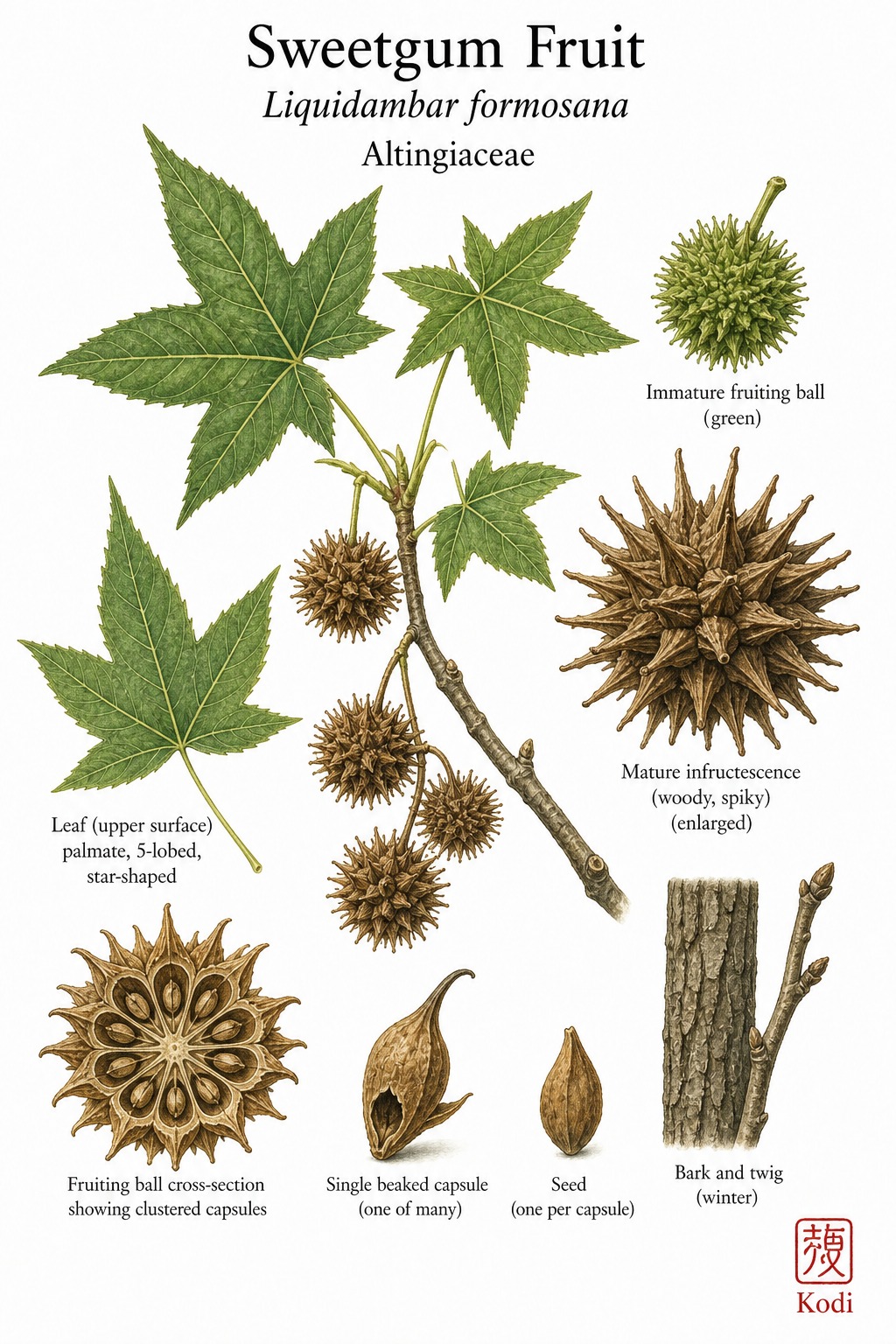
Known in TCM as Lu Lu Tong (路路通), this bitter, neutral herb enters the Liver and Kidney. Traditionally, it dispels wind and unblocks the channels - Lu Lu Tong is used for bi pain, numbness, joint restriction, and contracture in the limbs, most often applied for joint pain, edema, and insufficient lactation. Modern research has identified Pentacyclic among its active constituents.
Part used: Fruit
Also Known As
Latin: Fructus Liquidambaris | Pinyin: Lu Lu Tong | Chinese: 路路通
TCM Properties
- Taste
- bitter
- Temperature
- neutral
- Channels
- Liver, Kidney
Traditional Use
Primary Actions
- Dispels wind and unblocks the channels - Lu Lu Tong is used for bi pain, numbness, joint restriction, and contracture in the limbs.
- Promotes urination and drains dampness - traditional indications include edema, abdominal distension, and damp obstruction.
- Moves blood and opens flow through secondary obstructions - it is also used for amenorrhea, insufficient lactation, sores, and itchy damp skin disorders.
Secondary Actions
- The name Lu Lu Tong suggests opening blocked pathways in multiple directions, which matches its broad traditional use for channel, fluid, and blood obstruction.
- The medicinal part is the dried infructescence of Liquidambar, not the resin or leaf preparations more commonly studied in modern phytochemistry.
Classic Formulas
- Lactation-opening pairings with Wang Bu Liu Xing, Tong Cao, or Chuan Shan Jia - traditional lineages use Lu Lu Tong when breast channels are obstructed.
- Wind-damp obstruction formulas pair Lu Lu Tong with Du Huo, Qiang Huo, Sang Zhi, or similar channel-opening herbs for painful joints and contracture.
Classical References
- TCM Wiki describes Lu Lu Tong as bitter and neutral, entering the Liver and Kidney to dispel wind, dredge the meridians, promote diuresis, and eliminate dampness.
- Traditional sources also note a pregnancy contraindication because the herb moves and opens strongly rather than simply nourishing.
Modern Research
Active Compounds
- Pentacyclic triterpenes - major source-plant constituents with anti-angiogenic and anti-inflammatory interest
- Abietane diterpenoids - compounds identified in modern Liquidambar chemistry studies
- Volatile oils - aromatic constituents more often studied in leaves and resin than in the dried fruit
- Phenolic constituents - supportive antioxidant compounds across the source plant
Studied Effects
- Direct biomedical research on the dried Lu Lu Tong infructescence is limited, and many modern studies focus on other parts of Liquidambar formosana.
- New abietane diterpenoids isolated from Liquidambar formosana showed anti-inflammatory effects through reduced iNOS and COX-2 expression in experimental work (PMID 36342378).
- Pentacyclic triterpenes from Liquidambar formosana resin demonstrated anti-angiogenic activity in preclinical study (PMID 33556839).
- Liquidambar leaf essential oil reduced inflammatory mediators in LPS-activated macrophages, supporting source-plant anti-inflammatory relevance even though the studied part was not the fruit spike itself (PMID 25115103).
PubMed References
- Liquidambarines A - C, three new abietane diterpenoids from Liquidambar formosana Hance and their anti-inflammatory activities. (2023)
- Pentacyclic Triterpenes from the resin of Liquidambar formosana have anti-angiogenic properties. (2021)
- Essential oil from leaves of Liquidambar formosana ameliorates inflammatory response in lipopolysaccharide-activated mouse macrophages. (2014)
Safety & Interactions
Contraindications
- Pregnancy
Cautions
- Most modern laboratory data concern Liquidambar resin or leaves rather than the exact Lu Lu Tong fruit spike used in TCM.
- Because Lu Lu Tong opens movement strongly, it should be matched carefully to obstruction patterns rather than used as a general tonic.
- MSK page not found - drug interaction data not available from Memorial Sloan Kettering integrative medicine database
Conditions
- Joint Pain Traditional ★★★★☆ JSON
- Edema Traditional ★★★☆☆ JSON
- Insufficient Lactation Traditional ★★☆☆☆ JSON
- Eczema Traditional ★★☆☆☆ JSON
Frequently Asked Questions
What is Sweetgum Fruit used for?
Sweetgum Fruit is traditionally used to Dispels wind and unblocks the channels - Lu Lu Tong is used for bi pain, numbness, joint restriction, and contracture in the limbs., Promotes urination and drains dampness - traditional indications include edema, abdominal distension, and damp obstruction., Moves blood and opens flow through secondary obstructions - it is also used for amenorrhea, insufficient lactation, sores, and itchy damp skin disorders.. Research has investigated its effects on: Direct biomedical research on the dried Lu Lu Tong infructescence is limited, and many modern studies focus on other parts of Liquidambar formosana.; New abietane diterpenoids isolated from Liquidambar formosana showed anti-inflammatory effects through reduced iNOS and COX-2 expression in experimental work (PMID 36342378)..
What are other names for Sweetgum Fruit?
Sweetgum Fruit is also known as Liquidambaris. In TCM: 路路通 (Lu Lu Tong); Fructus Liquidambaris.
Is Sweetgum Fruit safe during pregnancy?
Sweetgum Fruit is not recommended during pregnancy.
What are the contraindications for Sweetgum Fruit?
Sweetgum Fruit should not be used in: Pregnancy. Consult a qualified healthcare provider before use.