Fortune Windmillpalm Petiole
- Chinese
- 棕榈
- Pinyin
- Zong Lv
- Latin
- Petiolus Trachycarpi
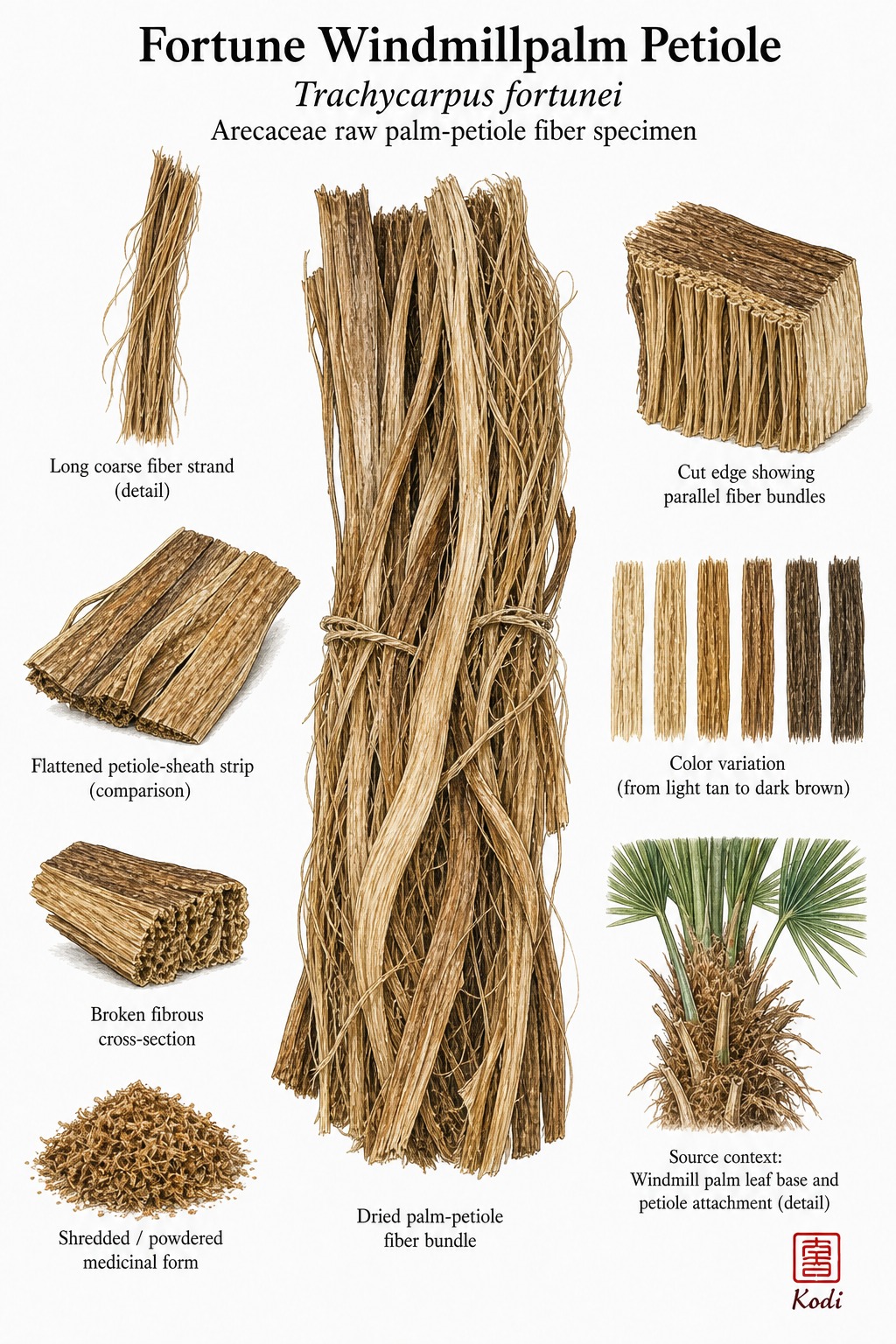
Known in TCM as Zong Lv (棕榈), this bitter and astringent, neutral herb enters the Liver and Spleen. Traditionally, it astringes and stops bleeding - raw Zong Lv is used for hematuria, epistaxis, hematochezia, hematemesis, traumatic bleeding, and metrorrhagia when a firm astringent is needed, most often applied for abnormal uterine bleeding, hematuria, and hemoptysis. Modern research has identified Tannin-like among its active constituents.
Part used: Leaf stalk
Also Known As
Latin: Petiolus Trachycarpi | Pinyin: Zong Lv | Chinese: 棕榈
TCM Properties
- Taste
- bitter, astringent
- Temperature
- neutral
- Channels
- Liver, Spleen
Traditional Use
Primary Actions
- Astringes and stops bleeding - raw Zong Lv is used for hematuria, epistaxis, hematochezia, hematemesis, traumatic bleeding, and metrorrhagia when a firm astringent is needed.
- Checks chronic leakage - traditional indications extend to leucorrhea and longstanding dysenteric or diarrheal discharge where containment has failed.
- May be powdered for external application - classical use includes local application on incised wounds and minor bleeding injuries.
Secondary Actions
- Zong Lv is closely related to Zong Lv Tan, but the carbonized form is generally considered stronger and more specialized for hemostasis.
- Because it strongly astringes, it is best when bleeding is not dominated by retained stasis or unresolved damp-heat.
Classic Formulas
- Shi Hui San - heat-bleeding formula lineage associated with the palm-fiber hemostatic tradition.
- Gu Chong Tang - uterine-bleeding formula lineage more commonly tied to the carbonized form but relevant to the Zong Lv family of medicinals.
Classical References
- TCM Wiki describes raw Zong Lv as bitter, astringent, and neutral, entering the Liver and Spleen to arrest bleeding.
- Chinese Pharmacopoeia reference materials identify the drug as the dried petiole of Trachycarpus fortunei.
- Traditional references distinguish the raw and carbonized forms, with the raw material also extending to chronic diarrhea and abnormal vaginal discharge.
Modern Research
Active Compounds
- Tannin-like astringent polyphenol fraction - the most plausible basis for the hemostatic and leakage-checking profile
- Catechin and protocatechuic-acid lineage phenolics - reported in source databases and quality references
- Fibrous lignocellulosic palm matrix - the structural material of the medicinal petiole
Studied Effects
- Direct PubMed literature on raw Zong Lv as a TCM hemostatic is very sparse, so modern support remains mainly pharmacopeial and traditional rather than trial-based.
- The most plausible modern rationale is local astringent action from tannin-rich fibrous material, but this has not been well validated in dedicated clinical studies.
Safety & Interactions
Contraindications
- Bleeding accompanied by substantial blood stasis or large clots
- Damp-heat dysentery that has not been resolved
Cautions
- Use the proper medicinal-grade petiole or sheath product, not ornamental palm fiber or landscaping material.
- Because it astringes, using it alone before the underlying excess is cleared may trap pathology.
- Modern evidence is limited and largely non-clinical.
- MSK page not found - drug interaction data not available from Memorial Sloan Kettering integrative medicine database
Conditions
- Abnormal Uterine Bleeding Traditional ★★★★☆ JSON
- Hematuria Traditional ★★★☆☆ JSON
- Hemoptysis Traditional ★★☆☆☆ JSON
- Dysentery Traditional ★★☆☆☆ JSON
- Leucorrhea Traditional ★★☆☆☆ JSON
Frequently Asked Questions
What is Fortune Windmillpalm Petiole used for?
Fortune Windmillpalm Petiole is traditionally used to Astringes and stops bleeding - raw Zong Lv is used for hematuria, epistaxis, hematochezia, hematemesis, traumatic bleeding, and metrorrhagia when a firm astringent is needed., Checks chronic leakage - traditional indications extend to leucorrhea and longstanding dysenteric or diarrheal discharge where containment has failed., May be powdered for external application - classical use includes local application on incised wounds and minor bleeding injuries.. Research has investigated its effects on: Direct PubMed literature on raw Zong Lv as a TCM hemostatic is very sparse, so modern support remains mainly pharmacopeial and traditional rather than trial-based.; The most plausible modern rationale is local astringent action from tannin-rich fibrous material, but this has not been well validated in dedicated clinical studies..
What are other names for Fortune Windmillpalm Petiole?
Fortune Windmillpalm Petiole is also known as Trachycarpi. In TCM: 棕榈 (Zong Lv); Petiolus Trachycarpi.
Is Fortune Windmillpalm Petiole safe during pregnancy?
The safety of Fortune Windmillpalm Petiole during pregnancy has not been established. Consult a qualified healthcare provider before use.
What are the contraindications for Fortune Windmillpalm Petiole?
Fortune Windmillpalm Petiole should not be used in: Bleeding accompanied by substantial blood stasis or large clots; Damp-heat dysentery that has not been resolved. Consult a qualified healthcare provider before use.