Fortune Eupatorium Herb
- Chinese
- 佩兰
- Pinyin
- Pei Lan
- Latin
- Herba Eupatorii
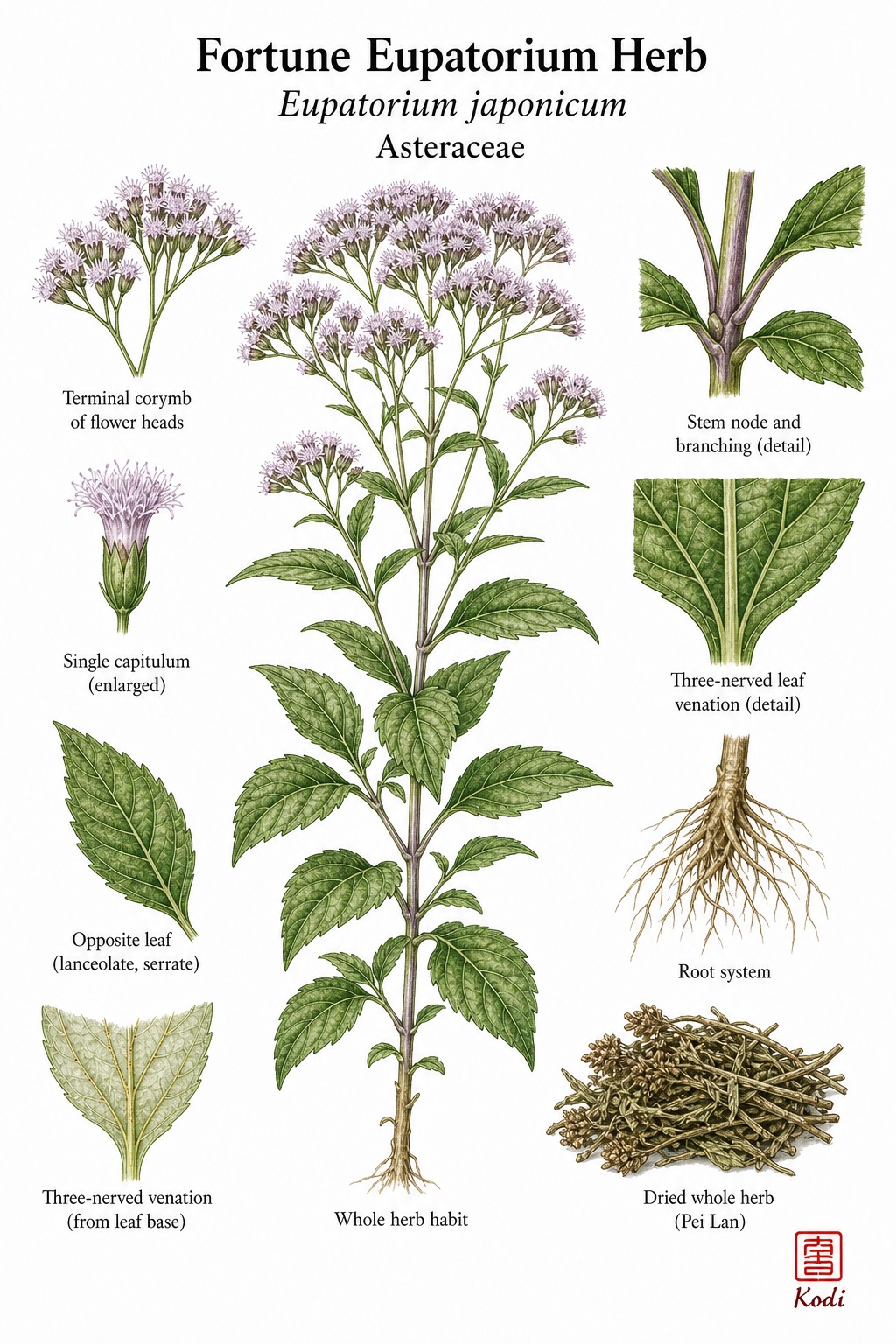
Known in TCM as Pei Lan (佩兰), this pungent, neutral herb enters the Spleen, Stomach, and Lung. Traditionally, it aromatically transforms dampness and awakens the Spleen - Pei Lan is used for chest or epigastric oppression, greasy taste, poor appetite, nausea, and summer humidity affecting the middle burner, most often applied for poor appetite, nausea, and indigestion. Modern research has identified Thymol among its active constituents.
Part used: Whole herb
Also Known As
Latin: Herba Eupatorii | Pinyin: Pei Lan | Chinese: 佩兰
TCM Properties
- Taste
- pungent
- Temperature
- neutral
- Channels
- Spleen, Stomach, Lung
Traditional Use
Primary Actions
- Aromatically transforms dampness and awakens the Spleen - Pei Lan is used for chest or epigastric oppression, greasy taste, poor appetite, nausea, and summer humidity affecting the middle burner.
- Releases early summer-damp or damp-warm patterns - it is chosen for mild fever, headache, chest fullness, and greasy tongue coating when exterior and interior turbidity coexist.
- Freshens the mouth and clears stale damp-heat turbidity - traditional use includes halitosis, excessive saliva, and sweet-greasy taste in the mouth from middle-jiao damp obstruction.
Secondary Actions
- Compared with Guang Huo Xiang, Pei Lan is less warm and better suited when dampness mixes with mild heat or when stale turbidity predominates over cold.
- It is a light aromatic herb that works best in early or moderate damp-turbid patterns rather than in deep chronic deficiency.
Classic Formulas
- Gan Lu Xiao Du Dan - damp-warm epidemic formula lineage in which Pei Lan helps aromatically resolve turbidity from the middle and the exterior.
Classical References
- TCM Wiki describes Pei Lan as pungent and neutral, entering the Spleen, Stomach, and Lung to resolve dampness and release the exterior.
- Traditional pairing with Guang Huo Xiang is repeatedly emphasized for damp obstruction of the middle and early summer-damp patterns.
- Shen Nong Ben Cao Jing is cited as the early classical source naming Pei Lan.
Modern Research
Active Compounds
- Thymol derivatives and related monoterpene constituents - among the best-studied aromatic components of Eupatorium fortunei
- Benzofurans and sesquiterpene constituents - recurrent bioactive classes in modern phytochemical reviews
- Volatile oils - relevant to the herb's fragrance and antimicrobial interest
- Pyrrolizidine alkaloids - toxicologically important constituents that require source and dose awareness
Studied Effects
- A 2026 review identified more than 160 compounds in Eupatorium fortunei and summarized anti-inflammatory, antiviral, antifungal, anticancer, and antidiabetic activities, while also highlighting toxicology concerns around pyrrolizidine alkaloids (PMID 41976178).
- Experimental work reported reduced metastatic and angiogenic potency in malignant cells through suppression of MMP-9 activity and VEGF production, supporting continued anticancer interest in E. fortunei extracts (PMID 25385232).
- Modern toxicology does not invalidate Pei Lan's traditional use, but it does reinforce the need for quality-controlled sourcing and prudent dosing.
PubMed References
Safety & Interactions
Contraindications
- Marked Yin deficiency or fluid depletion without damp obstruction
- Very dry patterns in which aromatic dispersing herbs aggravate thirst and dryness
- Use of unverified raw material with uncertain pyrrolizidine alkaloid exposure
Cautions
- Modern toxicology reviews note pyrrolizidine alkaloids in Eupatorium fortunei and support quality-controlled sourcing rather than casual or poorly identified material.
- Its aromatic nature is better for damp-turbid patterns than for chronic deficiency without turbidity.
- MSK page not found - drug interaction data not available from Memorial Sloan Kettering integrative medicine database
Conditions
- Poor Appetite Traditional ★★★★☆ JSON
- Nausea Traditional ★★★★☆ JSON
- Indigestion Traditional ★★★☆☆ JSON
- Wind Heat Traditional ★★☆☆☆ JSON
Frequently Asked Questions
What is Fortune Eupatorium Herb used for?
Fortune Eupatorium Herb is traditionally used to Aromatically transforms dampness and awakens the Spleen - Pei Lan is used for chest or epigastric oppression, greasy taste, poor appetite, nausea, and summer humidity affecting the middle burner., Releases early summer-damp or damp-warm patterns - it is chosen for mild fever, headache, chest fullness, and greasy tongue coating when exterior and interior turbidity coexist., Freshens the mouth and clears stale damp-heat turbidity - traditional use includes halitosis, excessive saliva, and sweet-greasy taste in the mouth from middle-jiao damp obstruction.. Research has investigated its effects on: A 2026 review identified more than 160 compounds in Eupatorium fortunei and summarized anti-inflammatory, antiviral, antifungal, anticancer, and antidiabetic activities, while also highlighting toxicology concerns around pyrrolizidine alkaloids (PMID 41976178).; Experimental work reported reduced metastatic and angiogenic potency in malignant cells through suppression of MMP-9 activity and VEGF production, supporting continued anticancer interest in E. fortunei extracts (PMID 25385232)..
What are other names for Fortune Eupatorium Herb?
Fortune Eupatorium Herb is also known as Eupatorium. In TCM: 佩兰 (Pei Lan); Herba Eupatorii.
Is Fortune Eupatorium Herb safe during pregnancy?
The safety of Fortune Eupatorium Herb during pregnancy has not been established. Consult a qualified healthcare provider before use.
What are the contraindications for Fortune Eupatorium Herb?
Fortune Eupatorium Herb should not be used in: Marked Yin deficiency or fluid depletion without damp obstruction; Very dry patterns in which aromatic dispersing herbs aggravate thirst and dryness; Use of unverified raw material with uncertain pyrrolizidine alkaloid exposure. Consult a qualified healthcare provider before use.