Black Seed
- Chinese
- 黑种草
- Pinyin
- Hei Zhong Cao
- Latin
- Semen Nigellae
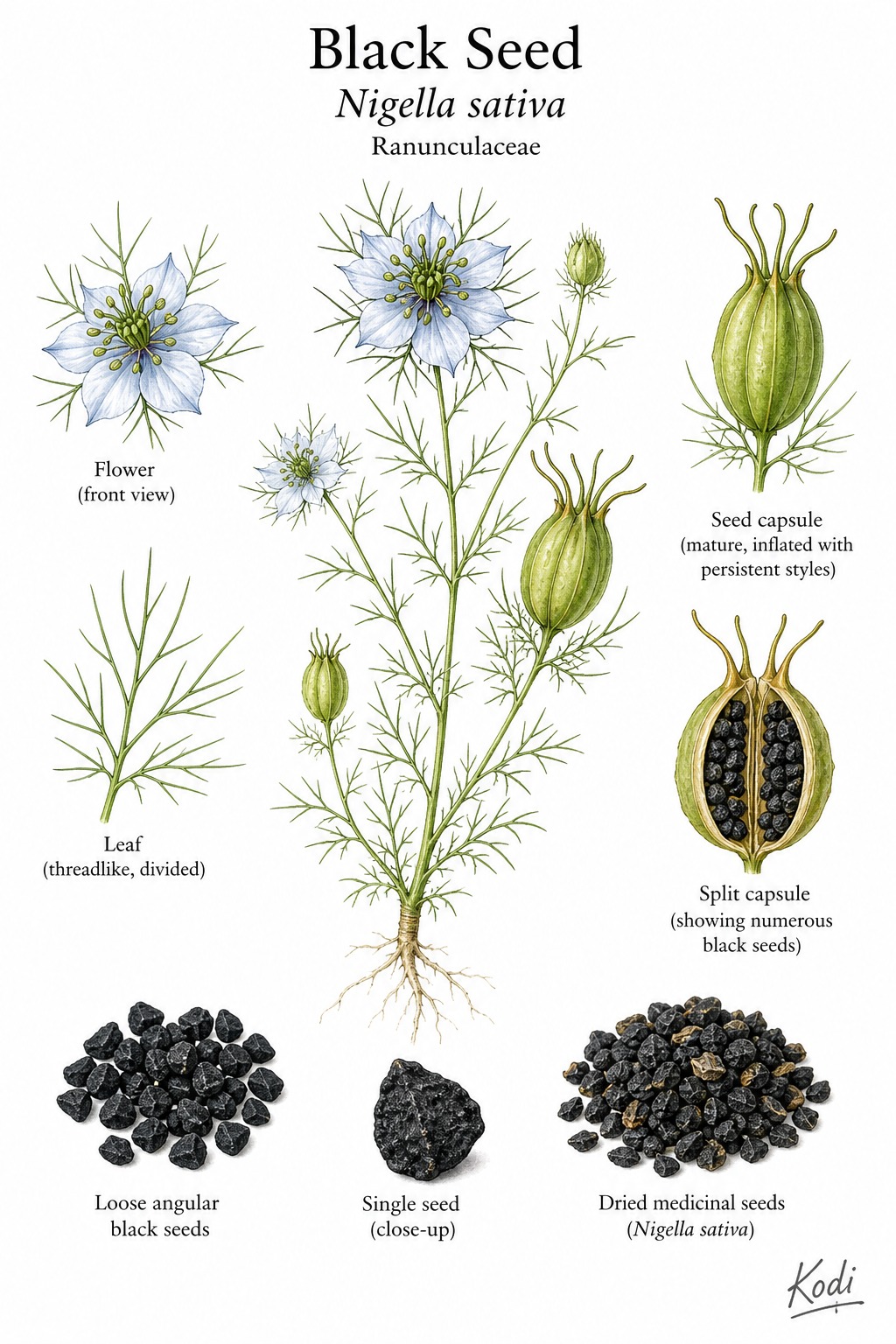
Known in TCM as Hei Zhong Cao (黑种草), this acrid and bitter, warm herb enters the Lung, Spleen, and Kidney. Traditionally, it warms and supports the Lung and middle burner - in modern integrative East-West herbal practice, black seed is used for wheezing, damp-cold digestion, and inflammatory respiratory patterns, most often applied for asthma, type 2 diabetes, and rheumatoid arthritis. Modern research has identified Thymoquinone among its active constituents.
Part used: Seed
Also Known As
Latin: Semen Nigellae | Pinyin: Hei Zhong Cao | Chinese: 黑种草
TCM Properties
- Taste
- acrid, bitter
- Temperature
- warm
- Channels
- Lung, Spleen, Kidney
Traditional Use
Primary Actions
- Warms and supports the Lung and middle burner - in modern integrative East-West herbal practice, black seed is used for wheezing, damp-cold digestion, and inflammatory respiratory patterns.
- Supports metabolic balance - it has become a prominent contemporary herb for blood sugar, lipids, and cardiometabolic resilience.
- Modulates inflammatory reactivity - modern herbal use extends to joint symptoms, immune over-reactivity, and chronic low-grade inflammation.
Secondary Actions
- Hei Zhong Cao is not part of the core classical Chinese materia medica canon, so its TCM property assignment is a modern integrative mapping.
- Food spice use, pressed black seed oil, and concentrated extracts differ substantially in potency and safety.
Classic Formulas
- No major classical TCM formula centers on Hei Zhong Cao because Nigella sativa entered Chinese-style practice mainly through modern integrative herbal medicine rather than through the early canon.
- Its functional analogue is the family of warming aromatic seeds that support the Lung and digestion while reducing phlegm and cold.
- Current use is more often in capsules, oils, and cross-tradition formulas than in fixed classical decoctions.
Classical References
- IMPORT NOTE: Nigella sativa is better known from Middle Eastern, South Asian, and European traditions than from the classical Chinese materia medica.
- The channels and properties assigned here reflect modern integrative TCM interpretation rather than a canonical early-text classification.
- Its present-day reputation rests heavily on anti-inflammatory, respiratory, and metabolic research.
Modern Research
Active Compounds
- Thymoquinone - the best-known bioactive constituent in black seed research
- Volatile oil fractions - major contributors to respiratory and anti-inflammatory interest
- Fixed oils rich in linoleic and oleic acids - part of the seed's cardiometabolic profile
- Alkaloids and saponins - additional constituents relevant to broader pharmacologic activity
Studied Effects
- A meta-analysis of randomized studies found that Nigella sativa supplementation improved asthma control, supporting one of its most consistent clinical-use areas (PMID 34658694).
- A 2022 systematic review and meta-analysis reported improved cardiometabolic indicators in prediabetes and type 2 diabetes with Nigella sativa supplementation (PMID 36034891).
- A 2016 review summarized both preclinical and clinical effects of Nigella sativa and thymoquinone across inflammatory, respiratory, metabolic, and immune contexts (PMID 27364039).
PubMed References
- The efficacy of Nigella sativa supplementation for asthma control: a meta-analysis of randomized controlled studies (2021)
- Nigella sativa supplementation improves cardiometabolic indicators in population with prediabetes and type 2 diabetes mellitus: A systematic review and meta-analysis of randomized controlled trials (2022)
- Preclinical and clinical effects of Nigella sativa and its constituent, thymoquinone: A review (2016)
Safety & Interactions
Contraindications
- Known allergy to black seed or black seed oil
- Use of concentrated oil or extracts in pregnancy without supervision
Cautions
- Memorial Sloan Kettering notes that pure Nigella sativa oil can cause allergic reactions and that high doses caused liver and kidney damage in animal studies.
- MSK also warns that Nigella sativa may increase the risk of side effects from cytochrome P450 substrate drugs, although the clinical relevance is not fully known.
- Food-level culinary use is not equivalent to high-dose oil or extract supplementation.
Drug Interactions
Black seed can affect CYP2D6 and CYP3A4 drug metabolism in laboratory studies, and thymoquinone has shown a possible warfarin interaction. The clinical importance is not established, so anyone taking prescription medicine should review concentrated seed oil or extract with a pharmacist or clinician.
- CYP2D6 and CYP3A4 substrate medicines … Nigella sativa inhibited these enzymes in laboratory research and may change drug concentrations. Clinical relevance is not known. (Uncertain) Source: Memorial Sloan Kettering About Herbs
- Warfarin … Thymoquinone inhibited warfarin activity in preclinical research. Clinical significance is not known. (Uncertain) Source: Memorial Sloan Kettering About Herbs
Conditions
- Asthma Research ★★★☆☆ JSON
- Type 2 Diabetes Research ★★☆☆☆ JSON
- Rheumatoid Arthritis Research ★★☆☆☆ JSON
- Hypertension Research ★★☆☆☆ JSON
Frequently Asked Questions
What is Black Seed used for?
Black Seed is traditionally used to Warms and supports the Lung and middle burner - in modern integrative East-West herbal practice, black seed is used for wheezing, damp-cold digestion, and inflammatory respiratory patterns., Supports metabolic balance - it has become a prominent contemporary herb for blood sugar, lipids, and cardiometabolic resilience., Modulates inflammatory reactivity - modern herbal use extends to joint symptoms, immune over-reactivity, and chronic low-grade inflammation.. Research has investigated its effects on: A meta-analysis of randomized studies found that Nigella sativa supplementation improved asthma control, supporting one of its most consistent clinical-use areas (PMID 34658694).; A 2022 systematic review and meta-analysis reported improved cardiometabolic indicators in prediabetes and type 2 diabetes with Nigella sativa supplementation (PMID 36034891)..
What are other names for Black Seed?
Black Seed is also known as Nigella. In TCM: 黑种草 (Hei Zhong Cao); Semen Nigellae.
Is Black Seed safe during pregnancy?
The safety of Black Seed during pregnancy has not been established. Consult a qualified healthcare provider before use.
What are the contraindications for Black Seed?
Black Seed should not be used in: Known allergy to black seed or black seed oil; Use of concentrated oil or extracts in pregnancy without supervision. Consult a qualified healthcare provider before use.
Does Black Seed interact with any medications?
Black Seed may interact with: CYP2D6 and CYP3A4 substrate medicines - Nigella sativa inhibited these enzymes in laboratory research and may change drug concentrations. Clinical relevance is not known. - (Uncertain severity); Warfarin - Thymoquinone inhibited warfarin activity in preclinical research. Clinical significance is not known. - (Uncertain severity). Always inform your healthcare provider of any herbal supplements you are taking.