European Verbena Herb
- Chinese
- 马鞭草
- Pinyin
- Ma Bian Cao
- Latin
- Herba Verbenae
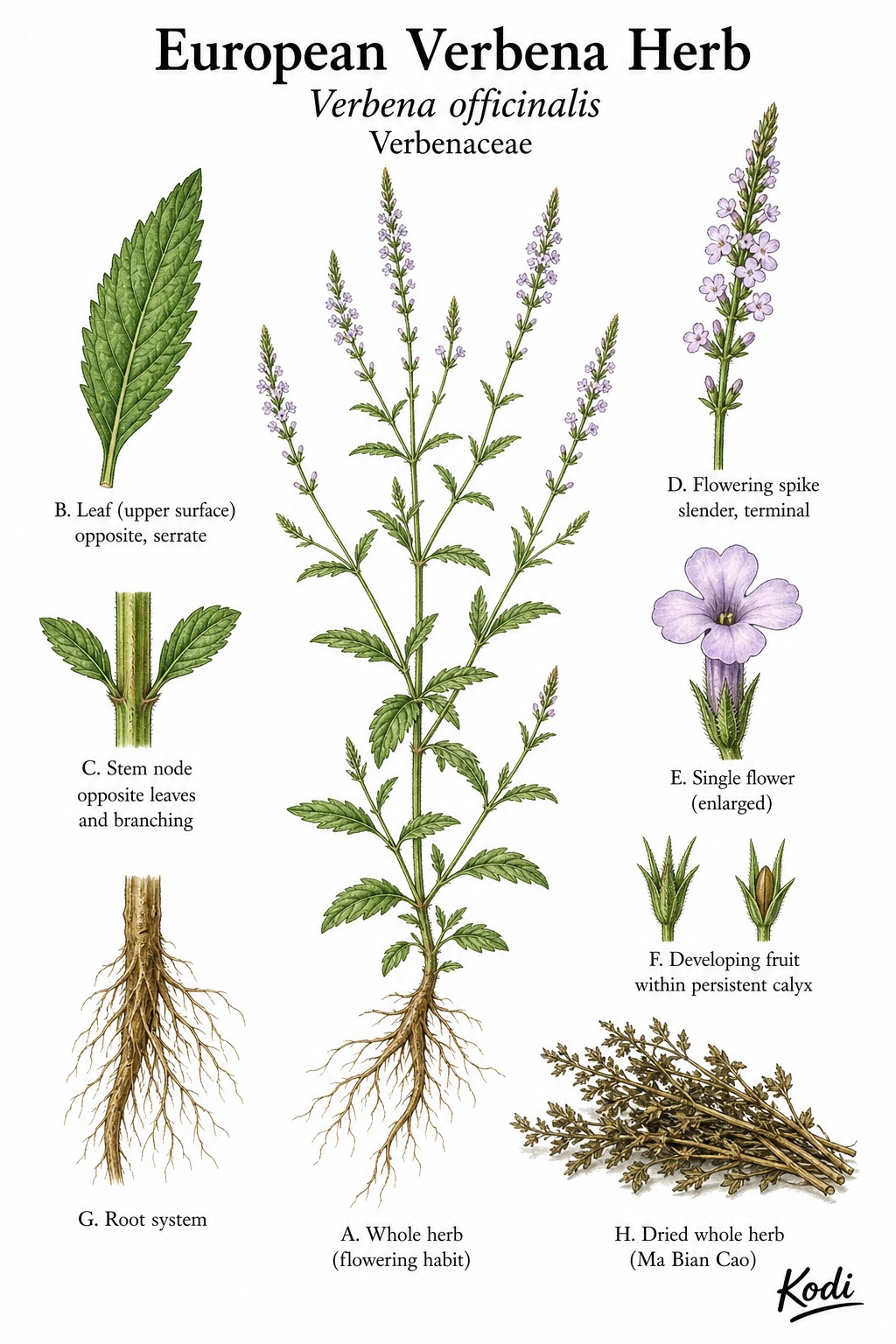
Known in TCM as Ma Bian Cao (马鞭草), this bitter and slightly acrid, slightly cold herb enters the Liver, Spleen, and Bladder. Traditionally, it invigorates blood and unblocks the menses - Ma Bian Cao is used for amenorrhea, dysmenorrhea, and abdominal masses when blood stasis and heat bind the lower burner, most often applied for amenorrhea, dysmenorrhea, and sore throat. Modern research has identified Iridoid among its active constituents.
Part used: Whole herb
Also Known As
Latin: Herba Verbenae | Pinyin: Ma Bian Cao | Chinese: 马鞭草
TCM Properties
- Taste
- bitter, slightly acrid
- Temperature
- slightly cold
- Channels
- Liver, Spleen, Bladder
Traditional Use
Primary Actions
- Invigorates blood and unblocks the menses - Ma Bian Cao is used for amenorrhea, dysmenorrhea, and abdominal masses when blood stasis and heat bind the lower burner.
- Clears heat and resolves toxicity - it is a traditional herb for severe sore throat, swollen gums, heat toxin accumulations, and some breast abscess patterns.
- Promotes urination and reduces edema - it is used when damp obstruction, swelling, or later-stage parasitic edema require a moving, draining herb.
Secondary Actions
- Ma Bian Cao is particularly valued when blood stasis and heat occur together, making it more appropriate than purely warming blood movers in some menstrual and inflammatory presentations.
- Fresh herb application and maceration are traditional routes for toxin or sore-type conditions, while the dried herb is more commonly decocted for menstrual and edema patterns.
Classic Formulas
- Menstrual stasis combinations may pair Ma Bian Cao with Dan Shen, Yi Mu Cao, Xiang Fu, or Yan Hu Suo for amenorrhea and painful periods.
- Heat-toxin and breast-abscess strategies combine it with Pu Gong Ying, Zi Hua Di Ding, or other toxin-resolving herbs.
- Edema and ascites formulas may pair Ma Bian Cao with Ban Bian Lian, Chuan Niu Xi, or Liu Ji Nu when dampness and obstruction predominate.
Classical References
- American Dragon and other TCM sources place Ma Bian Cao among blood-invigorating herbs while also emphasizing its heat-clearing and urination-promoting functions.
- Traditional notes specifically mention its usefulness when blood stasis is complicated by blood heat that dries and congeals the blood.
- Because it moves blood and drains, it is used cautiously in weak or pregnant patients.
Modern Research
Active Compounds
- Iridoid glycosides such as verbenalin and hastatoside - hallmark Verbena constituents
- Flavonoids - major anti-inflammatory and antioxidant phytochemicals
- Triterpenes and phenolic acids - supportive constituents in anti-inflammatory and immune studies
- Volatile and bitter principles - contributors to the herb's broader sensory and digestive profile
Studied Effects
- An experimental study found anticonvulsant, anxiolytic, and sedative activities in Verbena officinalis, supporting longstanding folk interest in the herb's calming actions (PMID 28066246).
- Leaf extract of Verbena officinalis showed anti-inflammatory activity in preclinical work, aligning with traditional heat-clearing and toxin-resolving logic (PMID 23196030).
- A 2023 study reported that bioactive constituents of Verbena officinalis reduced inflammation and enhanced natural killer cell killing efficiency in experimental systems (PMID 37108306).
PubMed References
Safety & Interactions
Contraindications
- Pregnancy
- Marked Spleen or Stomach deficiency without a clear excess, stasis, or heat component
- Heavy menstrual bleeding without underlying stasis
Cautions
- Ma Bian Cao moves blood and drains downward, so it is not an appropriate casual pregnancy herb.
- Its cold, bitter, and moving qualities may aggravate weak digestion in depleted patients.
- MSK page not found - drug interaction data not available from Memorial Sloan Kettering integrative medicine database
Drug Interactions
- Anticoagulants or antiplatelet drugs - theoretical additive bleeding risk
- Sedative medications - theoretical additive calming effect based on preclinical CNS data
Conditions
- Amenorrhea Traditional ★★★☆☆ JSON
- Dysmenorrhea Traditional ★★★☆☆ JSON
- Sore Throat Traditional ★★★☆☆ JSON
- Edema Traditional ★★☆☆☆ JSON
Frequently Asked Questions
What is European Verbena Herb used for?
European Verbena Herb is traditionally used to Invigorates blood and unblocks the menses - Ma Bian Cao is used for amenorrhea, dysmenorrhea, and abdominal masses when blood stasis and heat bind the lower burner., Clears heat and resolves toxicity - it is a traditional herb for severe sore throat, swollen gums, heat toxin accumulations, and some breast abscess patterns., Promotes urination and reduces edema - it is used when damp obstruction, swelling, or later-stage parasitic edema require a moving, draining herb.. Research has investigated its effects on: An experimental study found anticonvulsant, anxiolytic, and sedative activities in Verbena officinalis, supporting longstanding folk interest in the herb's calming actions (PMID 28066246).; Leaf extract of Verbena officinalis showed anti-inflammatory activity in preclinical work, aligning with traditional heat-clearing and toxin-resolving logic (PMID 23196030)..
What are other names for European Verbena Herb?
European Verbena Herb is also known as Verbena. In TCM: 马鞭草 (Ma Bian Cao); Herba Verbenae.
Is European Verbena Herb safe during pregnancy?
European Verbena Herb is not recommended during pregnancy. Ma Bian Cao moves blood and drains downward, so it is not an appropriate casual pregnancy herb.
What are the contraindications for European Verbena Herb?
European Verbena Herb should not be used in: Pregnancy; Marked Spleen or Stomach deficiency without a clear excess, stasis, or heat component; Heavy menstrual bleeding without underlying stasis. Consult a qualified healthcare provider before use.
Does European Verbena Herb interact with any medications?
European Verbena Herb may interact with: Anticoagulants or antiplatelet drugs - theoretical additive bleeding risk; Sedative medications - theoretical additive calming effect based on preclinical CNS data. Always inform your healthcare provider of any herbal supplements you are taking.