Eucalyptus Oil
- Chinese
- 桉油
- Pinyin
- An You
- Latin
- Oleum Eucalypti
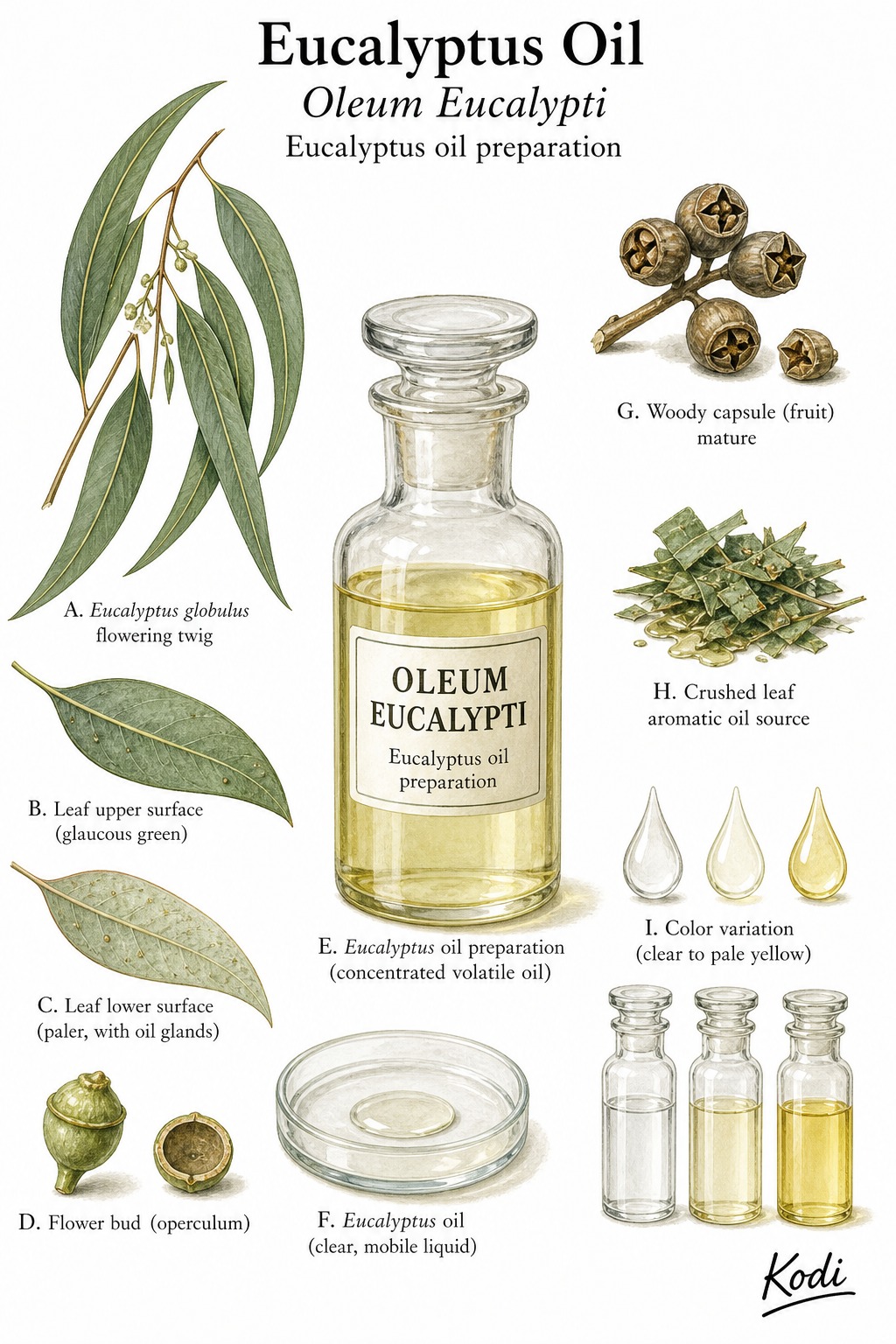
Known in TCM as An You (桉油), this acrid and slightly bitter, cool herb enters the Lung. Traditionally, it opens the airways and transforms phlegm - eucalyptus oil is used in modern integrative herbalism for chest congestion, productive cough, and heavy obstructive respiratory symptoms, most often applied for bronchitis, sinusitis, and asthma. Modern research has identified 1,8-cineole among its active constituents.
Part used: Oil
Also Known As
Latin: Oleum Eucalypti | Pinyin: An You | Chinese: 桉油
TCM Properties
- Taste
- acrid, slightly bitter
- Temperature
- cool
- Channels
- Lung
Traditional Use
Primary Actions
- Opens the airways and transforms phlegm - eucalyptus oil is used in modern integrative herbalism for chest congestion, productive cough, and heavy obstructive respiratory symptoms.
- Aromatically clears the nose and upper passages - inhaled preparations are used for sinus congestion, stale damp obstruction, and the sense of blocked breathing in the head and chest.
- Can be applied externally for muscular discomfort - diluted topical preparations are used for rubefacient, cooling, and counterirritant effects.
Secondary Actions
- Eucalyptus oil is a modern aromatic medicinal and does not belong to the classical Chinese materia medica canon in the same way as core TCM crude herbs.
- Standardized cineole products, vapor rubs, steam inhalations, and pure essential oil are not identical preparations and should not be treated as interchangeable.
Classic Formulas
- No major classical Shang Han Lun or Jin Gui Yao Lue formula includes eucalyptus oil because it entered East-West practice much later as a modern aromatic preparation.
- Its functional analogue in TCM is the family of aromatic opening and phlegm-transforming strategies rather than a single canonical decoction identity.
- Modern use is concentrated in inhalation blends, chest rubs, and diluted topical preparations rather than internal decoction formulas.
Classical References
- Eucalyptus oil is best understood as a modern integrative aromatic rather than as a classical Chinese single herb.
- Its TCM-style property assignment is inferential and based on modern use for Lung obstruction, phlegm, and aromatic opening.
- Because it is highly concentrated, essential-oil safety principles matter more than for ordinary dried plant decoctions.
Modern Research
Active Compounds
- 1,8-cineole (eucalyptol) - the dominant respiratory-active monoterpene in many standardized products
- Alpha-pinene - contributes aromatic and antimicrobial activity
- Limonene - a supportive volatile constituent found in some eucalyptus species
- Terpinenes and terpene alcohols - additional volatile fractions relevant to aroma and mucosal effects
Studied Effects
- A placebo-controlled double-blind trial found that cineole improved symptoms in adults with acute bronchitis, supporting the respiratory reputation of eucalyptus-derived products (PMID 24261680).
- Concomitant therapy with cineole reduced COPD exacerbations in a placebo-controlled trial, suggesting a meaningful adjunctive role in chronic obstructive airway disease management (PMID 19624838).
- A prospective pediatric study documented eucalyptus-oil-induced seizures in children, underlining that potent aromatic oils can be clinically dangerous when misused (PMID 33927923).
- Earlier poison exposure literature also described unintentional toxicity in young children, reinforcing the need for strict household safety (PMID 20084213).
PubMed References
- Efficacy of cineole in patients suffering from acute bronchitis: a placebo-controlled double-blind trial (2013)
- Concomitant therapy with Cineole (Eucalyptole) reduces exacerbations in COPD: a placebo-controlled double-blind trial (2009)
- Eucalyptus Oil-Induced Seizures in Children: A Single-Center Prospective Study (2021)
- Unintentional exposure of young children to camphor and eucalyptus oils (2001)
Safety & Interactions
Contraindications
- Internal use in infants or young children
- Known seizure disorder or history of fragrance-triggered neurologic symptoms
- Undiluted application near the face of babies or small children
- Oral self-dosing of essential oil without qualified guidance
Cautions
- Eucalyptus oil is far more hazardous when swallowed than many consumers assume and can cause vomiting, CNS depression, and seizures.
- Only diluted topical use is appropriate, and concentrated oils should be kept away from children.
- MSK page not found - drug interaction data not available from Memorial Sloan Kettering integrative medicine database
Drug Interactions
- Other concentrated inhaled or topical aromatics - additive irritant burden
- Medications that lower seizure threshold - theoretical additive risk in susceptible users
Conditions
- Bronchitis Research ★★★☆☆ JSON
- Sinusitis Research ★★☆☆☆ JSON
- Asthma Research ★☆☆☆☆ JSON
- Productive Cough Traditional ★★☆☆☆ JSON
Frequently Asked Questions
What is Eucalyptus Oil used for?
Eucalyptus Oil is traditionally used to Opens the airways and transforms phlegm - eucalyptus oil is used in modern integrative herbalism for chest congestion, productive cough, and heavy obstructive respiratory symptoms., Aromatically clears the nose and upper passages - inhaled preparations are used for sinus congestion, stale damp obstruction, and the sense of blocked breathing in the head and chest., Can be applied externally for muscular discomfort - diluted topical preparations are used for rubefacient, cooling, and counterirritant effects.. Research has investigated its effects on: A placebo-controlled double-blind trial found that cineole improved symptoms in adults with acute bronchitis, supporting the respiratory reputation of eucalyptus-derived products (PMID 24261680).; Concomitant therapy with cineole reduced COPD exacerbations in a placebo-controlled trial, suggesting a meaningful adjunctive role in chronic obstructive airway disease management (PMID 19624838)..
What are other names for Eucalyptus Oil?
Eucalyptus Oil is also known as Eucalypti. In TCM: 桉油 (An You); Oleum Eucalypti.
Is Eucalyptus Oil safe during pregnancy?
The safety of Eucalyptus Oil during pregnancy has not been established. Consult a qualified healthcare provider before use.
What are the contraindications for Eucalyptus Oil?
Eucalyptus Oil should not be used in: Internal use in infants or young children; Known seizure disorder or history of fragrance-triggered neurologic symptoms; Undiluted application near the face of babies or small children; Oral self-dosing of essential oil without qualified guidance. Consult a qualified healthcare provider before use.
Does Eucalyptus Oil interact with any medications?
Eucalyptus Oil may interact with: Other concentrated inhaled or topical aromatics - additive irritant burden; Medications that lower seizure threshold - theoretical additive risk in susceptible users. Always inform your healthcare provider of any herbal supplements you are taking.