Alcohol (Jiu)
- Chinese
- 酒
- Pinyin
- Jiu
- Latin
- Vinum
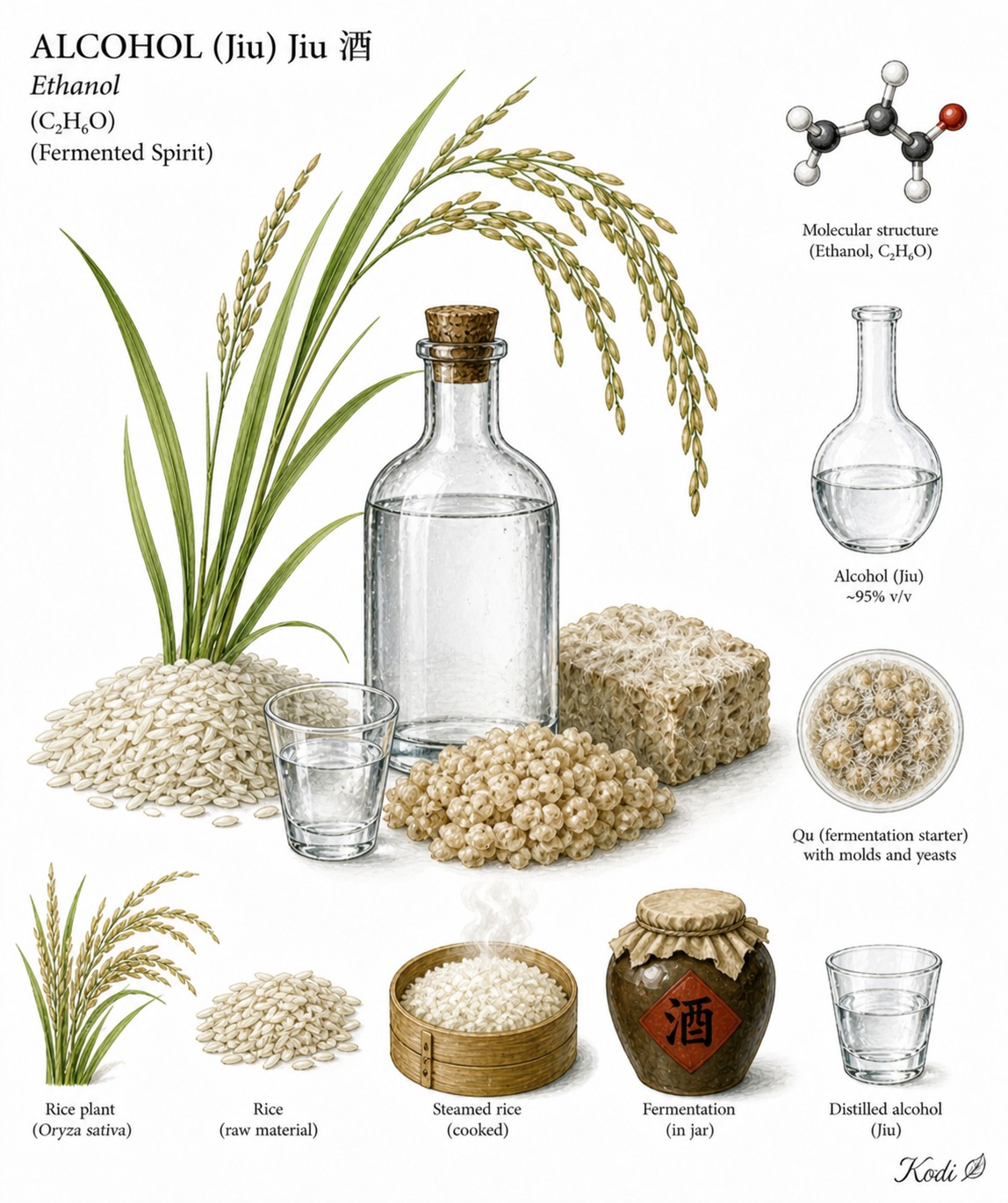
Known in TCM as Jiu (酒), this acrid and sweet and bitter, warm herb enters the Heart, Liver, Lung, and Stomach. Traditionally, it warms the channels and dispels cold - Jiu is classically used in small medicinal amounts to move cold from the channels and collaterals and to support formulas for cold-induced pain or traumatic stagnation, most often applied for traumatic injury, wind cold, and abdominal pain. Modern research has identified Ethanol among its active constituents.
Part used: Wine preparation
TCM Properties
- Taste
- acrid, sweet, bitter
- Temperature
- warm
- Channels
- Heart, Liver, Lung, Stomach
Traditional Use
Primary Actions
- Warms the channels and dispels cold - Jiu is classically used in small medicinal amounts to move cold from the channels and collaterals and to support formulas for cold-induced pain or traumatic stagnation.
- Invigorates blood and quickens circulation - medicinal wine is traditionally used to help open the vessels, improve the movement of blood and qi, and support recovery from bruising, pain, or blood stasis.
- Guides other herbs upward and outward - alcohol is often used as a processing or delivery medium because it is thought to mobilize and circulate the actions of a formula more rapidly than water alone.
Secondary Actions
- Traditional Jiu usually means grain alcohol or medicinal wine, not laboratory-grade pure ethanol, so modern product identity matters.
- In TCM, alcohol more often acts as a vehicle, extractor, or processing adjunct than as a stand-alone long-term tonic.
Classic Formulas
- Many classic medicated wine traditions use Jiu as a solvent for blood-invigorating, cold-dispelling, and trauma-supporting herbs rather than as the main active crude drug.
- Wine-processing methods for herbs such as Da Huang or Dang Gui reflect the long-standing belief that Jiu can redirect and mobilize herbal actions.
- Traditional trauma liniments and medicinal wines use alcohol to carry topical or internal formulas, especially when cold, pain, or blood stasis are central.
Classical References
- IMPORT NOTE: this catalog labels the entry as ethanol, but the traditional Chinese context is closer to medicinal wine or grain alcohol than to pure laboratory ethanol.
- Classical use is measured, formula-based, and contextual; it is not a blanket endorsement of recreational drinking.
- Traditional writings consistently frame Jiu as a warming mover that can both activate circulation and carry other substances through the channels.
Modern Research
Active Compounds
- Ethanol - the principal antiseptic and psychoactive compound
- Acetaldehyde - the major toxic metabolite relevant to carcinogenicity and organ injury
- Congener compounds in beverages - variable by product and relevant to tolerability and toxicity
- Hydroalcoholic solvent effects - part of why alcohol remains important in extraction and antiseptic formulations
Studied Effects
- Modern evidence strongly supports ethanol as a virucidal hand antiseptic and key infection-control ingredient, which is one of its clearest contemporary validated uses (PMID 35794648).
- A systematic review found that alcohol plays an indispensable role in effective skin antisepsis, including when combined with other antiseptic agents (PMID 22984485).
- A 2016 meta-analysis challenged the common belief that moderate alcohol consumption reliably lowers mortality, highlighting how confounding can distort apparent cardiovascular benefit claims (PMID 26997174).
- A review of alcoholic beverages emphasized that ethanol and acetaldehyde exposure contribute to carcinogenic risk, reinforcing that oral alcohol is not a benign wellness intervention (PMID 27353523).
PubMed References
- Ethanol is indispensable for virucidal hand antisepsis: memorandum from the alcohol-based hand rub (ABHR) Task Force, WHO Collaborating Centre on Patient Safety, and the Commission for Hospital Hygiene and Infection Prevention (KRINKO), Robert Koch Institute, Berlin, Germany (2022)
- The forgotten role of alcohol: a systematic review and meta-analysis of the clinical efficacy and perceived role of chlorhexidine in skin antisepsis (2012)
- Do "Moderate" Drinkers Have Reduced Mortality Risk? A Systematic Review and Meta-Analysis of Alcohol Consumption and All-Cause Mortality (2016)
- Carcinogenic compounds in alcoholic beverages: an update (2016)
Safety & Interactions
Contraindications
- Pregnancy and breastfeeding
- Alcohol use disorder or history of problematic alcohol use
- Liver disease, pancreatitis, or uncontrolled gastritis
- Concurrent use of medications that interact dangerously with alcohol
Cautions
- Traditional medicinal use of Jiu does not justify casual or high-volume drinking.
- Undiluted ethanol and beverage-strength medicinal wine are not interchangeable for internal use.
- Modern oral alcohol exposure carries clear risks involving injury, cancer, liver disease, and medication interactions.
Drug Interactions
- Sedatives, opioids, benzodiazepines, and many sleep medicines - additive CNS and respiratory depression
- Disulfiram or metronidazole-like reactions - potentially severe intolerance symptoms
- Acetaminophen and other hepatotoxic drugs - increased liver injury risk with repeated use
Conditions
- Traumatic Injury Traditional ★★★☆☆ JSON
- Wind Cold Traditional ★★☆☆☆ JSON
- Abdominal Pain Traditional ★★☆☆☆ JSON
- Amenorrhea Traditional ★★☆☆☆ JSON
Frequently Asked Questions
What is Alcohol (Jiu) used for?
Alcohol (Jiu) is traditionally used to Warms the channels and dispels cold - Jiu is classically used in small medicinal amounts to move cold from the channels and collaterals and to support formulas for cold-induced pain or traumatic stagnation., Invigorates blood and quickens circulation - medicinal wine is traditionally used to help open the vessels, improve the movement of blood and qi, and support recovery from bruising, pain, or blood stasis., Guides other herbs upward and outward - alcohol is often used as a processing or delivery medium because it is thought to mobilize and circulate the actions of a formula more rapidly than water alone.. Research has investigated its effects on: Modern evidence strongly supports ethanol as a virucidal hand antiseptic and key infection-control ingredient, which is one of its clearest contemporary validated uses (PMID 35794648).; A systematic review found that alcohol plays an indispensable role in effective skin antisepsis, including when combined with other antiseptic agents (PMID 22984485)..
Is Alcohol (Jiu) safe during pregnancy?
Alcohol (Jiu) is not recommended during pregnancy.
What are the contraindications for Alcohol (Jiu)?
Alcohol (Jiu) should not be used in: Pregnancy and breastfeeding; Alcohol use disorder or history of problematic alcohol use; Liver disease, pancreatitis, or uncontrolled gastritis; Concurrent use of medications that interact dangerously with alcohol. Consult a qualified healthcare provider before use.
Does Alcohol (Jiu) interact with any medications?
Alcohol (Jiu) may interact with: Sedatives, opioids, benzodiazepines, and many sleep medicines - additive CNS and respiratory depression; Disulfiram or metronidazole-like reactions - potentially severe intolerance symptoms; Acetaminophen and other hepatotoxic drugs - increased liver injury risk with repeated use. Always inform your healthcare provider of any herbal supplements you are taking.