Earthworm
- Chinese
- 地龙
- Pinyin
- Di Long
- Latin
- Pheretima
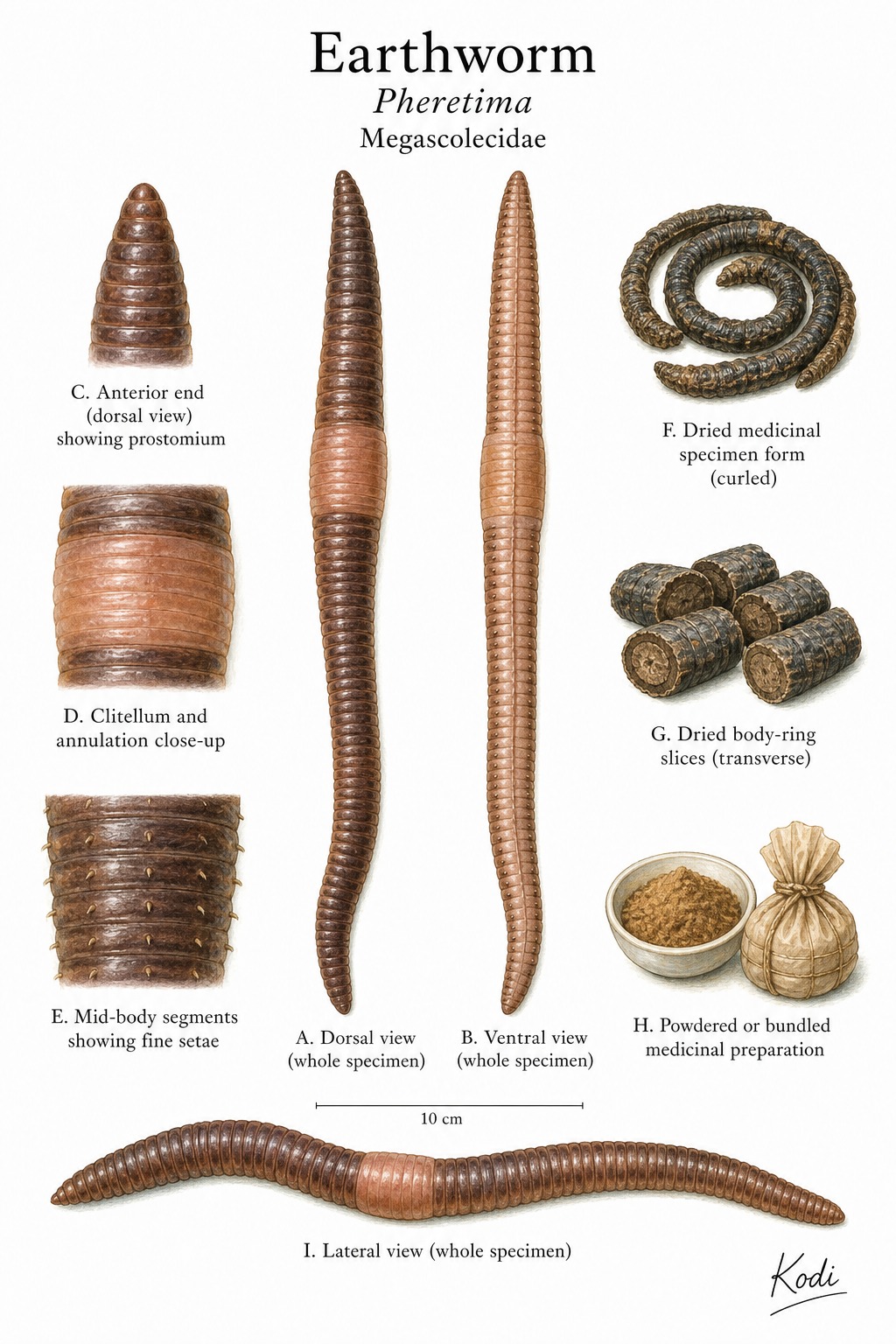
Known in TCM as Di Long (地龙), this salty, cold herb enters the Bladder, Liver, Lung, and Spleen. Traditionally, it clears heat and extinguishes internal wind - Di Long is classically used for high fever, spasms, convulsions, and heat-driven agitation in which internal wind has been stirred by replete heat, most often applied for stroke, asthma, and joint pain. Modern research has identified Lumbrokinase among its active constituents.
Also Known As
Latin: Pheretima | Pinyin: Di Long | Chinese: 地龙
TCM Properties
- Taste
- salty
- Temperature
- cold
- Channels
- Bladder, Liver, Lung, Spleen
Traditional Use
Primary Actions
- Clears heat and extinguishes internal wind - Di Long is classically used for high fever, spasms, convulsions, and heat-driven agitation in which internal wind has been stirred by replete heat.
- Unblocks channels and collaterals - it is a core animal medicine for hemiplegia, numbness, facial paralysis, red swollen painful obstruction, and post-stroke patterns where movement has been blocked by stasis and heat.
- Clears Lung heat and calms wheezing - traditional use extends to asthma, labored breathing, and stubborn wheeze when heat and obstruction bind the Lung.
- Promotes urination and reduces swelling - it can be added when bladder heat, edema, or difficult urination are part of the pattern.
Secondary Actions
- Di Long is prized for strong channel-opening action and is usually chosen when a formula needs something more penetrating than ordinary plant herbs.
- Modern extract products such as lumbrokinase are not interchangeable with crude TCM earthworm and should not be treated as simple equivalents.
Classic Formulas
- Bu Yang Huan Wu Tang - classic post-stroke formula in which Di Long helps reopen the channels and collaterals.
- Di Long with Gou Teng, Jiang Can, and Quan Xie - a traditional internal-wind combination for spasms, tremors, and convulsions.
- Di Long with Ma Huang and Xing Ren - a classic wheezing strategy for Lung heat with difficult breathing.
Classical References
- Shen Nong Ben Cao Jing and later materia medica preserve Di Long's reputation for treating heat, spasms, and channel obstruction.
- Traditional herbology links its animal, drilling, penetrating character to its ability to reach the collaterals and unblock what is stuck.
- Modern pharmacopoeias distinguish several official source species but preserve the same broad functional profile of clearing heat, stopping spasms, and opening the channels.
Modern Research
Active Compounds
- Lumbrokinase and related fibrinolytic enzymes - the best-known protein fraction associated with antithrombotic research
- Other fibrinolytic proteins and proteases - additional earthworm enzymes studied for clot-dissolving activity
- Nucleosides such as hypoxanthine, inosine, and related small molecules - important markers in earthworm quality-control work
- Peptides and amino acid-rich protein fractions - broader bioactive material investigated in anti-inflammatory and antifibrotic models
Studied Effects
- Oral Pheretima aspergillum improved neurologic recovery in a rat middle-cerebral-artery occlusion model, supporting ongoing interest in stroke and collateral-opening applications (PMID 24082328).
- Chinese medicine Di-Long from Pheretima vulgaris showed anti-rheumatoid-arthritis effects in preclinical work through NF-kB and chemotaxis-related pathways, aligning with traditional painful-obstruction use (PMID 35033948).
- A 2024 meta-analysis concluded that lumbrokinase may have adjunctive potential in acute ischemic stroke, but product standardization and trial quality remain important limitations (PMID 40933244).
PubMed References
- Effect of oral administration of Pheretima aspergillum (earthworm) in rats with cerebral infarction induced by middle-cerebral artery occlusion (2013)
- Therapeutic effects of Chinese medicine Di-Long (Pheretima vulgaris) on rheumatoid arthritis through inhibiting NF-kB activation and regulating Th1/Th2 balance (2022)
- Therapeutic Potential of Lumbrokinase in Acute Ischemic Stroke: A Meta-Analysis of Efficacy and Safety (2024)
- Heavy Metals and Probabilistic Risk Assessment via Pheretima (a Traditional Chinese Medicine) Consumption in China (2022)
Safety & Interactions
Contraindications
- Cold deficiency patterns without heat, wind, or obstruction
- Known allergy to animal-derived medicines
- Active bleeding disorders without close supervision
Cautions
- Di Long extracts and lumbrokinase-type products may affect coagulation and should be treated more cautiously than the herb's traditional reputation alone might suggest.
- Commercial Pheretima products can face quality and contamination issues, including documented heavy-metal concerns in some market samples.
- MSK page not found - drug interaction data not available from Memorial Sloan Kettering integrative medicine database
Drug Interactions
- Anticoagulants or antiplatelet drugs - theoretical additive bleeding risk
- Fibrinolytic or thrombolytic medications - theoretical additive clot-dissolving effect
Conditions
Frequently Asked Questions
What is Earthworm used for?
Earthworm is traditionally used to Clears heat and extinguishes internal wind - Di Long is classically used for high fever, spasms, convulsions, and heat-driven agitation in which internal wind has been stirred by replete heat., Unblocks channels and collaterals - it is a core animal medicine for hemiplegia, numbness, facial paralysis, red swollen painful obstruction, and post-stroke patterns where movement has been blocked by stasis and heat., Clears Lung heat and calms wheezing - traditional use extends to asthma, labored breathing, and stubborn wheeze when heat and obstruction bind the Lung., Promotes urination and reduces swelling - it can be added when bladder heat, edema, or difficult urination are part of the pattern.. Research has investigated its effects on: Oral Pheretima aspergillum improved neurologic recovery in a rat middle-cerebral-artery occlusion model, supporting ongoing interest in stroke and collateral-opening applications (PMID 24082328).; Chinese medicine Di-Long from Pheretima vulgaris showed anti-rheumatoid-arthritis effects in preclinical work through NF-kB and chemotaxis-related pathways, aligning with traditional painful-obstruction use (PMID 35033948)..
What are other names for Earthworm?
Earthworm is also known as Pheretima. In TCM: 地龙 (Di Long); Pheretima.
Is Earthworm safe during pregnancy?
The safety of Earthworm during pregnancy has not been established. Consult a qualified healthcare provider before use.
What are the contraindications for Earthworm?
Earthworm should not be used in: Cold deficiency patterns without heat, wind, or obstruction; Known allergy to animal-derived medicines; Active bleeding disorders without close supervision. Consult a qualified healthcare provider before use.
Does Earthworm interact with any medications?
Earthworm may interact with: Anticoagulants or antiplatelet drugs - theoretical additive bleeding risk; Fibrinolytic or thrombolytic medications - theoretical additive clot-dissolving effect. Always inform your healthcare provider of any herbal supplements you are taking.