Dried Ginger
- Chinese
- 干姜
- Pinyin
- Gan Jiang
- Latin
- Rhizoma Zingiberis
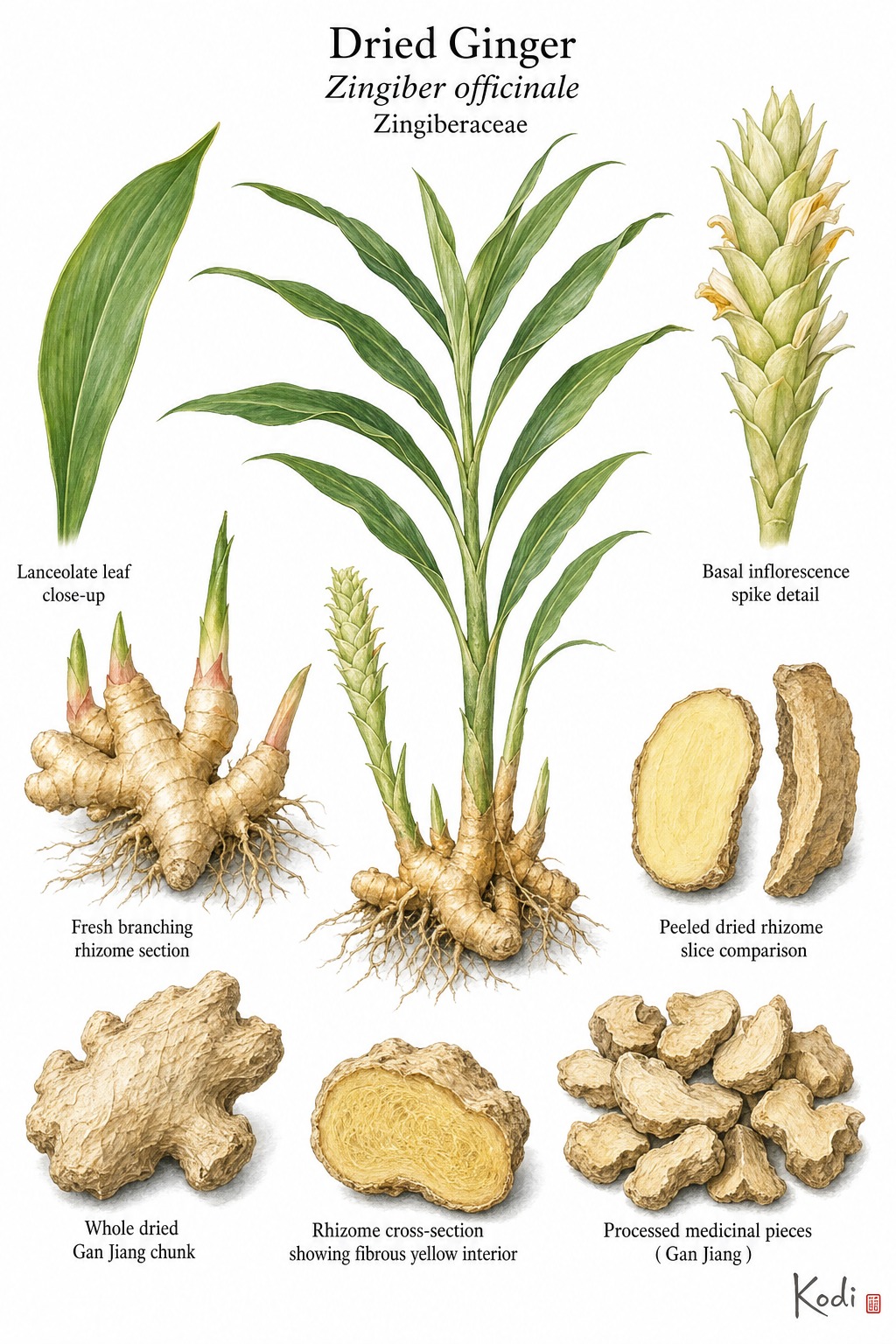
Known in TCM as Gan Jiang (干姜), this acrid, hot herb enters the Spleen, Stomach, Heart, Lung, and Kidney. Traditionally, it warms the middle and dispels interior cold - Gan Jiang is a major herb for abdominal pain, vomiting, diarrhea, and weak digestion when cold impairs Spleen-Stomach function, most often applied for abdominal pain, diarrhea, and cough. Modern research has identified 6-Gingerol among its active constituents.
Part used: Rhizome
Also Known As
Latin: Rhizoma Zingiberis | Pinyin: Gan Jiang | Chinese: 干姜
TCM Properties
- Taste
- acrid
- Temperature
- hot
- Channels
- Spleen, Stomach, Heart, Lung, Kidney
Traditional Use
Primary Actions
- Warms the middle and dispels interior cold - Gan Jiang is a major herb for abdominal pain, vomiting, diarrhea, and weak digestion when cold impairs Spleen-Stomach function.
- Rescues devastated Yang and restores the pulse - in severe deficiency-cold patterns it is combined with stronger agents such as Fu Zi to revive depleted Yang.
- Warms the Lung and transforms thin mucus - traditional use extends to cold-phlegm cough, clear copious sputum, and chronic Lung cold.
Secondary Actions
- Compared with fresh ginger, Gan Jiang is hotter, drier, and more focused on internal warming rather than on releasing the exterior.
- Its processing concentrates a deeper middle-jiao and Yang-restoring action, which is why it appears in both digestive and collapse-rescue formulas.
Classic Formulas
- Li Zhong Wan - classic formula for middle-jiao deficiency-cold with abdominal pain, diarrhea, and poor appetite in which Gan Jiang is the warming core.
- Si Ni Tang - Gan Jiang works with Fu Zi and Zhi Gan Cao to rescue devastated Yang in severe cold-collapse patterns.
- Xiao Qing Long Tang - includes Gan Jiang to warm the Lung and help transform cold fluids behind cough and wheezing.
Classical References
- Traditional materia medica describe Gan Jiang as acrid and hot, entering the Spleen, Stomach, Heart, and Lung to warm the interior and restore Yang.
- Its core identity is internal warming: middle-burner cold, devastated Yang, and cold-phlegm Lung patterns are the main classical uses.
Modern Research
Active Compounds
- 6-Gingerol - a major pungent phenolic associated more strongly with fresh ginger but still relevant to the dried rhizome chemistry
- 6-Shogaol - a dehydration product enriched by drying and heating, strongly associated with Gan Jiang's hotter pharmacologic profile
- Zingerone and related phenolic compounds - supportive pungent constituents
- Sesquiterpene volatile oils such as zingiberene - important aromatic compounds in ginger rhizome
Studied Effects
- A 2024 review on quality markers and safety emphasized that drying and processing alter ginger chemistry and enrich shogaol-type constituents relevant to dried ginger's hotter medicinal profile (PMID 41508197).
- Recent systematic review work found that ginger supplementation can improve several cardiovascular biomarkers, supporting broad anti-inflammatory and metabolic interest even though most studies are not Gan Jiang-specific (PMID 41195902).
- Experimental work on dried ginger constituents demonstrated anti-inflammatory effects in lipopolysaccharide-stimulated macrophages and animal models, supporting the herb's broader modern pharmacologic relevance beyond digestive use (PMID 23935687).
PubMed References
- Quality assessment of commercial dried ginger: an in-depth analysis of phytochemical composition, quality markers, and safety aspects (2024)
- Ginger (Zingiber Officinale) Supplementation and Biomarkers of Cardiovascular Disease - A Systematic Review and Meta-Analysis of Randomized Controlled Trials (2024)
- Anti-inflammatory effect of constituents isolated from Rhizome of Zingiber officinale (2013)
Safety & Interactions
Contraindications
- Excess heat or Yin deficiency heat patterns
- Bleeding from blood heat
- Dry cough from heat or fluid depletion
Cautions
- Gan Jiang is much hotter than culinary ginger and should not be assumed to be interchangeable with casual food use.
- Its drying warmth can aggravate thirst, constipation, or irritative heat symptoms if used without a true cold pattern.
Drug Interactions
- Blood thinners or antiplatelet drugs - concentrated ginger preparations may increase bleeding tendency.
- Diabetes medications - ginger extracts may modestly enhance glucose-lowering effects in some users.
Classic formulas that use Dried Ginger
Herbs are rarely taken alone in Chinese medicine. These formula pages show what this herb does inside a classic prescription and which pattern that prescription is chosen for.
Conditions
- Abdominal Pain Traditional ★★★★☆ JSON
- Diarrhea Traditional ★★★★☆ JSON
- Cough Traditional ★★★☆☆ JSON
- Poor Appetite Traditional ★★★☆☆ JSON
Frequently Asked Questions
What is Dried Ginger used for?
Dried Ginger is traditionally used to Warms the middle and dispels interior cold - Gan Jiang is a major herb for abdominal pain, vomiting, diarrhea, and weak digestion when cold impairs Spleen-Stomach function., Rescues devastated Yang and restores the pulse - in severe deficiency-cold patterns it is combined with stronger agents such as Fu Zi to revive depleted Yang., Warms the Lung and transforms thin mucus - traditional use extends to cold-phlegm cough, clear copious sputum, and chronic Lung cold.. Research has investigated its effects on: A 2024 review on quality markers and safety emphasized that drying and processing alter ginger chemistry and enrich shogaol-type constituents relevant to dried ginger's hotter medicinal profile (PMID 41508197).; Recent systematic review work found that ginger supplementation can improve several cardiovascular biomarkers, supporting broad anti-inflammatory and metabolic interest even though most studies are not Gan Jiang-specific (PMID 41195902)..
What are other names for Dried Ginger?
Dried Ginger is also known as Zingiberis. In TCM: 干姜 (Gan Jiang); Rhizoma Zingiberis.
Is Dried Ginger safe during pregnancy?
The safety of Dried Ginger during pregnancy has not been established. Consult a qualified healthcare provider before use.
What are the contraindications for Dried Ginger?
Dried Ginger should not be used in: Excess heat or Yin deficiency heat patterns; Bleeding from blood heat; Dry cough from heat or fluid depletion. Consult a qualified healthcare provider before use.
Does Dried Ginger interact with any medications?
Dried Ginger may interact with: Blood thinners or antiplatelet drugs - concentrated ginger preparations may increase bleeding tendency.; Diabetes medications - ginger extracts may modestly enhance glucose-lowering effects in some users.. Always inform your healthcare provider of any herbal supplements you are taking.