Digitalis Leaf
- Chinese
- 洋地黄叶
- Pinyin
- Yang Di Huang Ye
- Latin
- Folium Digitalis
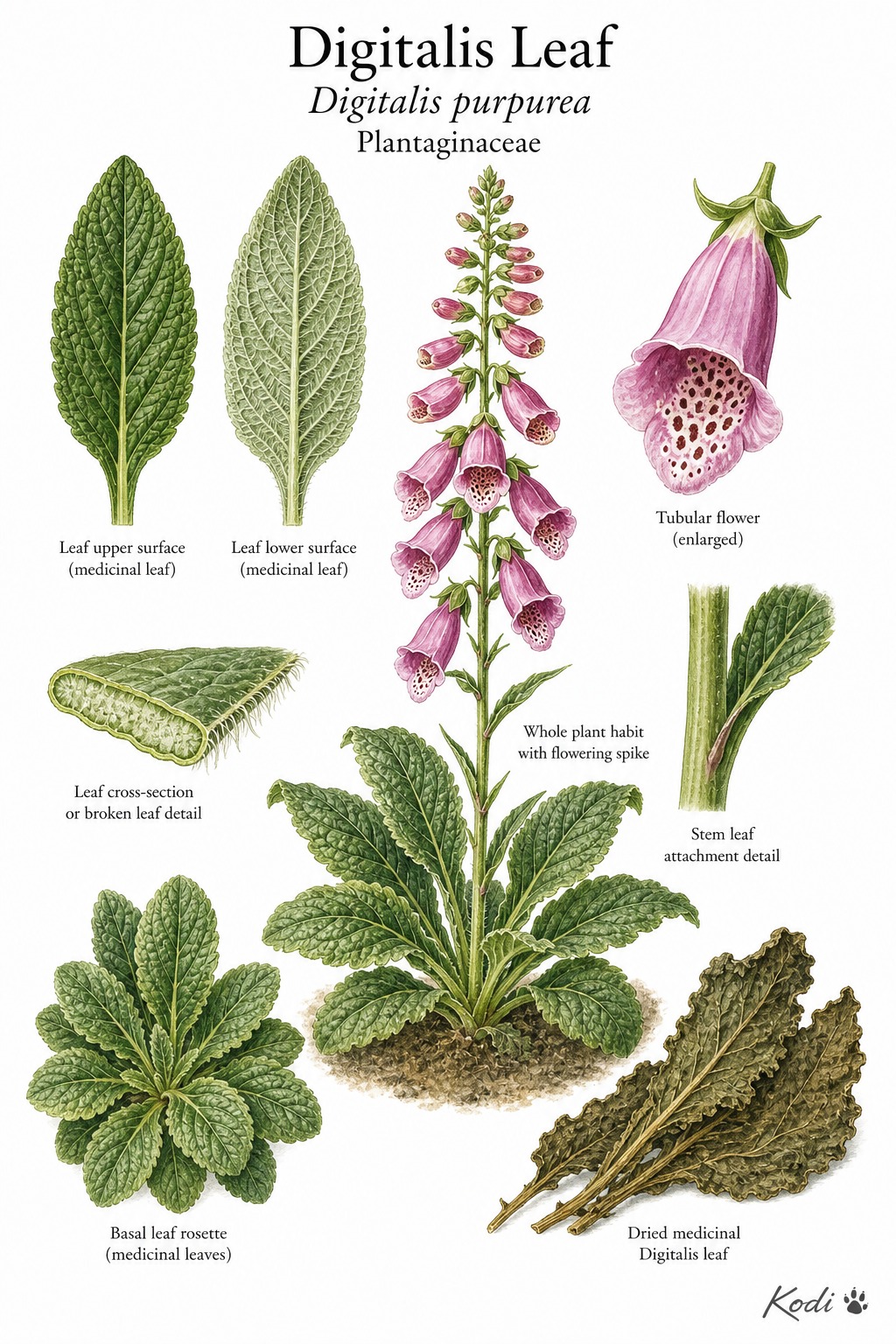
Known in TCM as Yang Di Huang Ye (洋地黄叶), this bitter herb enters the Heart. Traditionally, it acts as a historical source of potent cardiac glycosides - Digitalis leaf was used in Western and later modern pharmacologic practice to increase cardiac contractility and help control certain arrhythmias, but it is not a classical self-prescribed Chinese materia medica herb, most often applied for cardiovascular disease, edema, and palpitations. Modern research has identified Digitoxin among its active constituents.
Part used: Leaf
Also Known As
Latin: Folium Digitalis | Pinyin: Yang Di Huang Ye | Chinese: 洋地黄叶
TCM Properties
- Taste
- bitter
- Channels
- Heart
Traditional Use
Primary Actions
- Acts as a historical source of potent cardiac glycosides - Digitalis leaf was used in Western and later modern pharmacologic practice to increase cardiac contractility and help control certain arrhythmias, but it is not a classical self-prescribed Chinese materia medica herb.
- Improves edema only indirectly through cardiac support - the leaf's historical role in dropsy and fluid retention depended on its cardiotonic effect rather than on a traditional diuretic mechanism.
- Demands exact dosing and medical supervision - crude-leaf use fell out of favor because the therapeutic window is extremely narrow and toxicity can be life-threatening.
Secondary Actions
- Modern practice uses purified or standardized cardiac glycosides rather than home-prepared leaf because batch variability makes crude Digitalis too dangerous for routine self-use.
- This record should be read as historical and toxicologic documentation, not as an endorsement of herbal self-treatment.
Classical References
- Digitalis is not a classical ben cao herb; it entered modern medicinal use through European cardiology and later pharmacology texts rather than through the traditional Chinese canon.
- William Withering's work on foxglove established the historic medical role of Digitalis leaf, but modern medicine progressively replaced crude-leaf use with standardized preparations because of serious toxicity risk.
Modern Research
Active Compounds
- Digitoxin - a classic cardenolide from Digitalis leaves with potent inotropic and toxic effects
- Gitoxin - another cardiac glycoside contributing to historical leaf activity
- Lanatosides - precursor glycosides, especially associated with Digitalis lanata and later digoxin production
- Related cardenolides and aglycones - the broader family responsible for both therapeutic and poisoning effects
Studied Effects
- A pharmacology review summarized the molecular and clinical pharmacology of digitalis, including its historical role in heart failure treatment and the manifestations and management of toxicity, but this literature supports standardized drugs rather than crude-leaf herbal use (PMID 10069797).
- A dedicated toxicity review emphasized that drug interactions are a common cause of digitalis poisoning, especially when conduction-slowing drugs or electrolyte disturbances are present (PMID 2646855).
- Modern toxicology case literature continues to show that accidental foxglove ingestion can cause severe or fatal cardiac glycoside poisoning, reinforcing why crude Digitalis leaf belongs in a high-risk category (PMID 28463019).
PubMed References
Safety & Interactions
Contraindications
- Any unsupervised self-medication
- Known bradyarrhythmia, advanced heart block, or unstable ventricular rhythm without specialist oversight
- Hypokalemia, hypomagnesemia, or significant renal impairment
- Pregnancy
Cautions
- All parts of the foxglove plant are toxic, and dried leaf remains dangerous despite processing.
- Modern therapeutic use belongs to standardized prescription glycosides, not crude herbal preparations.
- Visual disturbance, nausea, vomiting, confusion, bradycardia, and arrhythmia are classic toxicity warnings that require urgent medical attention.
Drug Interactions
- Loop or thiazide diuretics and other potassium-depleting therapies - electrolyte loss increases digitalis toxicity risk.
- Verapamil, amiodarone, quinidine, and other conduction-slowing or interacting cardiovascular drugs - may raise toxicity risk or worsen rhythm disturbances.
- Other cardiac glycosides or unmonitored stimulant-laxative use - additive cardiotoxic or electrolyte-mediated danger.
Conditions
- Cardiovascular Disease Clinical ★★☆☆☆ JSON
- Edema Clinical ★★☆☆☆ JSON
- Palpitations Clinical ★☆☆☆☆ JSON
Frequently Asked Questions
What is Digitalis Leaf used for?
Digitalis Leaf is traditionally used to Acts as a historical source of potent cardiac glycosides - Digitalis leaf was used in Western and later modern pharmacologic practice to increase cardiac contractility and help control certain arrhythmias, but it is not a classical self-prescribed Chinese materia medica herb., Improves edema only indirectly through cardiac support - the leaf's historical role in dropsy and fluid retention depended on its cardiotonic effect rather than on a traditional diuretic mechanism., Demands exact dosing and medical supervision - crude-leaf use fell out of favor because the therapeutic window is extremely narrow and toxicity can be life-threatening.. Research has investigated its effects on: A pharmacology review summarized the molecular and clinical pharmacology of digitalis, including its historical role in heart failure treatment and the manifestations and management of toxicity, but this literature supports standardized drugs rather than crude-leaf herbal use (PMID 10069797).; A dedicated toxicity review emphasized that drug interactions are a common cause of digitalis poisoning, especially when conduction-slowing drugs or electrolyte disturbances are present (PMID 2646855)..
What are other names for Digitalis Leaf?
Digitalis Leaf is also known as Digitalis. In TCM: 洋地黄叶 (Yang Di Huang Ye); Folium Digitalis.
Is Digitalis Leaf safe during pregnancy?
Digitalis Leaf is not recommended during pregnancy.
What are the contraindications for Digitalis Leaf?
Digitalis Leaf should not be used in: Any unsupervised self-medication; Known bradyarrhythmia, advanced heart block, or unstable ventricular rhythm without specialist oversight; Hypokalemia, hypomagnesemia, or significant renal impairment; Pregnancy. Consult a qualified healthcare provider before use.
Does Digitalis Leaf interact with any medications?
Digitalis Leaf may interact with: Loop or thiazide diuretics and other potassium-depleting therapies - electrolyte loss increases digitalis toxicity risk.; Verapamil, amiodarone, quinidine, and other conduction-slowing or interacting cardiovascular drugs - may raise toxicity risk or worsen rhythm disturbances.; Other cardiac glycosides or unmonitored stimulant-laxative use - additive cardiotoxic or electrolyte-mediated danger.. Always inform your healthcare provider of any herbal supplements you are taking.