Difengpi Bark
- Chinese
- 地枫皮
- Pinyin
- Di Feng Pi
- Latin
- Cortex Illicii
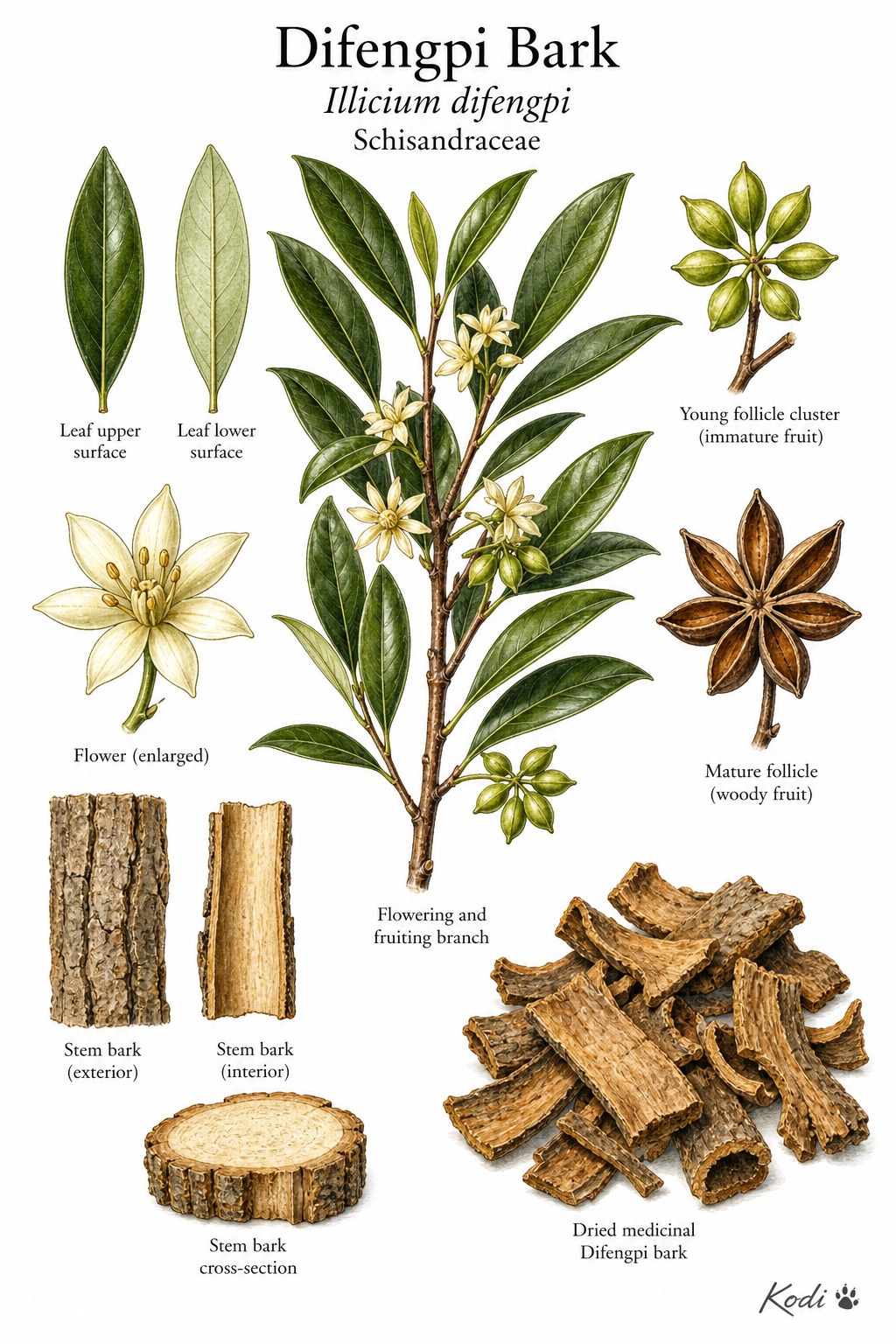
Known in TCM as Di Feng Pi (地枫皮), this acrid and astringent, warm herb enters the Bladder and Kidney. Traditionally, it dispels wind and eliminates dampness - Di Feng Pi is used for rheumatic pain, difficult joint movement, and chronic painful obstruction with a cold-damp component, most often applied for rheumatism, joint pain, and low back pain. Modern research has identified Safrole among its active constituents.
Part used: Bark
Also Known As
Latin: Cortex Illicii | Pinyin: Di Feng Pi | Chinese: 地枫皮
TCM Properties
- Taste
- acrid, astringent
- Temperature
- warm
- Channels
- Bladder, Kidney
Traditional Use
Primary Actions
- Dispels wind and eliminates dampness - Di Feng Pi is used for rheumatic pain, difficult joint movement, and chronic painful obstruction with a cold-damp component.
- Promotes qi movement and alleviates pain - traditional use focuses especially on low back pain and strain-type soreness that worsen with exertion and weather.
- Supports chronic wind-damp weakness rather than acute hot inflammation - this is a warming, slightly toxic bark chosen for stubborn cold-bi presentations.
Secondary Actions
- Its traditional role is narrower than broader wind-damp herbs such as Du Huo or Qin Jiao because Di Feng Pi carries a slightly toxic reputation and is usually used more selectively.
- The herb is particularly associated with the lower back and lower limbs in regional materia medica traditions.
Classic Formulas
- Di Feng Pi with Du Huo, Sang Ji Sheng, and Niu Xi - common cold-damp arthralgia logic when weakness and lumbago are prominent.
- Regional rheumatism formulas using Di Feng Pi as a warming specialist for stubborn low-back and joint pain.
Classical References
- TCM Wiki describes Di Feng Pi as slightly pungent, astringent, warm, and slightly toxic, entering the Bladder and Kidney channels, with actions of dispelling wind, eliminating dampness, promoting qi circulation, and alleviating pain.
- Traditional indications center on rheumatic arthritis and lumbago caused by overexertion or chronic wind-damp obstruction.
Modern Research
Active Compounds
- Safrole - a major essential-oil component identified in Illicium difengpi bark and relevant to both bioactivity and toxicity interpretation
- Linalool - another major volatile constituent with anti-inflammatory and analgesic relevance in broader phytochemical literature
- Lignans and neolignans - stem-bark constituents studied for nitric-oxide-inhibitory and anti-inflammatory effects
- Triterpenoids - secondary metabolites investigated in cell models related to inflammatory signaling
Studied Effects
- Modern chemistry studies confirm that Illicium difengpi bark contains volatile oils and lignan-rich fractions, which helps explain ongoing interest in its anti-inflammatory traditional use.
- Published experimental work on Illicium difengpi compounds shows nitric-oxide-inhibitory and anti-inflammatory activity in cell models, but herb-specific clinical evidence remains sparse.
- An indexed essential-oil study identified safrole, linalool, and germacrene D as major components, reinforcing the need to weigh both bioactivity and toxicity when interpreting the herb (PMID 22236213).
PubMed References
Safety & Interactions
Contraindications
- Heat-type painful obstruction without cold-damp features
- Pregnancy or actively trying to conceive without supervision
- Unverified source material or likely substitution
Cautions
- Di Feng Pi is traditionally regarded as slightly toxic, and modern chemistry identifies safrole-containing volatile fractions that support conservative dosing and sourcing.
- Because wild resources are limited and substitution risk is real, authenticated supply is especially important.
- Direct clinical evidence is sparse compared with the amount of traditional reputation.
Conditions
- Rheumatism Traditional ★★★★☆ JSON
- Joint Pain Traditional ★★★☆☆ JSON
- Low Back Pain Traditional ★★★★☆ JSON
Frequently Asked Questions
What is Difengpi Bark used for?
Difengpi Bark is traditionally used to Dispels wind and eliminates dampness - Di Feng Pi is used for rheumatic pain, difficult joint movement, and chronic painful obstruction with a cold-damp component., Promotes qi movement and alleviates pain - traditional use focuses especially on low back pain and strain-type soreness that worsen with exertion and weather., Supports chronic wind-damp weakness rather than acute hot inflammation - this is a warming, slightly toxic bark chosen for stubborn cold-bi presentations.. Research has investigated its effects on: Modern chemistry studies confirm that Illicium difengpi bark contains volatile oils and lignan-rich fractions, which helps explain ongoing interest in its anti-inflammatory traditional use.; Published experimental work on Illicium difengpi compounds shows nitric-oxide-inhibitory and anti-inflammatory activity in cell models, but herb-specific clinical evidence remains sparse..
What are other names for Difengpi Bark?
Difengpi Bark is also known as Illicium. In TCM: 地枫皮 (Di Feng Pi); Cortex Illicii.
Is Difengpi Bark safe during pregnancy?
Difengpi Bark is not recommended during pregnancy.
What are the contraindications for Difengpi Bark?
Difengpi Bark should not be used in: Heat-type painful obstruction without cold-damp features; Pregnancy or actively trying to conceive without supervision; Unverified source material or likely substitution. Consult a qualified healthcare provider before use.