Dahurian Angelica Root
- Chinese
- 白芷
- Pinyin
- Bai Zhi
- Latin
- Radix Angelicae Dahuricae
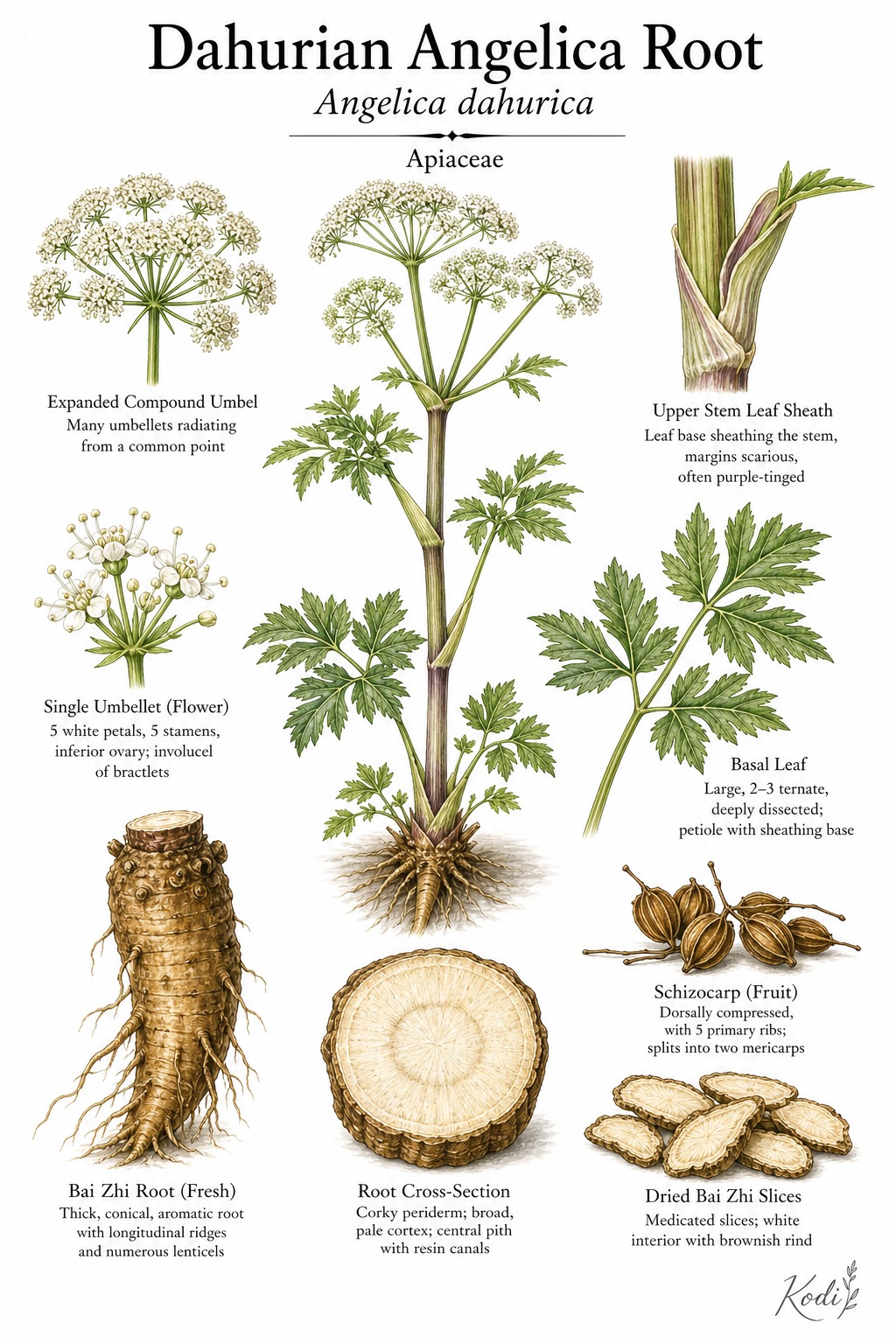
Known in TCM as Bai Zhi (白芷), this acrid, warm herb enters the Lung, Stomach, and Large Intestine. Traditionally, it expels wind and releases the exterior - Bai Zhi is used for wind-cold headache, body discomfort, and early-stage exterior patterns, especially when frontal pain is prominent, most often applied for headache, sinusitis, and toothache. Modern research has identified Imperatorin among its active constituents.
Part used: Root
Also Known As
Latin: Radix Angelicae Dahuricae | Pinyin: Bai Zhi | Chinese: 白芷
TCM Properties
- Taste
- acrid
- Temperature
- warm
- Channels
- Lung, Stomach, Large Intestine
Traditional Use
Primary Actions
- Expels wind and releases the exterior - Bai Zhi is used for wind-cold headache, body discomfort, and early-stage exterior patterns, especially when frontal pain is prominent.
- Alleviates pain and opens the nasal passages - it is a classic herb for Yangming-channel headache, sinus congestion, rhinitis, and toothache centered in the forehead, nose, and gums.
- Dries dampness and stops leukorrhea - its warm, aromatic, drying nature is applied to damp-related vaginal discharge patterns.
- Reduces swelling and promotes discharge of pus - Bai Zhi is used for early sores, abscesses, and skin conditions where it helps open, vent, and move stagnation.
Secondary Actions
- Bai Zhi is especially associated with the face, sinuses, gums, and frontal head, which explains why it shows up so often in headache and nasal formulas.
- Because it is warm, fragrant, and drying, it is best matched to obstructive wind-cold or damp patterns rather than to true yin-deficient heat and dryness.
Classic Formulas
- Jiu Wei Qiang Huo Tang - Bai Zhi helps release wind-cold and specifically addresses frontal headache in this classic exterior-dispelling formula.
- Bai Zhi with Cang Er Zi and Xin Yi - the standard nasal-opening combination for chronic congestion, sinus blockage, and headache behind the brow line.
- Bai Zhi with Huang Bai, Bai Zhu, and Shan Yao - a traditional damp-drying and discharge-controlling strategy for leukorrhea.
Classical References
- Traditional texts describe Bai Zhi as acrid and warm, entering the Lung, Stomach, and Large Intestine to release the exterior, relieve pain, unblock the nose, and dry dampness.
- Because it enters the Yangming channels of the face, Bai Zhi is one of the most characteristic herbs for frontal headache, supraorbital pain, gum swelling, and toothache.
- Older cautions consistently note that Bai Zhi's warm and drying fragrance is unsuitable for blood heat and yin-deficient dryness.
Modern Research
Active Compounds
- Imperatorin - a major furanocoumarin investigated for analgesic and anti-inflammatory activity
- Isoimperatorin - another characteristic coumarin of Bai Zhi
- Oxypeucedanin and byakangelicin - marker coumarins used in phytochemical and quality studies
- Volatile oils and scopoletin-related phenolics - supportive constituents contributing to fragrance and pharmacology
Studied Effects
- A comprehensive 2022 review summarized Bai Zhi's traditional uses, phytochemistry, and pharmacology and highlighted substantial anti-inflammatory, analgesic, antimicrobial, and dermatologic research around the root (PMID 35847034).
- An experimental study found that Angelica dahurica extract attenuated inflammatory pain in mice through TRPV1-related mechanisms, which fits the herb's long-standing use for headache and facial pain (PMID 35656472).
- In diabetic mice, Angelica dahurica promoted angiogenesis and accelerated wound healing through HIF-1alpha and PDGF-beta signaling, supporting the traditional use of Bai Zhi for sores and damaged tissue (PMID 32853721).
PubMed References
- The Angelica dahurica: A Review of Traditional Uses, Phytochemistry and Pharmacology (2022)
- Angelica dahurica Extracts Attenuate CFA-Induced Inflammatory Pain via TRPV1 in Mice (2022)
- Angelica dahurica promoted angiogenesis and accelerated wound healing in db/db mice via the HIF-1alpha/PDGF-beta signaling pathway (2020)
Safety & Interactions
Contraindications
- Yin deficiency with heat
- Headache from rising Liver Yang rather than exterior wind or damp obstruction
- Marked dryness without dampness or obstruction
Cautions
- Bai Zhi is warm and drying and may aggravate dryness, heat signs, or depletion if used without a clear wind-cold or damp pattern.
- Because Bai Zhi contains coumarin-rich constituents, concentrated extracts may increase photosensitivity in susceptible users even though ordinary decoction use is usually well tolerated.
- MSK page not found - drug interaction data not available from Memorial Sloan Kettering integrative medicine database
Classic formulas that use Dahurian Angelica Root
Herbs are rarely taken alone in Chinese medicine. These formula pages show what this herb does inside a classic prescription and which pattern that prescription is chosen for.
Conditions
- Headache Traditional ★★★★☆ JSON
- Sinusitis Traditional ★★★★☆ JSON
- Toothache Traditional ★★★★☆ JSON
- Common Cold Traditional ★★★☆☆ JSON
- Leukorrhea Traditional ★★☆☆☆ JSON
Frequently Asked Questions
What is Dahurian Angelica Root used for?
Dahurian Angelica Root is traditionally used to Expels wind and releases the exterior - Bai Zhi is used for wind-cold headache, body discomfort, and early-stage exterior patterns, especially when frontal pain is prominent., Alleviates pain and opens the nasal passages - it is a classic herb for Yangming-channel headache, sinus congestion, rhinitis, and toothache centered in the forehead, nose, and gums., Dries dampness and stops leukorrhea - its warm, aromatic, drying nature is applied to damp-related vaginal discharge patterns., Reduces swelling and promotes discharge of pus - Bai Zhi is used for early sores, abscesses, and skin conditions where it helps open, vent, and move stagnation.. Research has investigated its effects on: A comprehensive 2022 review summarized Bai Zhi's traditional uses, phytochemistry, and pharmacology and highlighted substantial anti-inflammatory, analgesic, antimicrobial, and dermatologic research around the root (PMID 35847034).; An experimental study found that Angelica dahurica extract attenuated inflammatory pain in mice through TRPV1-related mechanisms, which fits the herb's long-standing use for headache and facial pain (PMID 35656472)..
What are other names for Dahurian Angelica Root?
Dahurian Angelica Root is also known as Angelica. In TCM: 白芷 (Bai Zhi); Radix Angelicae Dahuricae.
Is Dahurian Angelica Root safe during pregnancy?
The safety of Dahurian Angelica Root during pregnancy has not been established. Consult a qualified healthcare provider before use.
What are the contraindications for Dahurian Angelica Root?
Dahurian Angelica Root should not be used in: Yin deficiency with heat; Headache from rising Liver Yang rather than exterior wind or damp obstruction; Marked dryness without dampness or obstruction. Consult a qualified healthcare provider before use.