Cyclea Root
- Chinese
- 轮环藤
- Pinyin
- Lun Huan Teng
- Latin
- Radix Cycleae Barbatae
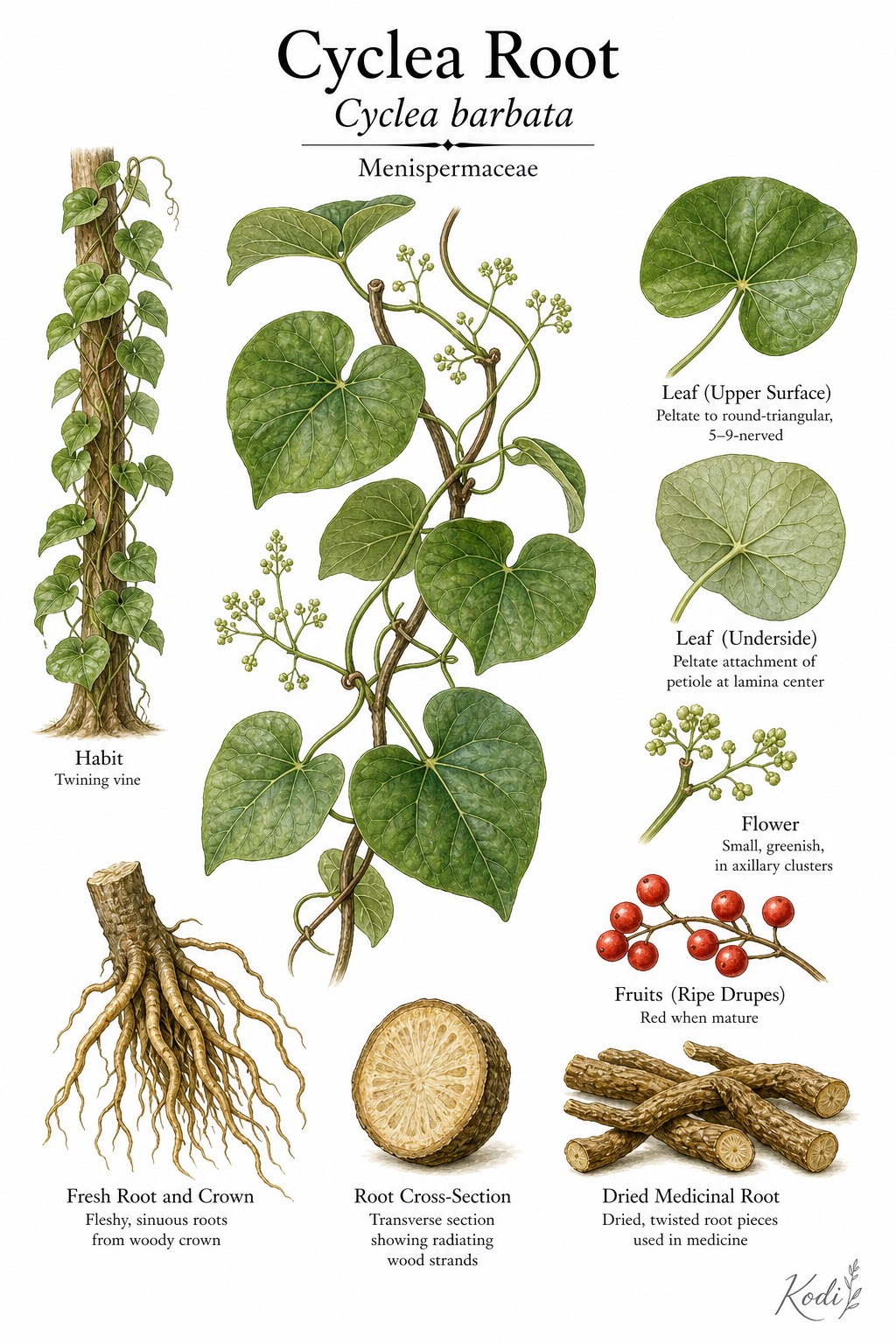
Known in TCM as Lun Huan Teng (轮环藤), this bitter, cold herb enters the Lung, Liver, and Bladder. Traditionally, it clears heat and resolves toxicity - Lun Huan Teng is used in regional folk medicine for wind-heat sore throat, toothache, and inflammatory toxic conditions, most often applied for sore throat, toothache, and diarrhea. Modern research has identified Bisbenzylisoquinoline among its active constituents.
Part used: Root
Also Known As
Latin: Radix Cycleae Barbatae | Pinyin: Lun Huan Teng | Chinese: 轮环藤
TCM Properties
- Taste
- bitter
- Temperature
- cold
- Channels
- Lung, Liver, Bladder
Traditional Use
Primary Actions
- Clears heat and resolves toxicity - Lun Huan Teng is used in regional folk medicine for wind-heat sore throat, toothache, and inflammatory toxic conditions.
- Promotes urination and relieves damp-heat strangury - the root is taken for painful urinary difficulty and lower-burner damp-heat patterns.
- Relieves damp-heat diarrhea - traditional use extends to intestinal heat-damp presentations marked by loose stool and irritation.
- Disperses stasis and reduces pain - it may be used for traumatic swelling and pain where heat, toxin, or localized stasis are part of the pattern.
Secondary Actions
- Lun Huan Teng is more of a regional folk herb than a universally standardized core materia medica item, so species naming and local usage can vary.
- Because the record is less standardized than major pharmacopoeial herbs, identification quality matters as much as theory when using this plant.
Classic Formulas
- Lun Huan Teng with Jin Yin Hua and Ban Lan Gen - a folk-style heat-toxin pairing for swollen sore throat and inflammatory throat conditions.
- Lun Huan Teng with Bai Mao Gen and Che Qian Zi - a regional damp-heat urinary combination for painful urination.
- Fresh or powdered Lun Huan Teng for traumatic swelling - local topical or decocted use for injury-related pain and bruising.
Classical References
- Regional herb references describe Lun Huan Teng as bitter and cold with actions of clearing heat, detoxifying, promoting urination, and stopping pain.
- Standard indication lists include wind-heat cold, sore throat, toothache, damp-heat diarrhea, painful urination, and traumatic injury.
- NOMENCLATURE NOTE: the source material for Lun Huan Teng is not as standardized in English-language references as major textbook herbs, so published plant names may vary across regional sources.
Modern Research
Active Compounds
- Bisbenzylisoquinoline alkaloids such as tetrandrine, berbamine, limacine, and cycleapeltine - the best described root-related constituents in Cyclea barbata literature
- Cycleabarbatine and related root alkaloids - identified in phytochemical work on the species
- Azafluoranthene alkaloids - additional specialized constituents reported from Cyclea barbata
Studied Effects
- Modern research on the exact TCM drug identity is limited, but root studies of Cyclea barbata show a rich alkaloid profile that supports continued pharmacognostic interest in the herb (PMID 8289066).
- An early natural-products study found that root-derived Cyclea barbata alkaloid fractions showed cytotoxic and antimalarial activity, although this does not directly confirm the traditional urinary and throat indications (PMID 8450318).
- Recent phytochemical work has continued to characterize unusual alkaloids from Cyclea barbata, showing that the herb remains chemically interesting even where clinical evidence is still sparse (PMID 30739491).
PubMed References
Safety & Interactions
Contraindications
- Pregnancy
- Marked Spleen-Stomach deficiency cold with loose stools
- Use from uncertain plant identity or poor-quality sourcing
Cautions
- Some references describe the herb as slightly toxic, so it should not be treated as an interchangeable culinary plant.
- Because English-language naming is inconsistent, misidentification is a practical safety issue for Lun Huan Teng.
- Modern clinical interaction data are sparse and the alkaloid-rich chemistry supports a cautious dosing approach.
- MSK page not found - drug interaction data not available from Memorial Sloan Kettering integrative medicine database
Conditions
- Sore Throat Traditional ★★★☆☆ JSON
- Toothache Traditional ★★★☆☆ JSON
- Diarrhea Traditional ★★☆☆☆ JSON
- Common Cold Traditional ★★☆☆☆ JSON
- Traumatic Injury Traditional ★★☆☆☆ JSON
Frequently Asked Questions
What is Cyclea Root used for?
Cyclea Root is traditionally used to Clears heat and resolves toxicity - Lun Huan Teng is used in regional folk medicine for wind-heat sore throat, toothache, and inflammatory toxic conditions., Promotes urination and relieves damp-heat strangury - the root is taken for painful urinary difficulty and lower-burner damp-heat patterns., Relieves damp-heat diarrhea - traditional use extends to intestinal heat-damp presentations marked by loose stool and irritation., Disperses stasis and reduces pain - it may be used for traumatic swelling and pain where heat, toxin, or localized stasis are part of the pattern.. Research has investigated its effects on: Modern research on the exact TCM drug identity is limited, but root studies of Cyclea barbata show a rich alkaloid profile that supports continued pharmacognostic interest in the herb (PMID 8289066).; An early natural-products study found that root-derived Cyclea barbata alkaloid fractions showed cytotoxic and antimalarial activity, although this does not directly confirm the traditional urinary and throat indications (PMID 8450318)..
What are other names for Cyclea Root?
Cyclea Root is also known as Cyclea. In TCM: 轮环藤 (Lun Huan Teng); Radix Cycleae Barbatae.
Is Cyclea Root safe during pregnancy?
Cyclea Root is not recommended during pregnancy.
What are the contraindications for Cyclea Root?
Cyclea Root should not be used in: Pregnancy; Marked Spleen-Stomach deficiency cold with loose stools; Use from uncertain plant identity or poor-quality sourcing. Consult a qualified healthcare provider before use.