Cuttlebone
- Chinese
- 海螵蛸
- Pinyin
- Hai Piao Xiao
- Latin
- Os Sepiellae Seu Sepiae
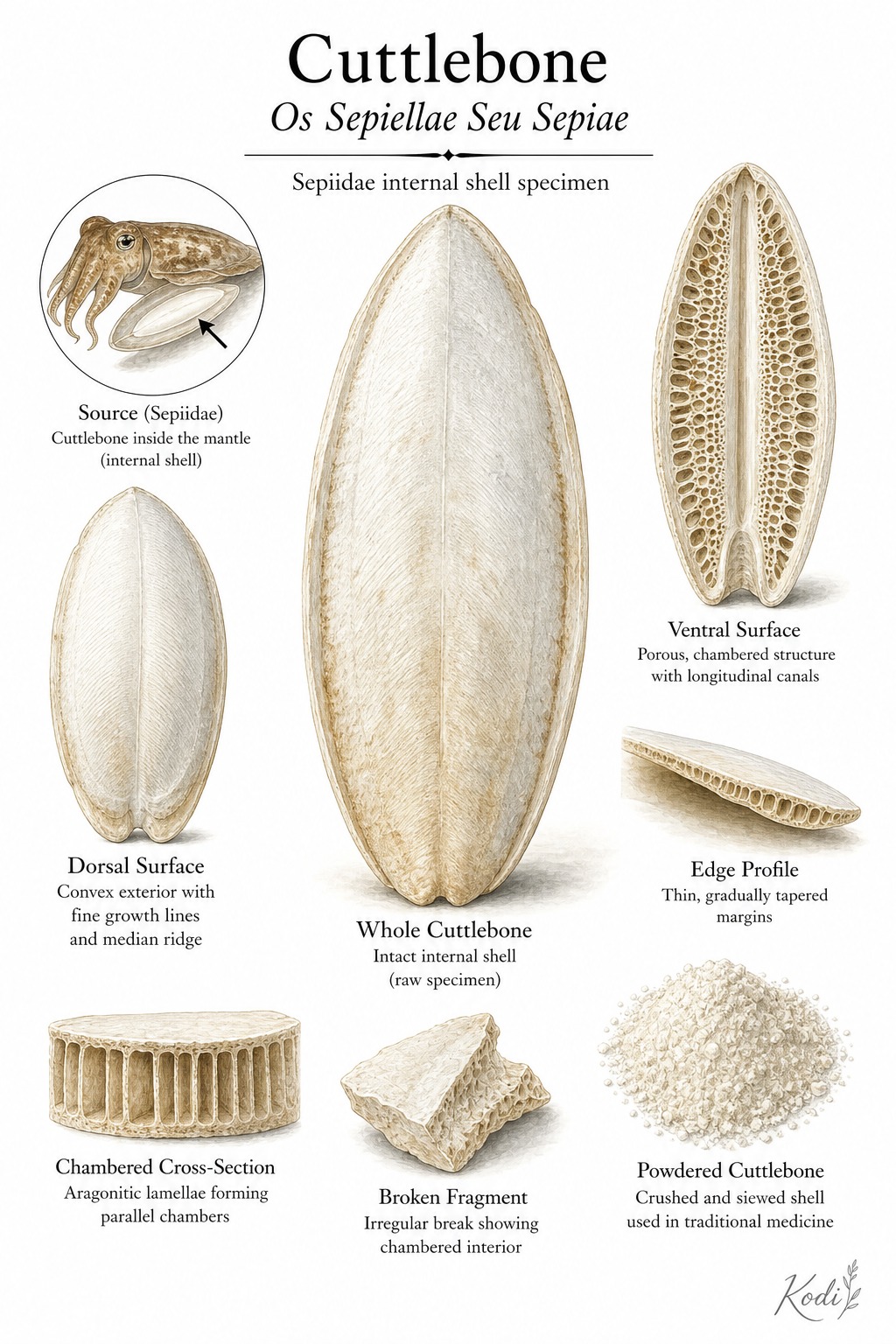
Known in TCM as Hai Piao Xiao (海螵蛸), this salty and astringent, slightly warm herb enters the Kidney and Liver. Traditionally, it secures essence and stops leukorrhea - Hai Piao Xiao is classically used for spermatorrhea, excessive vaginal discharge, and chronic leakage patterns involving instability of the lower burner, most often applied for acid reflux, gastric ulcer, and uterine bleeding. Modern research has identified Calcium among its active constituents.
Part used: Bone
Also Known As
Latin: Os Sepiellae Seu Sepiae | Pinyin: Hai Piao Xiao | Chinese: 海螵蛸
TCM Properties
- Taste
- salty, astringent
- Temperature
- slightly warm
- Channels
- Kidney, Liver
Traditional Use
Primary Actions
- Secures essence and stops leukorrhea - Hai Piao Xiao is classically used for spermatorrhea, excessive vaginal discharge, and chronic leakage patterns involving instability of the lower burner.
- Astringes bleeding - the powdered shell is used for uterine bleeding and other chronic bleeding patterns where an astringent mineral substance is appropriate.
- Restrains acidity and alleviates pain - it is a classic herb for acid regurgitation, epigastric discomfort, and ulcer-type stomach pain, especially when calcined or finely powdered.
- Dries dampness and promotes healing externally - topical use extends to weeping sores, ulcerations, and traumatic bleeding where the powder can dry discharge and protect tissue.
Secondary Actions
- Hai Piao Xiao is both a lower-burner astringent and an upper-digestive mineral antacid, which is why it appears in very different kinds of formulas.
- In modern practice it is commonly powdered and taken for stomach-acid complaints or applied externally rather than relied on as a long-boiled crude shell.
Classic Formulas
- Hai Piao Xiao with Qian Shi and Shan Zhu Yu - a classic lower-burner astringent strategy for spermatorrhea and chronic leukorrhea.
- Hai Piao Xiao with Wa Leng Zi - a traditional mineral pairing for acid regurgitation and epigastric pain when both astringing and antacid action are needed.
- Hai Piao Xiao with Bai Ji for powder use - a familiar hemostatic and tissue-protective combination for bleeding ulcers or external sores.
Classical References
- Traditional references describe Hai Piao Xiao as salty, astringent, and slightly warm, entering the Liver and Kidney to secure essence, stop bleeding, and restrain acidity.
- The herb is also commonly known as Wu Zei Gu, and the two names often refer to the same medicinal cuttlebone material in classical and modern usage.
- Its dual use for chronic leakage below and sour regurgitation above is one of the defining features that distinguishes it from many other marine shell medicinals.
Modern Research
Active Compounds
- Calcium carbonate and aragonite - the major mineral matrix responsible for antacid and scaffold-like properties
- Chitin and chitosan-related shell components - relevant to hemostatic and biomaterial research
- Trace minerals and amino-acid residues - minor constituents used in quality-control studies of Os Sepiae
Studied Effects
- In a rat model of NSAID-related gastric injury, cuttlebone promoted healing of acute gastric mucosal lesions, which supports the traditional use of Hai Piao Xiao for acid injury and ulcer-type stomach pain (PMID 33082835).
- A marine biomaterials study showed that cuttlebone can serve as a useful calcium-rich scaffold for bone graft preparation, reinforcing the structural and tissue-supportive properties of this shell medicine (PMID 29616431).
- A recent hydrogel study used nanoscale cuttlebone to improve hemostatic and antibacterial wound-dressing performance, offering a modern analogue for the herb's classical external bleeding and wound uses (PMID 40245568).
PubMed References
Safety & Interactions
Contraindications
- Constipation from fluid depletion without leakage or acidity patterns
- Heat-type irritability without a clear astringent indication
Cautions
- As a calcium-rich shell medicine, Hai Piao Xiao can reduce absorption of certain medications if taken at the same time.
- Only properly cleaned medicinal cuttlebone should be used because crude marine material may carry contamination or quality-control problems.
- The powdered shell is best matched to leakage, bleeding, and acidity patterns rather than taken casually as a long-term supplement.
Drug Interactions
- Fluoroquinolone antibiotics - calcium-rich shell minerals can chelate the drug and reduce absorption; separate by several hours
- Tetracycline antibiotics - concurrent mineral intake can lower antibiotic bioavailability; stagger dosing
- Levothyroxine - calcium-containing minerals may impair thyroid hormone absorption; separate by at least 4 hours
- Iron supplements - calcium can decrease iron absorption when taken together
Conditions
- Acid Reflux Research ★★★★☆ JSON
- Gastric Ulcer Research ★★★★☆ JSON
- Uterine Bleeding Traditional ★★★☆☆ JSON
- Leukorrhea Traditional ★★★☆☆ JSON
Frequently Asked Questions
What is Cuttlebone used for?
Cuttlebone is traditionally used to Secures essence and stops leukorrhea - Hai Piao Xiao is classically used for spermatorrhea, excessive vaginal discharge, and chronic leakage patterns involving instability of the lower burner., Astringes bleeding - the powdered shell is used for uterine bleeding and other chronic bleeding patterns where an astringent mineral substance is appropriate., Restrains acidity and alleviates pain - it is a classic herb for acid regurgitation, epigastric discomfort, and ulcer-type stomach pain, especially when calcined or finely powdered., Dries dampness and promotes healing externally - topical use extends to weeping sores, ulcerations, and traumatic bleeding where the powder can dry discharge and protect tissue.. Research has investigated its effects on: In a rat model of NSAID-related gastric injury, cuttlebone promoted healing of acute gastric mucosal lesions, which supports the traditional use of Hai Piao Xiao for acid injury and ulcer-type stomach pain (PMID 33082835).; A marine biomaterials study showed that cuttlebone can serve as a useful calcium-rich scaffold for bone graft preparation, reinforcing the structural and tissue-supportive properties of this shell medicine (PMID 29616431)..
What are other names for Cuttlebone?
Cuttlebone is also known as Sepiella. In TCM: 海螵蛸 (Hai Piao Xiao); Os Sepiellae Seu Sepiae.
Is Cuttlebone safe during pregnancy?
The safety of Cuttlebone during pregnancy has not been established. Consult a qualified healthcare provider before use.
What are the contraindications for Cuttlebone?
Cuttlebone should not be used in: Constipation from fluid depletion without leakage or acidity patterns; Heat-type irritability without a clear astringent indication. Consult a qualified healthcare provider before use.
Does Cuttlebone interact with any medications?
Cuttlebone may interact with: Fluoroquinolone antibiotics - calcium-rich shell minerals can chelate the drug and reduce absorption; separate by several hours; Tetracycline antibiotics - concurrent mineral intake can lower antibiotic bioavailability; stagger dosing; Levothyroxine - calcium-containing minerals may impair thyroid hormone absorption; separate by at least 4 hours; Iron supplements - calcium can decrease iron absorption when taken together. Always inform your healthcare provider of any herbal supplements you are taking.