Croton Seeds
- Chinese
- 巴豆
- Pinyin
- Ba Dou
- Latin
- Fructus Crotonis
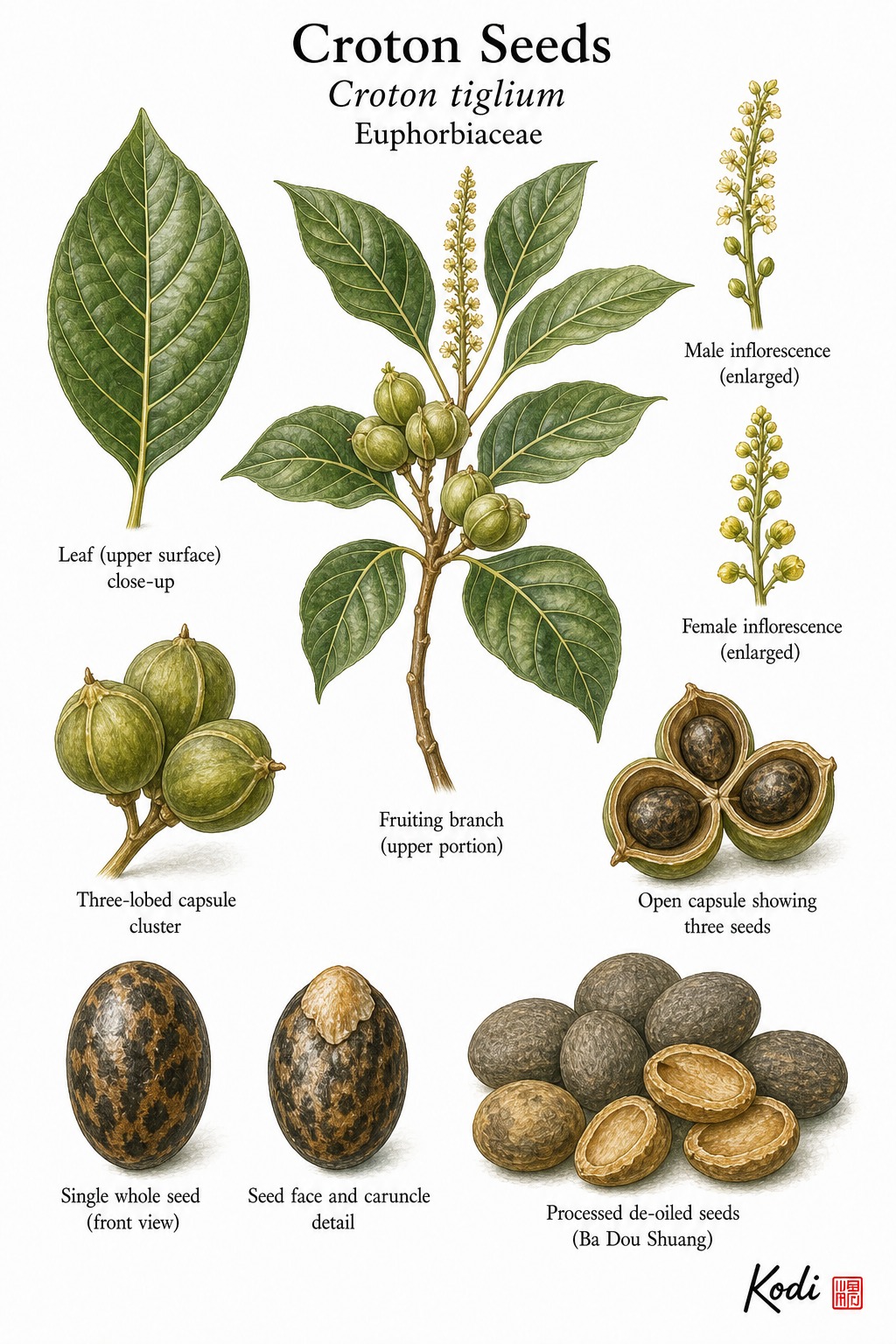
Known in TCM as Ba Dou (巴豆), this acrid, hot herb enters the Stomach, Large Intestine, and Lung. Traditionally, it drastically purges cold accumulation - Ba Dou is one of the strongest downward-draining herbs in the materia medica and is reserved for severe cold constipation, food stagnation, and abdominal fullness when ordinary purgatives are too weak, most often applied for constipation, edema, and phlegm accumulation. Modern research has identified Phorbol among its active constituents.
Part used: Fruit
Also Known As
Latin: Fructus Crotonis | Pinyin: Ba Dou | Chinese: 巴豆
TCM Properties
- Taste
- acrid
- Temperature
- hot
- Channels
- Stomach, Large Intestine, Lung
Traditional Use
Primary Actions
- Drastically purges cold accumulation - Ba Dou is one of the strongest downward-draining herbs in the materia medica and is reserved for severe cold constipation, food stagnation, and abdominal fullness when ordinary purgatives are too weak.
- Expels retained water and reduces swelling - classical use extends to ascites, edema, and severe distension patterns in which cold accumulation and water retention bind together.
- Drives out phlegm and opens obstructed throat conditions - tiny doses were historically used for stubborn phlegm accumulation, throat blockage, and difficult downward movement of Lung and Stomach Qi.
- Externally corrodes sores and kills parasites - topical preparations were used for scabies, tinea, toxic ulcers, and suppurative lesions when a strong corrosive or drying action was desired.
Secondary Actions
- Ba Dou is a specialist emergency-style herb rather than a routine bowel mover, and classical use depends on minute dosing, processing, and close supervision.
- Traditional practice often distinguishes the raw seed from processed Ba Dou Shuang, which tempers some of the harsh oil while preserving the obstruction-breaking character.
Classic Formulas
- Tiny-dose Ba Dou pill or powder use for cold accumulation constipation - a classical drastic-purgative strategy that emphasizes the seed's forceful downward action and the need for very careful dosing.
- Ba Dou combined with other retained-water herbs in old ascites formulas - historical usage for severe abdominal fullness and edema, now mainly preserved as a cautionary example of high-risk purgation.
- External Ba Dou paste or powder - traditional topical application for scabies, tinea, and stubborn toxic sores when corrosive action was intentionally used.
Classical References
- Traditional materia medica texts describe Ba Dou as acrid, hot, and toxic, entering the Stomach, Large Intestine, and Lung to purge cold accumulation, expel water, and open phlegm obstruction.
- Older references consistently stress that the seed is incompatible with pregnancy and unsuitable for frail or weak patients because its attack on obstruction is extremely forceful.
- The common caution about incompatibility with Qian Niu Zi remains part of the traditional identity of the herb and reinforces how carefully it was classically handled.
Modern Research
Active Compounds
- Phorbol esters - major irritant diterpenes associated with the seed's drastic purgative and inflammatory toxicity
- Croton oil triglyceride fraction - the oily seed component that contributes to strong cathartic and tissue-irritating effects
- Toxic seed proteins - inflammatory proteins implicated in mucosal injury and poison risk
- Crotonic acid and related marker compounds - used in toxicologic and processing studies to assess detoxification
Studied Effects
- A 2022 review summarized Ba Dou pharmacology and toxicology and confirmed that the seed remains defined by the tension between traditional purgative use and substantial poisoning risk rather than by casual self-care use (PMID 35723937).
- An experimental study found that toxic proteins from Croton tiglium promoted release of proinflammatory cytokines through p38-MAPK signaling, which helps explain the herb's severe irritant nature and high safety burden (PMID 28560398).
- A recent detoxification and purgative study showed that traditional processing can reduce some acute toxicity while preserving cathartic activity, supporting the old insistence on processed rather than casually raw use (PMID 40869036).
PubMed References
- Botany, traditional uses, phytochemistry, pharmacological and toxicological effects of Croton tiglium Linn.: a comprehensive review (2022)
- Toxic proteins from Croton tiglium L. exert a proinflammatory effect by inducing release of proinflammatory cytokines and activating the p38-MAPK signaling pathway (2017)
- Purgative Effect, Acute Toxicity, and Quantification of Phorbol-12-Myristate-13-Acetate and Crotonic Acid in Croton tiglium L. Seeds Before and After Treatment by Thai Traditional Detoxification Process (2025)
Safety & Interactions
Contraindications
- Pregnancy
- Breastfeeding
- Frailty or marked deficiency
- Active inflammatory bowel disease or gastrointestinal ulceration
- Any unsupervised internal use
Cautions
- Ba Dou is highly toxic and can cause severe vomiting, abdominal pain, profuse diarrhea, dehydration, mucosal injury, and systemic poisoning if misused.
- Only properly processed medicinal material should be considered; raw or excessive dosing can be dangerous even in small amounts.
- Topical use can also blister or inflame skin and mucosa and should never be treated as a casual home remedy.
- MSK page not found - drug interaction data not available from Memorial Sloan Kettering integrative medicine database
Conditions
- Constipation Traditional ★★★★☆ JSON
- Edema Traditional ★★★☆☆ JSON
- Phlegm Accumulation Traditional ★★☆☆☆ JSON
- Sore Throat Traditional ★★☆☆☆ JSON
- Scabies Traditional ★★☆☆☆ JSON
Frequently Asked Questions
What is Croton Seeds used for?
Croton Seeds is traditionally used to Drastically purges cold accumulation - Ba Dou is one of the strongest downward-draining herbs in the materia medica and is reserved for severe cold constipation, food stagnation, and abdominal fullness when ordinary purgatives are too weak., Expels retained water and reduces swelling - classical use extends to ascites, edema, and severe distension patterns in which cold accumulation and water retention bind together., Drives out phlegm and opens obstructed throat conditions - tiny doses were historically used for stubborn phlegm accumulation, throat blockage, and difficult downward movement of Lung and Stomach Qi., Externally corrodes sores and kills parasites - topical preparations were used for scabies, tinea, toxic ulcers, and suppurative lesions when a strong corrosive or drying action was desired.. Research has investigated its effects on: A 2022 review summarized Ba Dou pharmacology and toxicology and confirmed that the seed remains defined by the tension between traditional purgative use and substantial poisoning risk rather than by casual self-care use (PMID 35723937).; An experimental study found that toxic proteins from Croton tiglium promoted release of proinflammatory cytokines through p38-MAPK signaling, which helps explain the herb's severe irritant nature and high safety burden (PMID 28560398)..
What are other names for Croton Seeds?
Croton Seeds is also known as Crotonis. In TCM: 巴豆 (Ba Dou); Fructus Crotonis.
Is Croton Seeds safe during pregnancy?
Croton Seeds is not recommended during pregnancy.
What are the contraindications for Croton Seeds?
Croton Seeds should not be used in: Pregnancy; Breastfeeding; Frailty or marked deficiency; Active inflammatory bowel disease or gastrointestinal ulceration; Any unsupervised internal use. Consult a qualified healthcare provider before use.