Cow's Milk
- Chinese
- 牛乳
- Pinyin
- Niu Ru
- Latin
- Lac Vaccinum
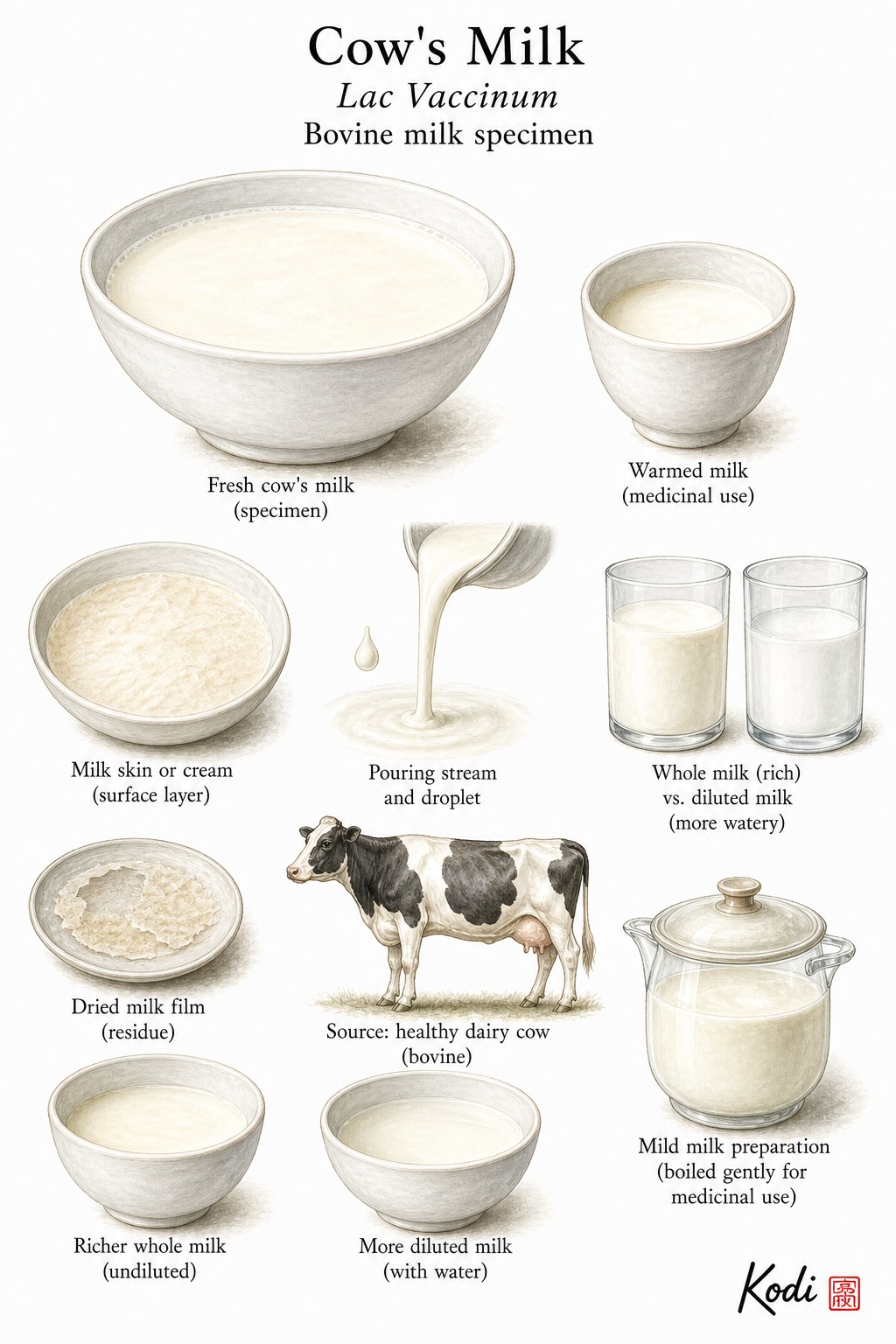
Known in TCM as Niu Ru (牛乳), this sweet, slightly cold herb enters the Heart, Lung, and Stomach. Traditionally, it tonifies deficiency and nourishes weakness - Niu Ru is treated in food-medicine tradition as a gentle restorative for fatigue, emaciation, and convalescence when fluids and nutritive substance are depleted, most often applied for constipation, digestive weakness, and dry cough. Modern research has identified Bovine among its active constituents.
Part used: Milk/Secretion
Also Known As
Latin: Lac Vaccinum | Pinyin: Niu Ru | Chinese: 牛乳
TCM Properties
- Taste
- sweet
- Temperature
- slightly cold
- Channels
- Heart, Lung, Stomach
Traditional Use
Primary Actions
- Tonifies deficiency and nourishes weakness - Niu Ru is treated in food-medicine tradition as a gentle restorative for fatigue, emaciation, and convalescence when fluids and nutritive substance are depleted.
- Benefits the Lung and Stomach while generating fluids - it is used for dry cough, thirst, regurgitation, and wasting patterns when dryness or lack of fluids affects the upper and middle burner.
- Moistens the intestines and relieves dryness-related constipation - the lubricating quality of milk makes it especially useful when constipation comes from depletion or lack of fluids rather than heat excess.
- Supports Blood and softens deficiency-type irritability - older dietetic traditions treat milk as a nutritive substance that can supplement the weak without requiring a strong herbal formula.
Secondary Actions
- Niu Ru belongs more to food therapy than to ordinary decoction-style materia medica, so preparation and tolerance matter as much as abstract properties.
- Its slightly cold, moistening nature helps dryness and wasting but can burden patients whose main problem is cold-damp, weak digestion, or heavy phlegm accumulation.
Classical References
- Traditional herb and dietetic references describe Niu Ru as sweet and slightly cold, entering the Heart, Lung, and Stomach to tonify deficiency, generate fluids, moisten the intestines, and benefit the weak.
- Food-therapy literature especially values milk for dry constipation, consumptive thirst, and convalescent weakness rather than for aggressive disease-transforming work.
- Its long-standing use as nourishment explains why Niu Ru is treated more like a medicinal food with pattern cautions than like a strongly directional crude drug.
Modern Research
Active Compounds
- Bovine milk oligosaccharides - prebiotic carbohydrates relevant to gut and immune research
- Lactoferrin - an iron-binding glycoprotein associated with antimicrobial and immunomodulatory activity
- Casein and whey proteins - the major nutritive protein fractions of cow's milk
- Milk phospholipids and bioactive lipids - membrane-related constituents studied for gut and immune effects
Studied Effects
- Bovine milk oligosaccharides modulated gut microbiota composition and short-chain-fatty-acid production in a neonatal preclinical model, which fits the traditional idea that Niu Ru can nourish and support the intestines when weakness and dryness are present (PMID 33919138).
- A review of lactoferrin described broad antimicrobial, immunomodulatory, and anti-inflammatory activity, reinforcing why milk remains pharmacologically interesting beyond simple caloric nutrition (PMID 33401580).
- A randomized controlled trial found that infant formula supplemented with milk-derived oligosaccharides shifted the gut microbiota closer to the pattern seen in breastfed infants and improved markers of intestinal immune defense, providing modern support for the gut-supportive potential of selected milk fractions (PMID 34617558).
PubMed References
- Bovine Milk Oligosaccharides and Human Milk Oligosaccharides Modulate the Gut Microbiota Composition and Volatile Fatty Acid Concentrations in a Preclinical Neonatal Model (2021)
- Lactoferrin: A Glycoprotein Involved in Immunomodulation, Anticancer, and Antimicrobial Processes (2021)
- Term infant formula supplemented with milk-derived oligosaccharides shifts the gut microbiota closer to that of human milk-fed infants and improves intestinal immune defense: a randomized controlled trial (2022)
Safety & Interactions
Contraindications
- Spleen and Stomach deficiency cold with loose stools
- Heavy phlegm-damp accumulation with poor digestion
- Known cow's milk protein allergy
Cautions
- Even though Niu Ru is gentle, it can worsen bloating, loose stool, or damp-phlegm congestion in patients who digest dairy poorly.
- Lactose intolerance and cow's milk protein allergy are practical modern concerns that can outweigh the herb's traditional nourishing role.
- MSK page not found - drug interaction data not available from Memorial Sloan Kettering integrative medicine database
Conditions
- Constipation Traditional ★★★☆☆ JSON
- Digestive Weakness Traditional ★★★☆☆ JSON
- Dry Cough Traditional ★★☆☆☆ JSON
- Fatigue Traditional ★★☆☆☆ JSON
- Blood Deficiency Traditional ★☆☆☆☆ JSON
Frequently Asked Questions
What is Cow's Milk used for?
Cow's Milk is traditionally used to Tonifies deficiency and nourishes weakness - Niu Ru is treated in food-medicine tradition as a gentle restorative for fatigue, emaciation, and convalescence when fluids and nutritive substance are depleted., Benefits the Lung and Stomach while generating fluids - it is used for dry cough, thirst, regurgitation, and wasting patterns when dryness or lack of fluids affects the upper and middle burner., Moistens the intestines and relieves dryness-related constipation - the lubricating quality of milk makes it especially useful when constipation comes from depletion or lack of fluids rather than heat excess., Supports Blood and softens deficiency-type irritability - older dietetic traditions treat milk as a nutritive substance that can supplement the weak without requiring a strong herbal formula.. Research has investigated its effects on: Bovine milk oligosaccharides modulated gut microbiota composition and short-chain-fatty-acid production in a neonatal preclinical model, which fits the traditional idea that Niu Ru can nourish and support the intestines when weakness and dryness are present (PMID 33919138).; A review of lactoferrin described broad antimicrobial, immunomodulatory, and anti-inflammatory activity, reinforcing why milk remains pharmacologically interesting beyond simple caloric nutrition (PMID 33401580)..
What are other names for Cow's Milk?
Cow's Milk is also known as Vaccinum. In TCM: 牛乳 (Niu Ru); Lac Vaccinum.
Is Cow's Milk safe during pregnancy?
The safety of Cow's Milk during pregnancy has not been established. Consult a qualified healthcare provider before use.
What are the contraindications for Cow's Milk?
Cow's Milk should not be used in: Spleen and Stomach deficiency cold with loose stools; Heavy phlegm-damp accumulation with poor digestion; Known cow's milk protein allergy. Consult a qualified healthcare provider before use.