Civet
- Chinese
- 灵猫香
- Pinyin
- Ling Mao Xiang
- Latin
- Zibethum
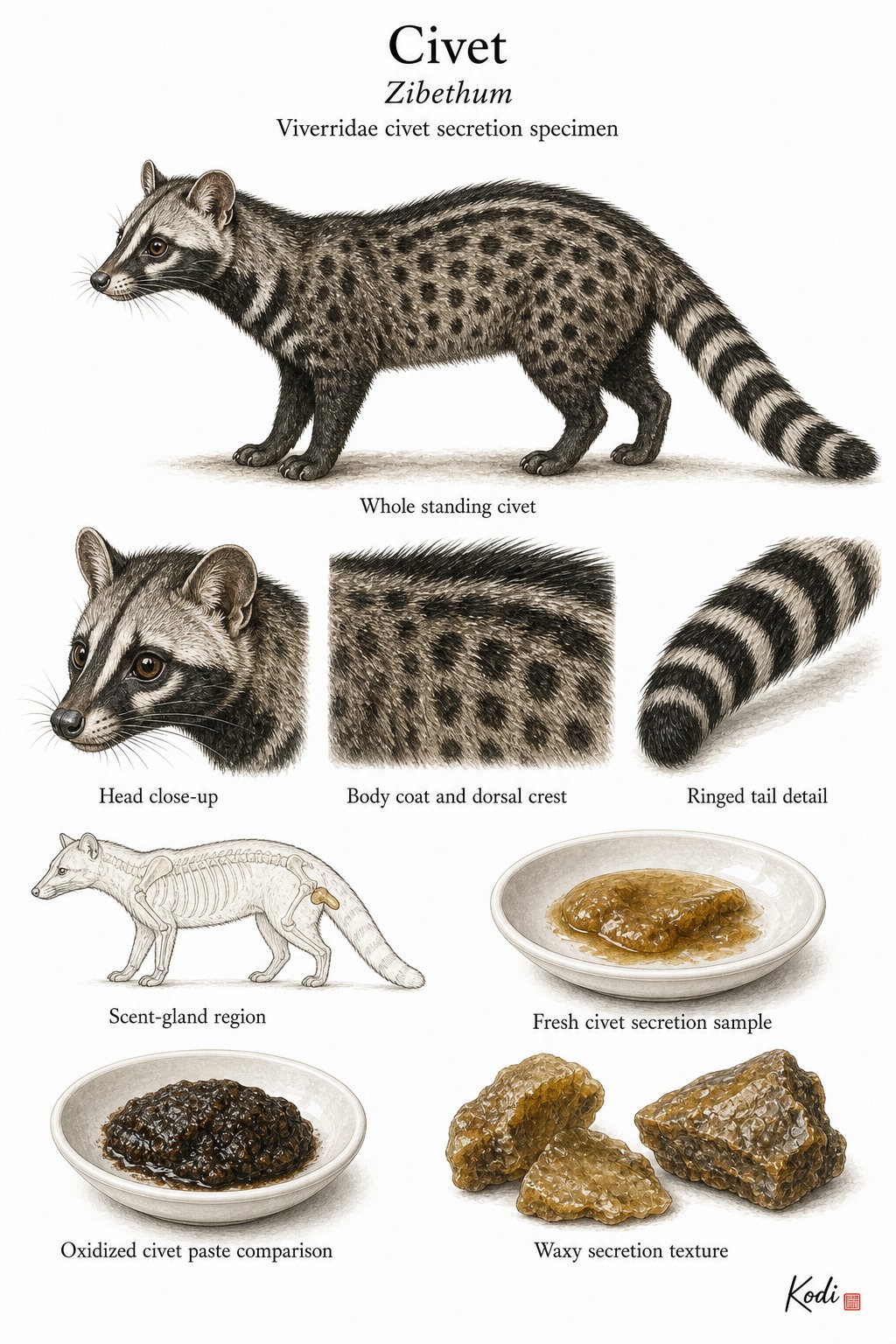
Known in TCM as Ling Mao Xiang (灵猫香). Traditionally, it moves Qi and alleviates pain - Ling Mao Xiang is a strongly aromatic animal secretion historically used for focal pain, constraint, and obstructed movement, especially when ordinary bland medicinals are considered too weak, most often applied for abdominal pain. Modern research has identified Civetone among its active constituents.
Also Known As
Latin: Zibethum | Pinyin: Ling Mao Xiang | Chinese: 灵猫香
TCM Properties
- Taste
- acrid
- Temperature
- warm
Traditional Use
Primary Actions
- Moves Qi and alleviates pain - Ling Mao Xiang is a strongly aromatic animal secretion historically used for focal pain, constraint, and obstructed movement, especially when ordinary bland medicinals are considered too weak.
- Aromatically dispels foulness and opens constrained pathways - older materia-medica summaries describe it as an intensely fragrant substance used when turbid obstruction, foulness, or stagnation is thought to cloud normal movement.
- Historically reduced swelling and helped formula-based treatment of toxic or inflamed lesions - this is a secondary and much less common modern use, but it appears in older patent and materia-medica references.
Secondary Actions
- Ling Mao Xiang is rare in modern routine practice and is better understood as a historical animal-derived aromatic than as a mainstream contemporary dispensary item.
- Some later sources compare parts of its profile to musk, but it is not a routine interchangeable substitute and should not be handled casually.
Classic Formulas
- Ling Mao Xiang Liu Shen Wan - older formula lineage using civet-derived aromatic material in combination with detoxifying and swelling-relieving ingredients.
- Ling Mao Xiang San - aromatic powder-style use in older references for pain, swelling, and obstructed movement patterns.
- When used at all, Ling Mao Xiang is more often a small aromatic component inside compound prescriptions than a stand-alone medicinal.
Classical References
- Chinese materia-medica summaries describe Ling Mao Xiang as the civet-gland secretion of Viverridae animals and emphasize actions such as dispelling foulness, moving Qi, and relieving pain.
- Some later Chinese references add blood-moving, calming, and swelling-relieving language, but mainstream modern English TCM coverage is sparse and inconsistent, so this record intentionally stays conservative.
- Because sourcing, legal status, and animal-welfare concerns are inseparable from the identity of the medicinal, practical modern use is far more restricted than the older literature might suggest.
Modern Research
Active Compounds
- Civetone - the characteristic macrocyclic ketone most associated with civet aroma
- Related macrocyclic ketones and aromatic lipophilic fractions - likely contributors to pharmacologic and fragrance behavior
- Indole and skatole trace odor contributors - important to the distinctive scent profile even at low levels
- Waxy lipid secretion matrix - the natural vehicle in which civet aromatic compounds are carried
Studied Effects
- An older indexed animal study reported that civet potentiated pentobarbital-induced sleep and showed mild analgesic and anticonvulsant effects, providing at least some direct pharmacology behind the traditional sedative-pain-relieving reputation (PMID 22557530).
- Older Chinese pharmacology summaries also describe anti-inflammatory and analgesic activity from civet ethanol extracts and macrocyclic ketone fractions, but much of that literature is difficult to verify in modern databases and should be treated as supportive rather than definitive.
- Modern clinical evidence is extremely sparse, so the record should be read as historically interesting but weakly validated by contemporary standards.
PubMed References
Safety & Interactions
Contraindications
- Pregnancy - older aromatic animal secretions in this class are traditionally avoided because of their moving, penetrating nature
- Use of illegally sourced, non-verified, or non-medicinal civet material
- Patients who have ethical, wildlife, or zoonotic-sourcing concerns that make animal-derived glandular products inappropriate
Cautions
- Authenticity, contamination control, and sourcing ethics are central concerns; civet is not a benign pantry substance and should never be improvised from fragrance-market material.
- Real-world modern use is uncommon, and synthetic civetone or non-animal aromatic substitutes are often preferred where an odor profile rather than the original animal material is being discussed.
- Direct contemporary clinical evidence is thin, so civet should not be treated as a well-validated modern analgesic or sedative.
Conditions
- Abdominal Pain Traditional ★★★☆☆ JSON
Frequently Asked Questions
What is Civet used for?
Civet is traditionally used to Moves Qi and alleviates pain - Ling Mao Xiang is a strongly aromatic animal secretion historically used for focal pain, constraint, and obstructed movement, especially when ordinary bland medicinals are considered too weak., Aromatically dispels foulness and opens constrained pathways - older materia-medica summaries describe it as an intensely fragrant substance used when turbid obstruction, foulness, or stagnation is thought to cloud normal movement., Historically reduced swelling and helped formula-based treatment of toxic or inflamed lesions - this is a secondary and much less common modern use, but it appears in older patent and materia-medica references.. Research has investigated its effects on: An older indexed animal study reported that civet potentiated pentobarbital-induced sleep and showed mild analgesic and anticonvulsant effects, providing at least some direct pharmacology behind the traditional sedative-pain-relieving reputation (PMID 22557530).; Older Chinese pharmacology summaries also describe anti-inflammatory and analgesic activity from civet ethanol extracts and macrocyclic ketone fractions, but much of that literature is difficult to verify in modern databases and should be treated as supportive rather than definitive..
What are other names for Civet?
Civet is also known as Zibethum. In TCM: 灵猫香 (Ling Mao Xiang); Zibethum.
Is Civet safe during pregnancy?
Civet is not recommended during pregnancy.
What are the contraindications for Civet?
Civet should not be used in: Pregnancy - older aromatic animal secretions in this class are traditionally avoided because of their moving, penetrating nature; Use of illegally sourced, non-verified, or non-medicinal civet material; Patients who have ethical, wildlife, or zoonotic-sourcing concerns that make animal-derived glandular products inappropriate. Consult a qualified healthcare provider before use.