Chuanxiong Rhizome, Szechuan Lovage Root
- Chinese
- 川芎
- Pinyin
- Chuan Xiong
- Latin
- Rhizoma Chuanxiong
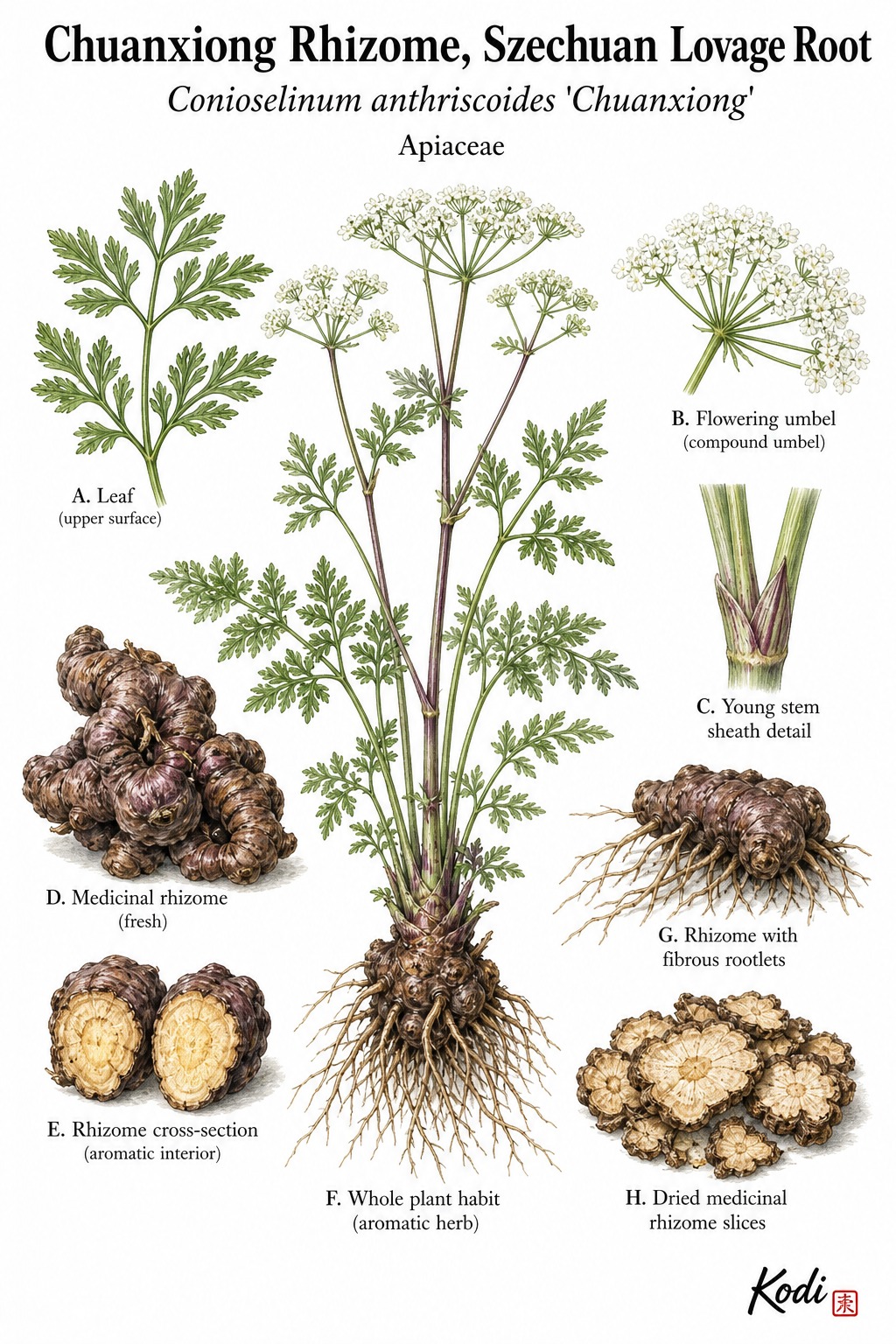
Known in TCM as Chuan Xiong (川芎), this acrid, warm herb enters the Liver, Gallbladder, and Pericardium. Traditionally, it invigorates Blood and dispels stasis, most often applied for headache, dysmenorrhea, and blood stasis. Modern research has identified Z-Ligustilide among its active constituents.
Part used: Rhizome
Also Known As
Latin: Rhizoma Chuanxiong | Pinyin: Chuan Xiong | Chinese: 川芎
TCM Properties
- Taste
- acrid
- Temperature
- warm
- Channels
- Liver, Gallbladder, Pericardium
Traditional Use
Primary Actions
- Invigorates Blood and dispels stasis
- Promotes Qi movement and alleviates pain
- Dispels Wind and relieves headache
Secondary Actions
- Resolves Liver Qi constraint
- Dispels Wind-Damp painful obstruction in joints
- Aids postpartum recovery by clearing retained Blood
Classic Formulas
- Chuan Xiong Cha Tiao San … dispels Wind and relieves Wind-type headache
- Si Wu Tang … foundational Blood-nourishing formula for Blood deficiency
- Xue Fu Zhu Yu Tang … invigorates Blood and dispels stasis in the chest
- Sheng Hua Tang … addresses postpartum Blood stagnation and lochia retention
Classical References
- Li Dongyuan: 'Headaches should not go without Chuan Xiong,' reflecting its premier role in headache treatment across pattern types
Modern Research
Active Compounds
- Z-Ligustilide
- Tetramethylpyrazine (TMP / Ligustrazine)
- Ferulic acid
- Senkyunolide A
- Butylidenephthalide
Studied Effects
- Comprehensive review documents cardiovascular, neuroprotective, and anti-inflammatory activities across chemical classes (PMID 40235541)
- Ligustilide protects against renal ischemia-reperfusion injury by maintaining Sirt3-dependent mitochondrial homeostasis and reducing oxidative stress (PMID 39216302)
- Z-Ligustilide promotes motor ability in experimental models by alleviating oxidative stress via intestinal microvilli (PMID 41482089)
PubMed References
- Ligusticum chuanxiong: a chemical, pharmacological and clinical review (2025)
- Ligustilide alleviates oxidative stress during renal ischemia-reperfusion injury through maintaining Sirt3-dependent mitochondrial homeostasis (2024)
- Z-Ligustilide purified from Ligusticum chuanxiong Hort. promotes motor ability in Caenorhabditis elegans by alleviating oxidative stress via the intestinal microvilli (2026)
Safety & Interactions
Contraindications
- Pregnancy … stimulates uterine contractions; avoid except in specialist obstetric emergencies
- Active hemorrhage or excessive bleeding unrelated to stasis
- Yin deficiency with Heat … warm, dispersing nature worsens this pattern
Cautions
- Combine with tonifying herbs when treating pure Qi or Blood deficiency
- High doses may cause dizziness or vomiting
Classic formulas that use Chuanxiong Rhizome, Szechuan Lovage Root
Herbs are rarely taken alone in Chinese medicine. These formula pages show what this herb does inside a classic prescription and which pattern that prescription is chosen for.
Conditions
- Headache Traditional ★★★★★ JSON
- Dysmenorrhea Traditional ★★★★★ JSON
- Blood Stasis Traditional ★★★★☆ JSON
- Angina Traditional ★★★★☆ JSON
- Joint Pain Traditional ★★★☆☆ JSON
- Stroke Research ★★★☆☆ JSON
Frequently Asked Questions
What is Chuanxiong Rhizome, Szechuan Lovage Root used for?
Chuanxiong Rhizome, Szechuan Lovage Root is traditionally used to Invigorates Blood and dispels stasis, Promotes Qi movement and alleviates pain, Dispels Wind and relieves headache. Research has investigated its effects on: Comprehensive review documents cardiovascular, neuroprotective, and anti-inflammatory activities across chemical classes (PMID 40235541); Ligustilide protects against renal ischemia-reperfusion injury by maintaining Sirt3-dependent mitochondrial homeostasis and reducing oxidative stress (PMID 39216302).
What are other names for Chuanxiong Rhizome, Szechuan Lovage Root?
Chuanxiong Rhizome, Szechuan Lovage Root is also known as Chuanxiong. In TCM: 川芎 (Chuan Xiong); Rhizoma Chuanxiong.
Is Chuanxiong Rhizome, Szechuan Lovage Root safe during pregnancy?
Chuanxiong Rhizome, Szechuan Lovage Root is not recommended during pregnancy.
What are the contraindications for Chuanxiong Rhizome, Szechuan Lovage Root?
Chuanxiong Rhizome, Szechuan Lovage Root should not be used in: Pregnancy … stimulates uterine contractions; avoid except in specialist obstetric emergencies; Active hemorrhage or excessive bleeding unrelated to stasis; Yin deficiency with Heat … warm, dispersing nature worsens this pattern. Consult a qualified healthcare provider before use.