Chingma Abutilon Seed
- Chinese
- 苘麻子
- Pinyin
- Qing Ma Zi
- Latin
- Semen Abutili
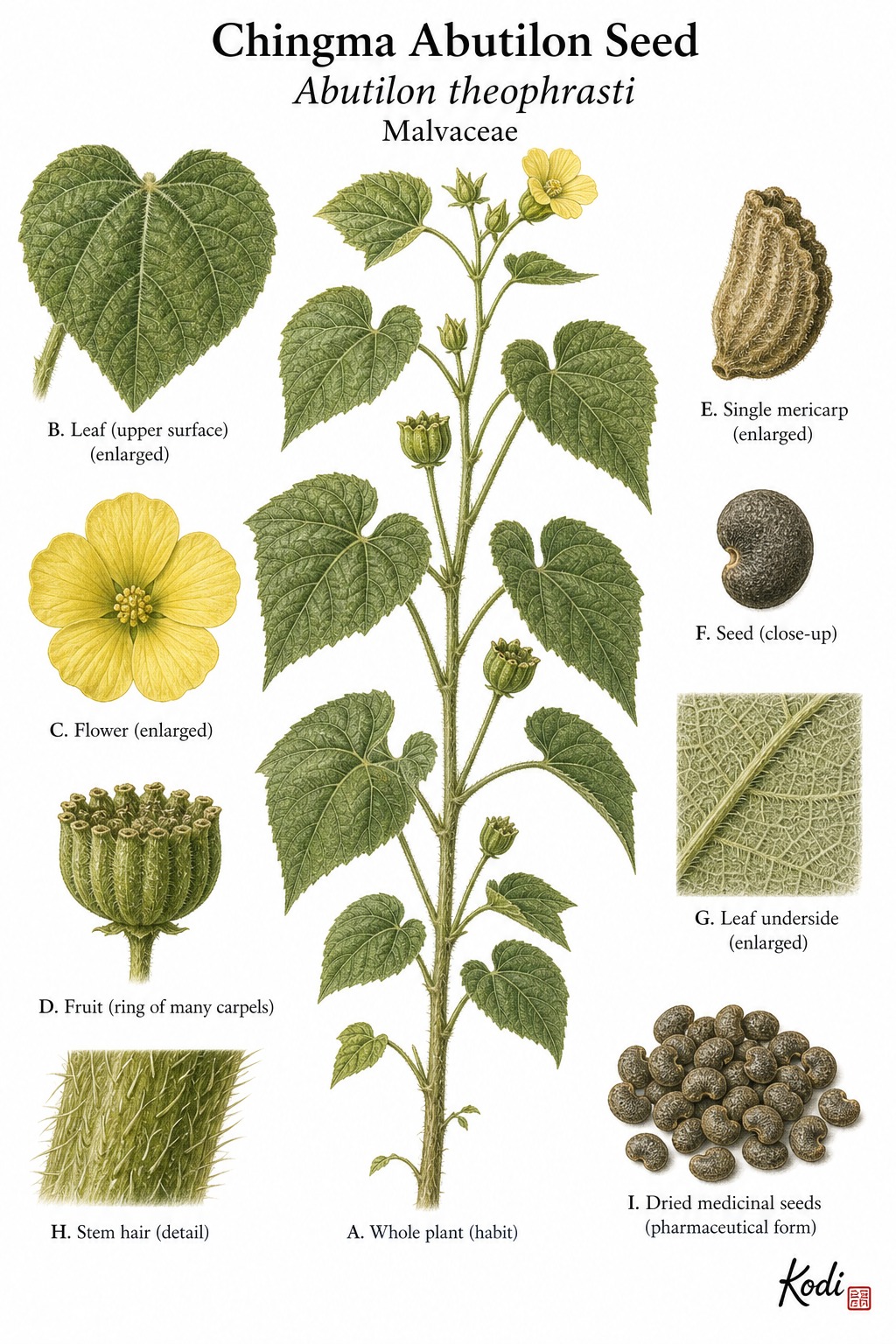
Known in TCM as Qing Ma Zi (苘麻子), this bitter, neutral herb enters the Large Intestine, Small Intestine, and Bladder. Traditionally, it clears heat and drains dampness - Qing Ma Zi is used for damp-heat disorders of the lower burner, especially painful or difficult urination and intestinal irritation with toxic-heat features, most often applied for urinary tract infection, dysentery, and carbuncle. Modern research has identified Quercetin among its active constituents.
Part used: Seed
Also Known As
Latin: Semen Abutili | Pinyin: Qing Ma Zi | Chinese: 苘麻子
TCM Properties
- Taste
- bitter
- Temperature
- neutral
- Channels
- Large Intestine, Small Intestine, Bladder
Traditional Use
Primary Actions
- Clears heat and drains dampness - Qing Ma Zi is used for damp-heat disorders of the lower burner, especially painful or difficult urination and intestinal irritation with toxic-heat features.
- Resolves toxicity - traditional indications include carbuncles, boils, and purulent or bloody dysenteric presentations in which heat and toxin are prominent.
- Benefits the urinary tract - regional and materia-medica use connects the seed with painful strangury, damp obstruction, and urinary discomfort rather than general tonic urination.
- Removes nebula - older eye-disease terminology associates the seed with cloudy visual obstruction or superficial opacity, so it appears in a small niche of traditional ophthalmic use.
Secondary Actions
- Qing Ma Zi is sometimes confused with Dong Kui Zi or other mallow-family seeds in trade and in older secondary sources, so botanical identity matters when interpreting the literature.
- Compared with better-known damp-draining seeds, Qing Ma Zi is a relatively obscure medicinal and is best used conservatively when the source material is clearly authenticated.
Classic Formulas
- Qing Ma Zi with Che Qian Zi and Qu Mai - lower-burner damp-heat pairing logic for painful urinary difficulty and heat strangury.
- Qing Ma Zi with Pu Gong Ying and other heat-toxin-clearing herbs - traditional toxic-swelling strategy for boils, carbuncles, and purulent inflammatory lesions.
- Qing Ma Zi with eye-clearing herbs such as Qing Xiang Zi - older ophthalmic pairing logic for nebula or cloudy superficial visual obstruction.
Classical References
- The Hong Kong Department of Health identification monograph for Semen Abutili describes the seed as bitter and neutral, entering the Large Intestine, Small Intestine, and Bladder meridians, with actions of clearing heat, removing toxins, draining dampness, and removing nebula.
- The same official source lists representative indications including dysentery with bloody purulent stools, urinary infection with painful difficult urination, carbuncles and boils, and nebula.
- Traditional lists and regional herb references treat Qing Ma Zi as a comparatively uncommon strangury-relieving and detoxifying seed rather than a major everyday materia-medica item.
Modern Research
Active Compounds
- Quercetin and kaempferol glycosides - flavonoid constituents identified from Abutilon theophrasti and relevant to antioxidant and anti-inflammatory interpretation
- Phenolic acids including ferulic-acid- and p-coumaric-acid-related compounds - components reported in profiling studies across plant parts including seeds
- Unsaturated fatty-acid-rich seed oil - a major nutritional fraction of Semen Abutili distinct from the more commonly discussed aerial flavonoid extracts
- Caffeic-acid-related phenolics - small molecules associated with anti-inflammatory and gastroprotective interest
- Plant-wide polyphenol matrix - broader phytochemical context that likely contributes to traditional detoxifying use
Studied Effects
- A comprehensive phenolic-profiling study identified numerous phenolic acids and flavonoids across the five parts of Abutilon theophrasti, including seed material, providing a chemical basis for antioxidant and anti-inflammatory interpretation of Qing Ma Zi (PMID 22275244).
- A 2025 pharmacology study found that a standardized aqueous extract of Abutilon theophrasti ameliorated hydrochloric-acid/ethanol-induced gastric ulcer in rats via antioxidant and anti-inflammatory mechanisms, though this research evaluated a broader plant extract rather than the seed alone (PMID 40606619).
- Flavonoid fractions from Abutilon theophrasti showed anti-inflammatory effects in LPS-induced acute-lung-injury models, supporting the plant's broader bioactivity profile while again not isolating the seed as the only active part (PMID 30551352).
- Direct modern pharmacology focused specifically on Qing Ma Zi seed decoction remains limited, so most current mechanistic evidence is still plant-wide rather than seed-exclusive.
PubMed References
- Accuracy mass screening and identification of phenolic compounds from the five parts of Abutilon theophrasti Medic. by reverse-phase high-performance liquid chromatography-electrospray ionization-quadrupoles-time of flight-mass spectrometry (2012)
- Standardized aqueous extract of Abutilon theophrasti Medic. ameliorates oxidative stress and inflammatory responses against hydrochloric acid/ethanol-induced gastric ulcer in rats (2025)
- The protective effect of the flavonoid fraction of Abutilon theophrasti Medic. leaves on LPS-induced acute lung injury in mice via the NF-kappaB and MAPK signalling pathways (2018)
Safety & Interactions
Contraindications
- Pregnancy
- Breastfeeding
- Severe deficiency-cold diarrhea without damp-heat or toxin
Cautions
- Formal clinical safety data are sparse, and Swiss complementary-medicine listings identify Abutili Semen as contraindicated during pregnancy and lactation
- Botanical confusion with other mallow-family seeds can alter both the expected actions and the safety profile
- Most modern pharmacology has been done on whole-plant or non-seed extracts, so seed-specific efficacy claims should remain conservative
- MSK page not found - drug interaction data not available from Memorial Sloan Kettering integrative medicine database
Conditions
- Urinary Tract Infection Traditional ★★★☆☆ JSON
- Dysentery Traditional ★★★☆☆ JSON
- Carbuncle Traditional ★★☆☆☆ JSON
- Blurred Vision Traditional ★★☆☆☆ JSON
Frequently Asked Questions
What is Chingma Abutilon Seed used for?
Chingma Abutilon Seed is traditionally used to Clears heat and drains dampness - Qing Ma Zi is used for damp-heat disorders of the lower burner, especially painful or difficult urination and intestinal irritation with toxic-heat features., Resolves toxicity - traditional indications include carbuncles, boils, and purulent or bloody dysenteric presentations in which heat and toxin are prominent., Benefits the urinary tract - regional and materia-medica use connects the seed with painful strangury, damp obstruction, and urinary discomfort rather than general tonic urination., Removes nebula - older eye-disease terminology associates the seed with cloudy visual obstruction or superficial opacity, so it appears in a small niche of traditional ophthalmic use.. Research has investigated its effects on: A comprehensive phenolic-profiling study identified numerous phenolic acids and flavonoids across the five parts of Abutilon theophrasti, including seed material, providing a chemical basis for antioxidant and anti-inflammatory interpretation of Qing Ma Zi (PMID 22275244).; A 2025 pharmacology study found that a standardized aqueous extract of Abutilon theophrasti ameliorated hydrochloric-acid/ethanol-induced gastric ulcer in rats via antioxidant and anti-inflammatory mechanisms, though this research evaluated a broader plant extract rather than the seed alone (PMID 40606619)..
What are other names for Chingma Abutilon Seed?
Chingma Abutilon Seed is also known as Abutili. In TCM: 苘麻子 (Qing Ma Zi); Semen Abutili.
Is Chingma Abutilon Seed safe during pregnancy?
Chingma Abutilon Seed is not recommended during pregnancy. Formal clinical safety data are sparse, and Swiss complementary-medicine listings identify Abutili Semen as contraindicated during pregnancy and lactation
What are the contraindications for Chingma Abutilon Seed?
Chingma Abutilon Seed should not be used in: Pregnancy; Breastfeeding; Severe deficiency-cold diarrhea without damp-heat or toxin. Consult a qualified healthcare provider before use.