Chinese Loropetalum
- Chinese
- 继木
- Pinyin
- Ji Mu
- Latin
- Herba Loropetali
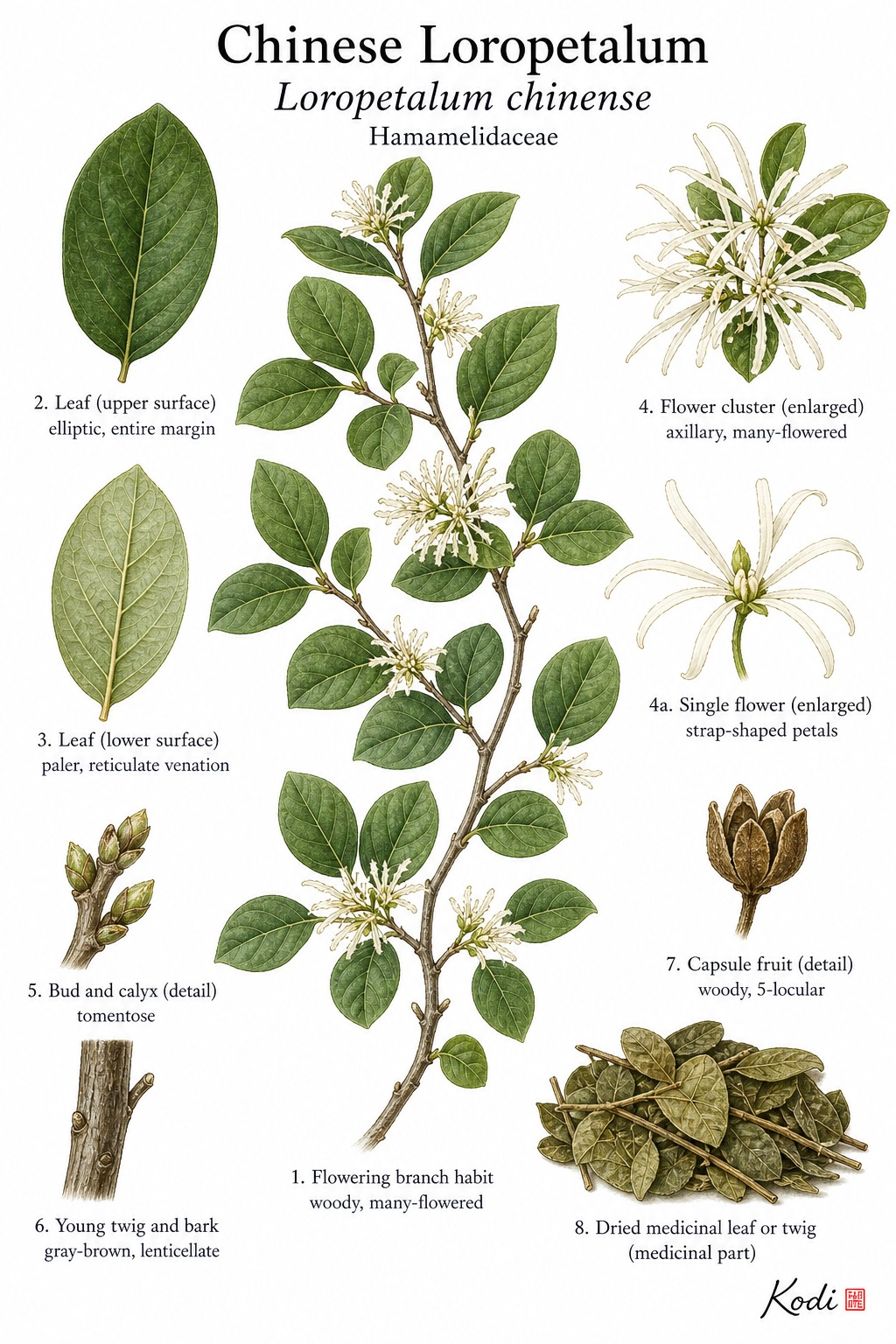
Known in TCM as Ji Mu (继木), this bitter and acrid, neutral herb enters the Lung, Spleen, Stomach, and Large Intestine. Traditionally, it clears heat and resolves toxicity with a particular bowel focus - Ji Mu is recorded for diarrhea and damp-toxic intestinal irritation, suggesting a modest place among lesser-known herbs used when heat, toxin, and digestive upset occur together, most often applied for diarrhea, blood stasis, and amenorrhea. Modern research has identified Loropetaliside among its active constituents.
Part used: Whole herb
Also Known As
Latin: Herba Loropetali | Pinyin: Ji Mu | Chinese: 继木
TCM Properties
- Taste
- bitter, acrid
- Temperature
- neutral
- Channels
- Lung, Spleen, Stomach, Large Intestine
Traditional Use
Primary Actions
- Clears heat and resolves toxicity with a particular bowel focus - Ji Mu is recorded for diarrhea and damp-toxic intestinal irritation, suggesting a modest place among lesser-known herbs used when heat, toxin, and digestive upset occur together.
- Astringes and stops bleeding - folk and materia-medica records preserve use of the leaves or aerial parts for traumatic bleeding and other superficial hemorrhagic presentations, especially when a local styptic herb is needed.
- Invigorates blood and dispels stasis - the herb is also used in regional practice for blood-stasis patterns such as amenorrhea, traumatic injury, bruising pain, and fixed obstruction rather than diffuse deficiency pain alone.
- Relieves swelling and pain in injuries or chronic obstruction - external or internal use has been noted for falls, chronic joint discomfort, and painful swellings where stagnation and local inflammation coexist.
Secondary Actions
- Different local records emphasize different plant parts, with leaves commonly mentioned for traumatic bleeding and roots or other parts occasionally discussed for chronic pain or stasis, so source identity should be checked in dispensary use.
- Because Ji Mu is a relatively obscure regional herb in modern English-language materia medica, it is best interpreted conservatively as a heat-clearing, mildly astringent, blood-moving plant rather than a front-line universal substitute for better-known herbs.
Classic Formulas
- Ji Mu topical leaf use for traumatic bleeding - regional practice applies the fresh or prepared leaf to cuts or externally bleeding injuries when the goal is to stop bleeding while reducing pain and local heat.
- Ji Mu with Tao Ren or Hong Hua - blood-stasis pairing logic for amenorrhea, fixed pain, and trauma where local tradition uses Ji Mu to add astringent and toxin-resolving support to more direct stasis-moving herbs.
- Ji Mu decoction for heat-toxic diarrhea - simple internal use is described in later herb lists when loose stool is attributed to toxic heat rather than deficiency cold.
Classical References
- American Dragon lists Ji Mu under Herba Loropetali and summarizes its core actions as clearing heat and toxic material, stopping bleeding by astringing, and invigorating blood to remove stasis.
- A Chinese materia-medica summary for Ji Mu records the leaf as bitter and astringent with neutral nature, and specifically mentions blood-stasis amenorrhea, traumatic injury, chronic arthritis, and traumatic bleeding as representative uses.
- A Chinese herbal database entry for 继木 associates the herb with Lung, Spleen, Stomach, and Large Intestine tropism and highlights bitter-acrid medicinal character, which fits the combined diarrhea, detoxifying, and pain-relieving uses reported in regional practice.
Modern Research
Active Compounds
- Loropetaliside A (flavan-3-ol derivative) - a named Loropetalum constituent isolated from leaf and stem material in antimicrobial screening work
- Loropetaliside B (lignan glucoside) - a characteristic Loropetalum glycoside that broadens the plant's non-ornamental phytochemical profile
- Quercetin and quercetin-3-O-rhamnoside (flavonoids) - known antioxidant and anti-inflammatory flavonoids identified from Loropetalum chinense
- Kaempferol-3-O-glucoside and tiliroside (flavonoid glycosides) - additional polyphenolic constituents relevant to antimicrobial and antioxidant interpretation
- Hydrolysable tannins including loropetalin-type compounds - astringent phenolics that plausibly connect the plant's chemistry with traditional bleeding-control use
Studied Effects
- A phytochemical and antimicrobial study of Loropetalum chinense leaf and stem extract isolated new compounds including loropetaliside A and B and confirmed antimicrobial activity from the plant material, giving the clearest direct modern support for Ji Mu's toxin-resolving reputation (PMID 23954178).
- Modern metabolomic work on Loropetalum chinense var. rubrum shows high flavonoid and anthocyanin accumulation in medicinally used plant material, reinforcing that the species is chemically rich in antioxidant-type phenolics even though this work was not a clinical efficacy study (PMID 36882694).
- Horticultural and chemotaxonomic studies repeatedly describe Loropetalum chinense as rich in flavonoids, tannins, and polyphenols, a chemical profile consistent with the herb's traditional combination of astringent, anti-inflammatory, and wound-related uses.
PubMed References
Safety & Interactions
Contraindications
- Constipation or very dry bowel patterns without heat or toxin
- Cases requiring strong primary hemostatic or antidiarrheal treatment rather than a mild regional adjunct
- Unverified source material when plant part identity is unclear
Cautions
- Ji Mu has a thinner and more regionally fragmented English-language record than major pharmacopoeial herbs, so clinical interpretation should stay conservative and source-specific
- Its tannin-rich, astringent chemistry may aggravate dryness or sluggish bowels if used excessively in patients without damp-heat or toxin signs
- Because the herb also appears in blood-stasis indications, prolonged self-use during unexplained bleeding or menstrual disorders is not appropriate without practitioner judgment
- MSK page not found - drug interaction data not available from Memorial Sloan Kettering integrative medicine database
Conditions
- Diarrhea Traditional ★★★☆☆ JSON
- Blood Stasis Traditional ★★☆☆☆ JSON
- Amenorrhea Traditional ★★☆☆☆ JSON
- Traumatic Injury Traditional ★★☆☆☆ JSON
- Joint Pain Traditional ★★☆☆☆ JSON
Frequently Asked Questions
What is Chinese Loropetalum used for?
Chinese Loropetalum is traditionally used to Clears heat and resolves toxicity with a particular bowel focus - Ji Mu is recorded for diarrhea and damp-toxic intestinal irritation, suggesting a modest place among lesser-known herbs used when heat, toxin, and digestive upset occur together., Astringes and stops bleeding - folk and materia-medica records preserve use of the leaves or aerial parts for traumatic bleeding and other superficial hemorrhagic presentations, especially when a local styptic herb is needed., Invigorates blood and dispels stasis - the herb is also used in regional practice for blood-stasis patterns such as amenorrhea, traumatic injury, bruising pain, and fixed obstruction rather than diffuse deficiency pain alone., Relieves swelling and pain in injuries or chronic obstruction - external or internal use has been noted for falls, chronic joint discomfort, and painful swellings where stagnation and local inflammation coexist.. Research has investigated its effects on: A phytochemical and antimicrobial study of Loropetalum chinense leaf and stem extract isolated new compounds including loropetaliside A and B and confirmed antimicrobial activity from the plant material, giving the clearest direct modern support for Ji Mu's toxin-resolving reputation (PMID 23954178).; Modern metabolomic work on Loropetalum chinense var. rubrum shows high flavonoid and anthocyanin accumulation in medicinally used plant material, reinforcing that the species is chemically rich in antioxidant-type phenolics even though this work was not a clinical efficacy study (PMID 36882694)..
What are other names for Chinese Loropetalum?
Chinese Loropetalum is also known as Loropetali. In TCM: 继木 (Ji Mu); Herba Loropetali.
Is Chinese Loropetalum safe during pregnancy?
The safety of Chinese Loropetalum during pregnancy has not been established. Consult a qualified healthcare provider before use.
What are the contraindications for Chinese Loropetalum?
Chinese Loropetalum should not be used in: Constipation or very dry bowel patterns without heat or toxin; Cases requiring strong primary hemostatic or antidiarrheal treatment rather than a mild regional adjunct; Unverified source material when plant part identity is unclear. Consult a qualified healthcare provider before use.