Castor Seed
- Chinese
- 蓖麻子
- Pinyin
- Bi Ma Zi
- Latin
- Semen Ricini
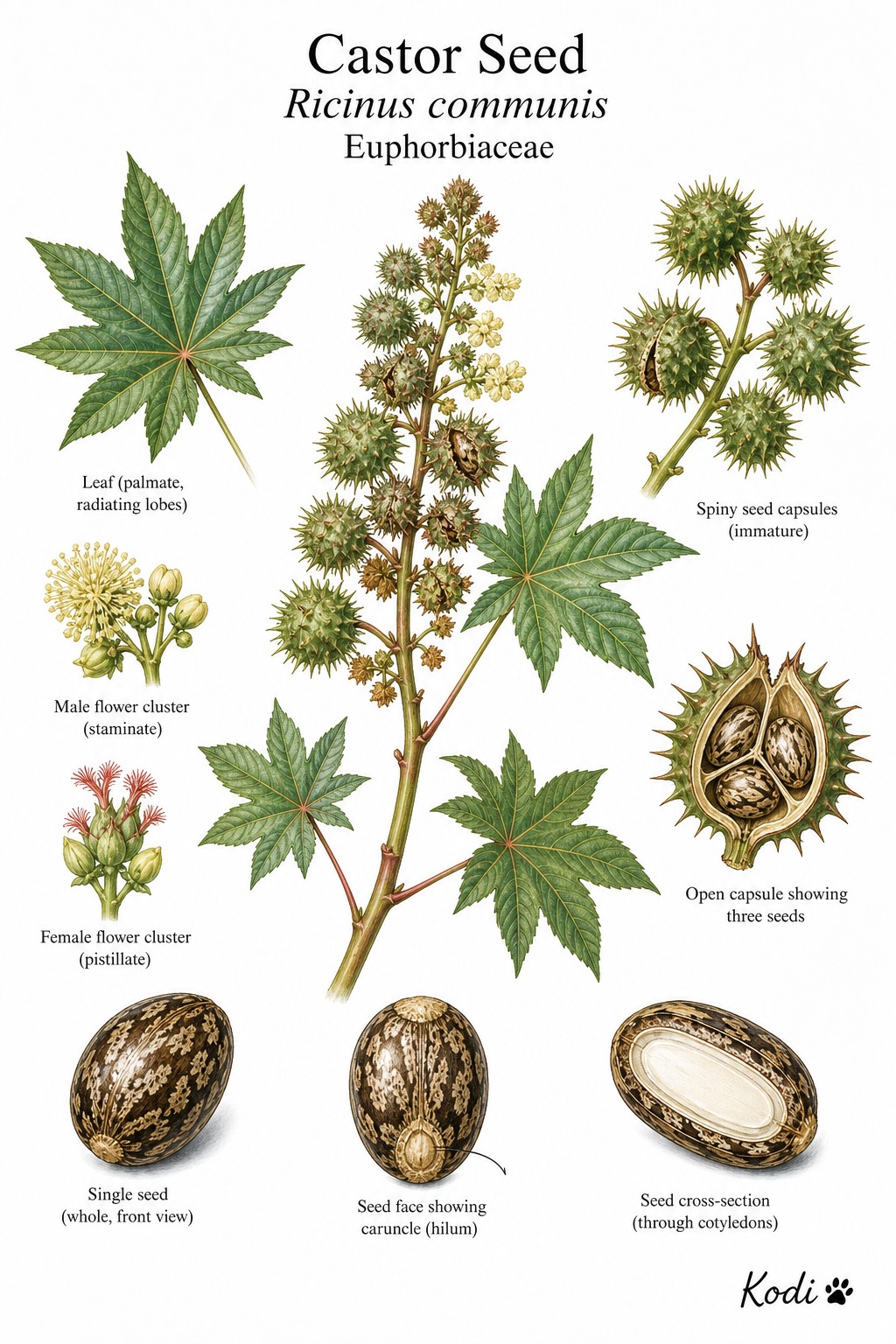
Known in TCM as Bi Ma Zi (蓖麻子), this acrid and sweet, neutral herb enters the Large Intestine and Lung. Traditionally, it resolves toxicity and reduces swelling - Bi Ma Zi is classically used for boils, abscesses, swollen lymph nodes, and severe throat swelling, usually by external application rather than casual internal dosing because of its toxicity, most often applied for constipation, abscess, and sore throat. Modern research has identified Ricin among its active constituents.
Part used: Seed
Also Known As
Latin: Semen Ricini | Pinyin: Bi Ma Zi | Chinese: 蓖麻子
TCM Properties
- Taste
- acrid, sweet
- Temperature
- neutral
- Channels
- Large Intestine, Lung
Traditional Use
Primary Actions
- Resolves toxicity and reduces swelling - Bi Ma Zi is classically used for boils, abscesses, swollen lymph nodes, and severe throat swelling, usually by external application rather than casual internal dosing because of its toxicity.
- Moistens the Intestines and unblocks severe dry constipation - the seed's abundant oil can move stubborn dry stool, but traditional practice strongly prefers the purified oil or very cautious supervised use because the whole seed contains ricin-bearing toxic material.
- Opens the channels and penetrates lodged obstruction - topical preparations are used for facial paralysis, numbness, stubborn headache, and localized stagnation because the seed is said to travel deeply through the network vessels.
- Historically drives downward movement strongly enough to influence labor and retained placenta - this old use is one reason the herb is absolutely contraindicated in pregnancy.
Secondary Actions
- Modern practice treats Bi Ma Zi as primarily an external-use herb or a high-caution preparation rather than a routine internal laxative.
- When internal bowel-moistening is needed, the separate purified castor-oil preparation is generally safer and more practical than the raw seed itself.
Classic Formulas
- Bi Ma Zi with Ru Xiang (蓖麻子配乳香) - traditional topical pairing for painful swellings and severe one-sided headache, combining swelling reduction with Blood-moving pain relief.
- Bi Ma Zi with Huang Lian (蓖麻子配黄连) - historical soaking or topical preparation for chronic toxic skin disease and severe inflammatory lesions where toxin and channel obstruction coexist.
- Historical navel, sole, or lower-abdomen applications of crushed castor seed - folk-classical obstetric methods used to hasten labor or expel retained placenta, now mainly cited as a safety warning rather than a self-care recommendation.
Classical References
- Me and Qi places Bi Ma Zi in the heat-clearing and toxin-relieving category and emphasizes swelling reduction, toxic-lesion use, bowel moistening, and strong external applications.
- Traditional comparisons distinguish Bi Ma Zi from Ba Dou and Huo Ma Ren: it is less violently purgative than Ba Dou but far more toxic than Huo Ma Ren, and its main modern relevance is external rather than internal.
- PREPARATION NOTE: this raw-seed record should not be confused with Bi Ma You (castor oil), the purified oil preparation in herb #196; the raw seeds retain ricin and related toxic constituents that make them substantially riskier.
Modern Research
Active Compounds
- Ricin (type II ribosome-inactivating protein) - the principal toxic protein responsible for the seed's high-risk status
- Ricinine (alkaloid) - a toxic marker compound frequently used as a biomarker of castor-bean exposure
- Ricinus communis agglutinin / RCA120 (lectin) - a ricin-related seed protein with toxicologic relevance
- Fixed oil rich in ricinoleic triglycerides - the seed's oily fraction underlies its historical laxative reputation once purified into castor oil
- Allergenic seed proteins - contribute to hypersensitivity and occupational-exposure concerns
Studied Effects
- A poison-center review of castor bean seed ingestions documented the real-world toxicity profile of the seeds and confirmed ricinine in exposed patients, underscoring the importance of careful risk counseling (PMID 24579983).
- A biomarker study showed urinary ricinine can confirm castor-bean exposure after non-lethal ingestion, reinforcing the clinical toxicology literature around raw-seed poisoning rather than routine therapeutic use (PMID 23014889).
- A classic review re-examined castor-bean toxicity case reports and argued that outcome depends heavily on dose, mastication, and modern supportive care, but still confirms the seed's serious poisoning potential (PMID 4082461).
PubMed References
Safety & Interactions
Contraindications
- Pregnancy
- Breastfeeding
- Children
- Any unsupervised internal use
Cautions
- Raw castor seeds contain ricin and ricinine and can cause severe poisoning with vomiting, diarrhea, gastrointestinal bleeding, shock, pulmonary injury, and multiorgan toxicity
- Chewed or well-masticated seeds are substantially more dangerous than intact seeds because the toxin is released from the seed coat
- External use can also irritate skin and mucosa and should be kept away from the eyes, mouth, and damaged skin
- MSK page not found - drug interaction data not available from Memorial Sloan Kettering integrative medicine database
Conditions
- Constipation Traditional ★★★☆☆ JSON
- Abscess Traditional ★★★☆☆ JSON
- Sore Throat Traditional ★★☆☆☆ JSON
- Facial Paralysis Traditional ★★☆☆☆ JSON
- Headache Traditional ★★☆☆☆ JSON
Frequently Asked Questions
What is Castor Seed used for?
Castor Seed is traditionally used to Resolves toxicity and reduces swelling - Bi Ma Zi is classically used for boils, abscesses, swollen lymph nodes, and severe throat swelling, usually by external application rather than casual internal dosing because of its toxicity., Moistens the Intestines and unblocks severe dry constipation - the seed's abundant oil can move stubborn dry stool, but traditional practice strongly prefers the purified oil or very cautious supervised use because the whole seed contains ricin-bearing toxic material., Opens the channels and penetrates lodged obstruction - topical preparations are used for facial paralysis, numbness, stubborn headache, and localized stagnation because the seed is said to travel deeply through the network vessels., Historically drives downward movement strongly enough to influence labor and retained placenta - this old use is one reason the herb is absolutely contraindicated in pregnancy.. Research has investigated its effects on: A poison-center review of castor bean seed ingestions documented the real-world toxicity profile of the seeds and confirmed ricinine in exposed patients, underscoring the importance of careful risk counseling (PMID 24579983).; A biomarker study showed urinary ricinine can confirm castor-bean exposure after non-lethal ingestion, reinforcing the clinical toxicology literature around raw-seed poisoning rather than routine therapeutic use (PMID 23014889)..
What are other names for Castor Seed?
Castor Seed is also known as Ricini. In TCM: 蓖麻子 (Bi Ma Zi); Semen Ricini.
Is Castor Seed safe during pregnancy?
Castor Seed is not recommended during pregnancy.
What are the contraindications for Castor Seed?
Castor Seed should not be used in: Pregnancy; Breastfeeding; Children; Any unsupervised internal use. Consult a qualified healthcare provider before use.