Castor Oil
- Chinese
- 蓖麻油
- Pinyin
- Bi Ma You
- Latin
- Oleum Ricini
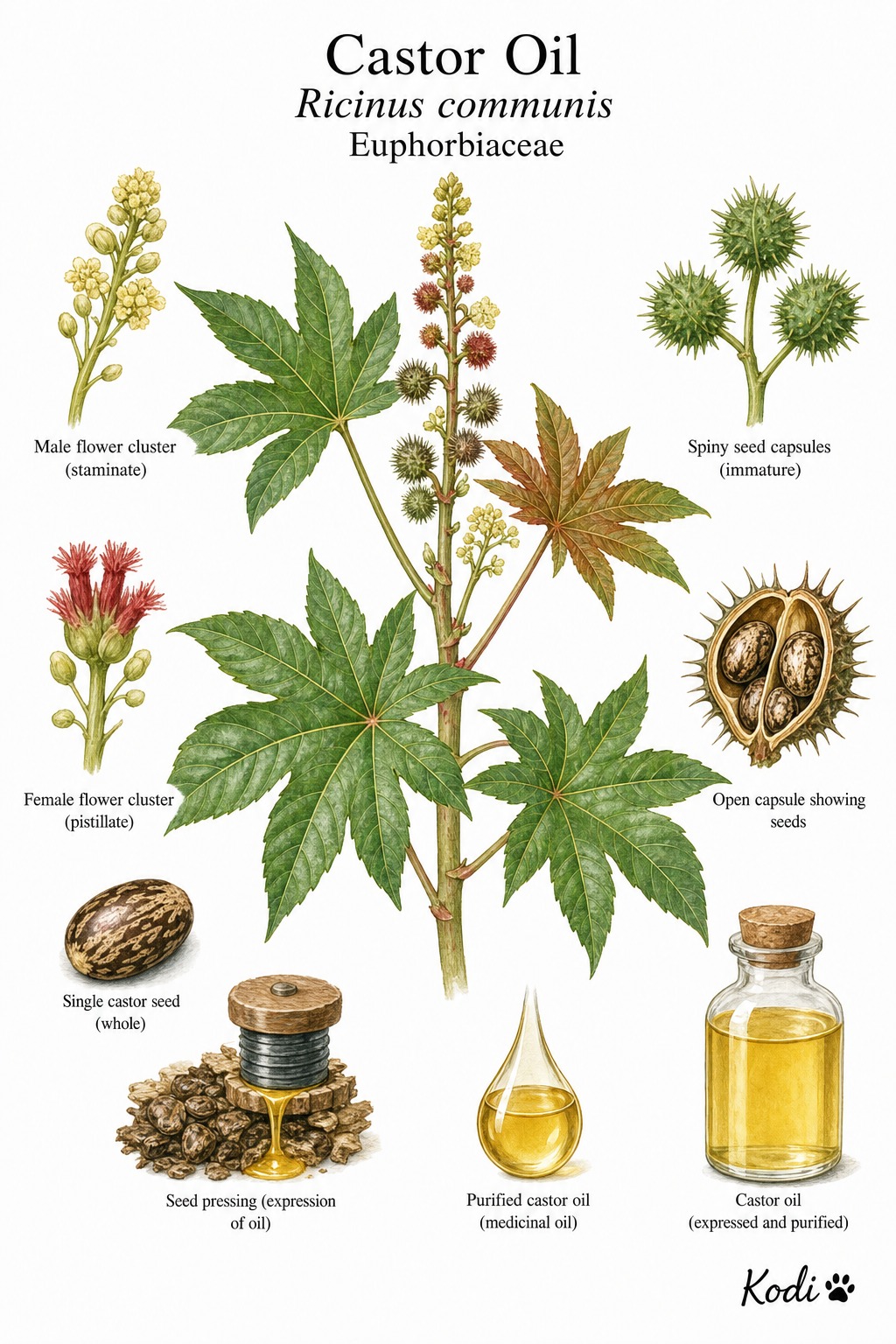
Known in TCM as Bi Ma You (蓖麻油), this sweet and acrid, neutral herb enters the Lung and Large Intestine. Traditionally, it moistens the Intestines and relaxes the bowels - Bi Ma You is the purified oily preparation traditionally used for dry constipation, abdominal distension, and obstructed stool when lubrication and downward movement are needed, most often applied for constipation, abdominal distension, and burns. Modern research has identified Ricinoleic among its active constituents.
Part used: Oil
Also Known As
Latin: Oleum Ricini | Pinyin: Bi Ma You | Chinese: 蓖麻油
TCM Properties
- Taste
- sweet, acrid
- Temperature
- neutral
- Channels
- Lung, Large Intestine
Traditional Use
Primary Actions
- Moistens the Intestines and relaxes the bowels - Bi Ma You is the purified oily preparation traditionally used for dry constipation, abdominal distension, and obstructed stool when lubrication and downward movement are needed.
- Moistens the skin and protects damaged tissue - topical castor oil is used for dryness, roughness, and irritated surfaces where an emollient, softening oil is preferred over harsher seed preparations.
- Supports external treatment of scabies, minor burns, and irritated skin lesions - traditional summaries place Bi Ma You among practical preparation-state medicinals that can both soften and shield inflamed tissues while reducing friction.
- Functions as the safer bowel-moving preparation derived from Bi Ma Zi - compared with the raw seed, the purified oil is the form traditionally preferred for internal laxative use because the dangerous seed proteins are removed during proper oil extraction.
Secondary Actions
- Bi Ma You is still not a food oil to use casually for long periods; it acts as a strong stimulant laxative and is best understood as a short-course medicinal preparation.
- The oil and the raw seed belong to the same plant, but their safety profiles are dramatically different: the seed is toxic because of ricin-bearing tissues, whereas properly prepared castor oil does not retain that same toxin burden.
Classical References
- TCM Wiki lists Bi Ma You as sweet, acrid, neutral, and toxic, entering the Lung and Large Intestine channels, with the actions of moistening the intestines to relax the bowels and moistening the skin.
- Traditional indication lists specifically include scabies, constipation, abdominal distension, and burns, showing the dual internal-external role of the oil preparation.
- PREPARATION NOTE: this record is for the purified seed oil, not the whole castor seed Bi Ma Zi; the latter is far more toxic and is recorded separately as herb #197.
Modern Research
Active Compounds
- Ricinoleic acid (hydroxylated fatty acid) - the dominant active constituent responsible for castor oil's laxative and much of its anti-inflammatory research profile
- Ricinolein (triglyceride of ricinoleic acid) - the principal storage-lipid form in castor oil
- Oleic acid (monounsaturated fatty acid) - a minor but relevant lipid contributor to the oil matrix
- Linoleic acid (polyunsaturated fatty acid) - a smaller constituent that contributes to barrier and surface-lipid discussions
- Minor tocopherols and sterol fractions - support antioxidant and dermatologic formulation interest
Studied Effects
- Mechanistic work on ricinoleic acid showed both pro- and anti-inflammatory actions depending on context, helping explain how castor oil can act as both a stimulant and a therapeutic topical oil (PMID 11534859).
- A review on ocular-surface disease summarized castor oil's anti-microbial, anti-inflammatory, anti-nociceptive, antioxidant, and tear-film-supporting properties, especially in blepharitis, meibomian gland dysfunction, and dry eye care (PMID 33037703).
- A randomized controlled trial found castor oil able to induce labor in post-date pregnancies, which helps explain why modern safety guidance strongly warns pregnant patients to avoid it outside medical supervision (PMID 28750937).
PubMed References
- Pro- and anti-inflammatory actions of ricinoleic acid: similarities and differences with capsaicin (2001)
- Therapeutic potential of castor oil in managing blepharitis, meibomian gland dysfunction and dry eye (2021)
- Castor oil for induction of labor in post-date pregnancies: A randomized controlled trial (2018)
Safety & Interactions
Contraindications
- Pregnancy
- Gastrointestinal obstruction
- Appendicitis or bowel perforation
- Inflammatory bowel disease
Cautions
- MSK notes that castor oil can cause abdominal cramping, vomiting, bloating, and dizziness, especially when used as an oral laxative
- Short-course use is preferred; repeated stimulant-laxative use can worsen dehydration and bowel irritation
- Purified castor oil is not the same as the raw castor seed, but low-quality or non-medicinal products should still not be assumed interchangeable with therapeutic-grade oil
- MSK reviewed castor oil and did not list specific herb-drug interactions on its monograph page
Conditions
- Constipation Clinical ★★★★☆ JSON
- Abdominal Distension Traditional ★★☆☆☆ JSON
- Burns Traditional ★★☆☆☆ JSON
- Scabies Traditional ★★☆☆☆ JSON
Frequently Asked Questions
What is Castor Oil used for?
Castor Oil is traditionally used to Moistens the Intestines and relaxes the bowels - Bi Ma You is the purified oily preparation traditionally used for dry constipation, abdominal distension, and obstructed stool when lubrication and downward movement are needed., Moistens the skin and protects damaged tissue - topical castor oil is used for dryness, roughness, and irritated surfaces where an emollient, softening oil is preferred over harsher seed preparations., Supports external treatment of scabies, minor burns, and irritated skin lesions - traditional summaries place Bi Ma You among practical preparation-state medicinals that can both soften and shield inflamed tissues while reducing friction., Functions as the safer bowel-moving preparation derived from Bi Ma Zi - compared with the raw seed, the purified oil is the form traditionally preferred for internal laxative use because the dangerous seed proteins are removed during proper oil extraction.. Research has investigated its effects on: Mechanistic work on ricinoleic acid showed both pro- and anti-inflammatory actions depending on context, helping explain how castor oil can act as both a stimulant and a therapeutic topical oil (PMID 11534859).; A review on ocular-surface disease summarized castor oil's anti-microbial, anti-inflammatory, anti-nociceptive, antioxidant, and tear-film-supporting properties, especially in blepharitis, meibomian gland dysfunction, and dry eye care (PMID 33037703)..
What are other names for Castor Oil?
Castor Oil is also known as Ricini. In TCM: 蓖麻油 (Bi Ma You); Oleum Ricini.
Is Castor Oil safe during pregnancy?
Castor Oil is not recommended during pregnancy.
What are the contraindications for Castor Oil?
Castor Oil should not be used in: Pregnancy; Gastrointestinal obstruction; Appendicitis or bowel perforation; Inflammatory bowel disease. Consult a qualified healthcare provider before use.