Calcined Pyrite
- Chinese
- 煅自然铜
- Pinyin
- Duan Zi Ran Tong
- Latin
- Pyritum Praeparata
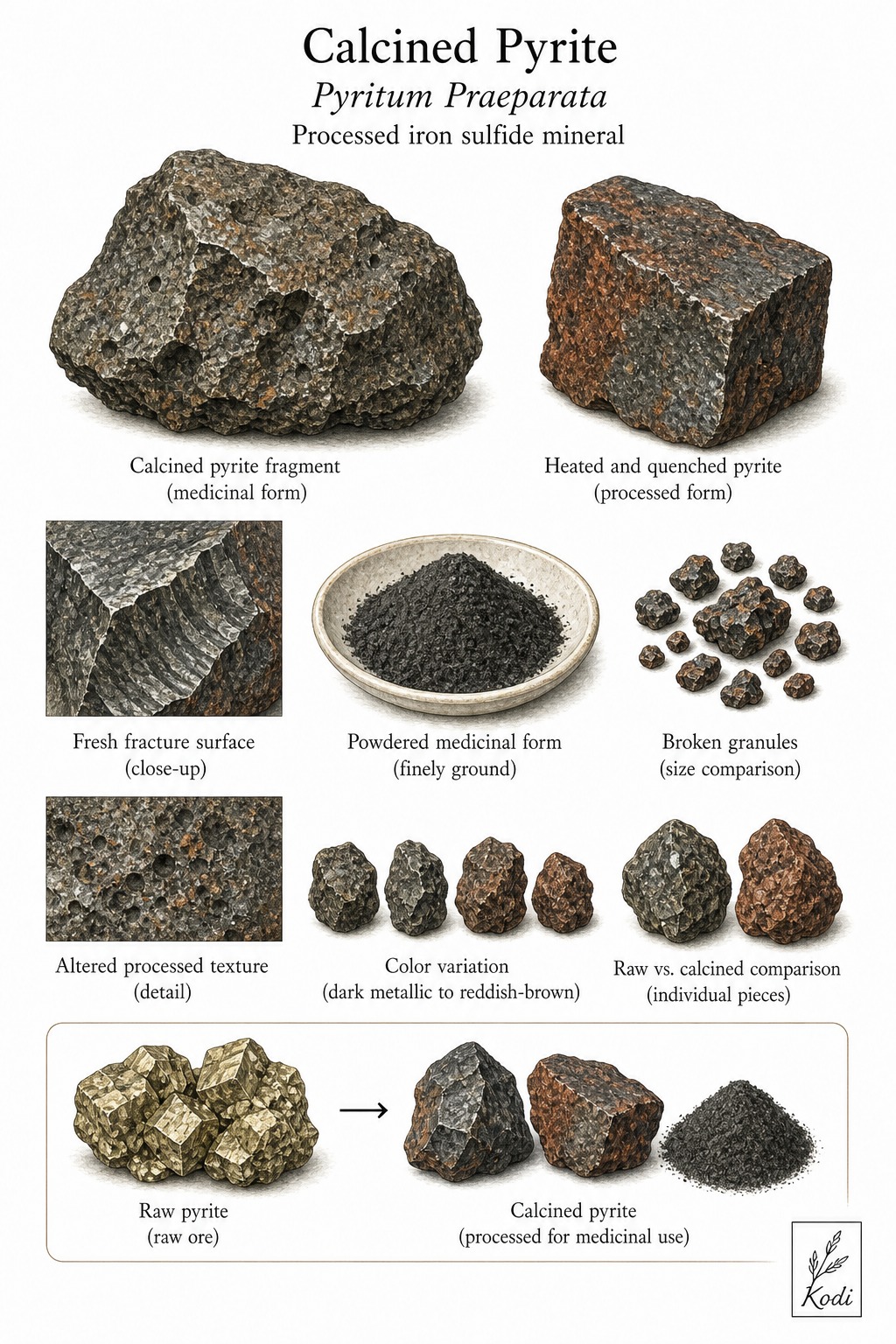
Known in TCM as Duan Zi Ran Tong (煅自然铜), this acrid, neutral herb enters the Liver. Traditionally, it invigorates Blood and alleviates pain - classically used for fixed pain, bruising, and trauma where blood stasis blocks the collaterals, most often applied for traumatic injury, joint pain, and skin burns. Modern research has identified Processed among its active constituents.
Part used: Pyrite
Also Known As
Latin: Pyritum Praeparata | Pinyin: Duan Zi Ran Tong | Chinese: 煅自然铜
TCM Properties
- Taste
- acrid
- Temperature
- neutral
- Channels
- Liver
Traditional Use
Primary Actions
- Invigorates Blood and alleviates pain - classically used for fixed pain, bruising, and trauma where blood stasis blocks the collaterals.
- Promotes healing of fractures and injured sinews - this is the classic distinguishing feature of Zi Ran Tong, especially after proper calcining and quenching make it suitable for bone-setting practice.
- Reduces swelling and assists repair after trauma - used for contusions, tendon damage, and slow-healing musculoskeletal injuries that need both movement of stasis and structural recovery.
Secondary Actions
- Traditional physicians insist on calcining and quenching because raw pyrite is too hard, harsh, and impurity-laden to use safely or effectively.
- The processed form is used in powders, pills, and external traumatology combinations rather than as a casual crude mineral decoction.
Classic Formulas
- Duan Zi Ran Tong with Gu Sui Bu and Xu Duan - bone-mending combination pattern for fractures and damaged sinews.
- Duan Zi Ran Tong with Ru Xiang and Mo Yao - trauma pairing strategy for pain, bruising, swelling, and delayed healing.
- External pyrite powders and traumatology wines - traditional bone-setting applications where the processed mineral supports callus formation and relieves pain.
Classical References
- Me & Qi presents Zi Ran Tong as a Liver-channel mineral that invigorates Blood, relieves pain, and specifically strengthens bones and sinews in fracture care.
- Classical medical lore preserved by Me & Qi famously connects Zi Ran Tong with early observations of fracture healing in animals, helping explain why it became a signature traumatology mineral.
- IMPORT NOTE: the source XLSX imported the pinyin as 'Duan Zhi Ran Tong', but the standard processed-drug name is Duan Zi Ran Tong. This file corrects the pinyin while preserving the slug.
Modern Research
Active Compounds
- Processed iron sulfide mineral phases - the core pyrite-derived fracture mineral after calcination
- Iron and copper trace elements - historically linked with bone-healing interest in processed pyrite preparations
- Reduced arsenic and lead fractions after calcining and vinegar quenching - a critical safety consequence of traditional processing
- Hematite-like transformation products formed during high-temperature processing - part of the mineralogical shift that changes bioavailability and toxicity
Studied Effects
- A 2024 systematic review and meta-analysis found that Chinese patent medicines containing pyrite improved total effective rate, callus growth, and bone union in fracture care, though the overall evidence quality remained limited (PMID 38256337).
- Traditional processing science has direct modern support - calcination and vinegar quenching reduce toxic metals and alter the crystal structure of pyrite in ways that rationalize why raw material is not used clinically (PMID 15673196).
- Laboratory work cited by Me & Qi also suggests processed pyrite enhances osteoblast activity more than raw material, reinforcing the long-standing bone-healing indication.
PubMed References
Safety & Interactions
Contraindications
- Pregnancy
- Long-term internal use without supervision
- Use of unprocessed raw pyrite
Cautions
- Although properly processed Zi Ran Tong is classically considered non-toxic, raw pyrite may contain arsenic, lead, and other undesirable mineral impurities
- The traditional calcining and quenching process is not optional - it is a safety and efficacy requirement
- Because it moves Blood and is used in trauma settings, it should be matched to genuine stasis or fracture-type presentations rather than taken as a general supplement
- MSK page not found - drug interaction data not available from Memorial Sloan Kettering integrative medicine database
Conditions
- Traumatic Injury Traditional ★★★★★ JSON
- Joint Pain Traditional ★★★☆☆ JSON
- Skin Burns Traditional ★☆☆☆☆ JSON
Frequently Asked Questions
What is Calcined Pyrite used for?
Calcined Pyrite is traditionally used to Invigorates Blood and alleviates pain - classically used for fixed pain, bruising, and trauma where blood stasis blocks the collaterals., Promotes healing of fractures and injured sinews - this is the classic distinguishing feature of Zi Ran Tong, especially after proper calcining and quenching make it suitable for bone-setting practice., Reduces swelling and assists repair after trauma - used for contusions, tendon damage, and slow-healing musculoskeletal injuries that need both movement of stasis and structural recovery.. Research has investigated its effects on: A 2024 systematic review and meta-analysis found that Chinese patent medicines containing pyrite improved total effective rate, callus growth, and bone union in fracture care, though the overall evidence quality remained limited (PMID 38256337).; Traditional processing science has direct modern support - calcination and vinegar quenching reduce toxic metals and alter the crystal structure of pyrite in ways that rationalize why raw material is not used clinically (PMID 15673196)..
What are other names for Calcined Pyrite?
Calcined Pyrite is also known as Praeparata. In TCM: 煅自然铜 (Duan Zi Ran Tong); Pyritum Praeparata.
Is Calcined Pyrite safe during pregnancy?
Calcined Pyrite is not recommended during pregnancy.
What are the contraindications for Calcined Pyrite?
Calcined Pyrite should not be used in: Pregnancy; Long-term internal use without supervision; Use of unprocessed raw pyrite. Consult a qualified healthcare provider before use.