Calcareous Tufa
- Chinese
- 石灰华
- Pinyin
- Shi Hui Hua
- Latin
- Calciosinti
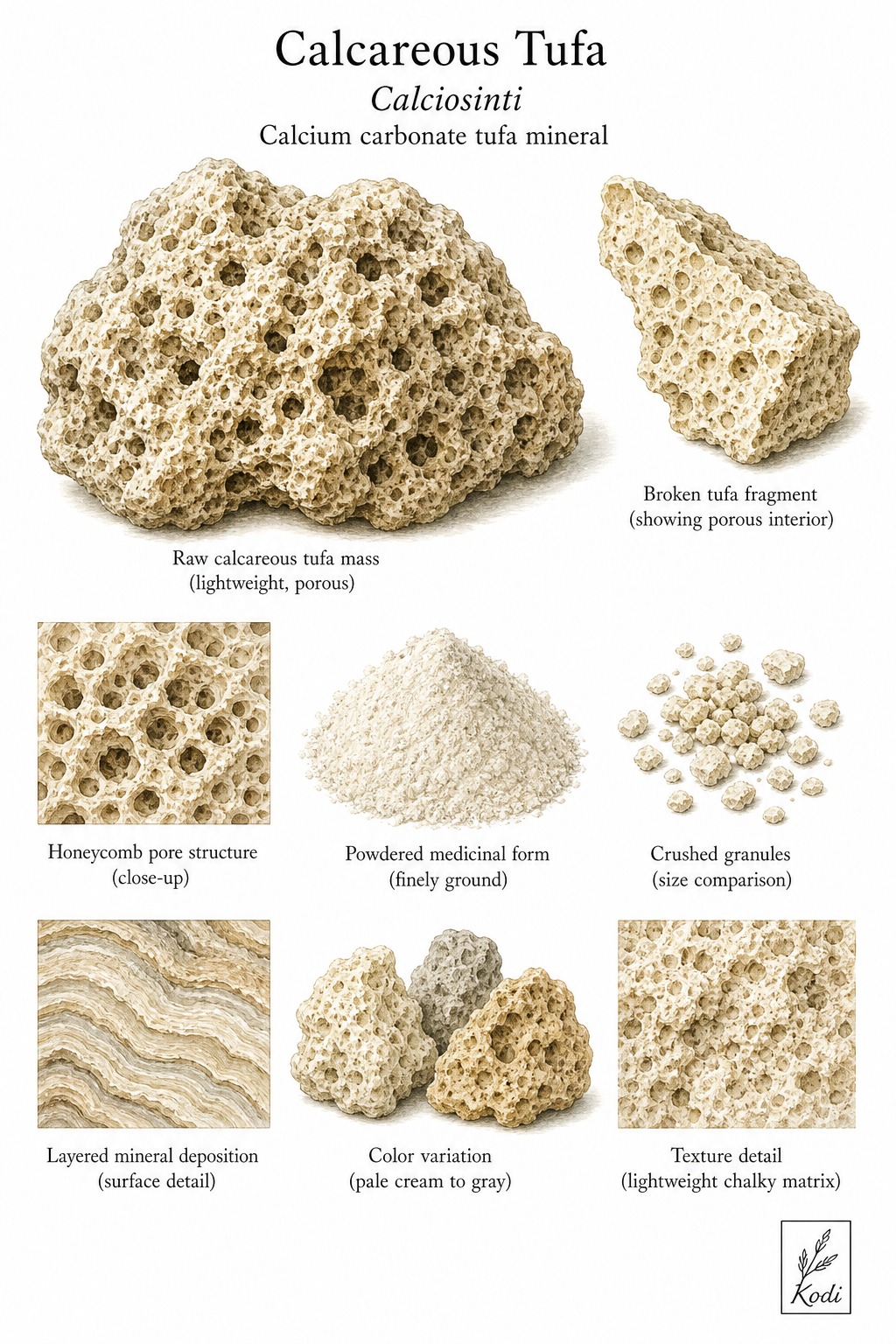
Known in TCM as Shi Hui Hua (石灰华), this sweet, cool herb enters the Lung and Liver. Traditionally, it clears Heat and benefits the Lung - used in Tibetan and regional minority-medicine traditions for Lung Heat, cough, and hot inflammatory respiratory disorders, most often applied for cough, bronchitis, and pneumonia. Modern research has identified Calcium among its active constituents.
Part used: Calcium silicate
Also Known As
Latin: Calciosinti | Pinyin: Shi Hui Hua | Chinese: 石灰华
TCM Properties
- Taste
- sweet
- Temperature
- cool
- Channels
- Lung, Liver
Traditional Use
Primary Actions
- Clears Heat and benefits the Lung - used in Tibetan and regional minority-medicine traditions for Lung Heat, cough, and hot inflammatory respiratory disorders.
- Stops cough and supports recovery from hot lung disease - extended to pediatric pneumonia, irritative cough, and feverish pulmonary conditions in traditional formula use.
- Assists wound healing and retreats jaundice - a lesser but recurring traditional role in ethnic-medicine references for hot sores, tissue injury, and jaundice patterns.
Secondary Actions
- Shi Hui Hua belongs more to Tibetan and minority-medicine formula traditions than to mainstream single-herb Han TCM dispensing.
- It is usually powdered and incorporated into compound preparations rather than featured as a famous standalone decoction herb.
Classic Formulas
- Jiu Wei Shi Hui Hua San (九味石灰华散) - Tibetan formula tradition used for pediatric pneumonia, high fever, agitation, and cough in hot lung disorders.
- Ba Wei Shi Hui Hua Wan (八味石灰华丸) - regional Tibetan formula line used for heat-type edema, cough, wheezing, oliguria, and weakness with fluid retention.
- Shi Hui Hua with safflower, terminalia fruit, and aromatic spices - a recurring ethnic-medicine combination pattern for clearing Heat while supporting the Lung and moving constrained pathology.
Classical References
- Chinese encyclopedia and regional Chinese herb references identify Shi Hui Hua as a characteristic Tibetan mineral medicinal rather than a mainstream Han pharmacopoeia decoction herb.
- Traditional summaries consistently describe it as slightly sweet and cool, with the core actions of clearing Heat and benefiting the Lung; some regional references also add wound-healing and jaundice-relieving uses.
- IMPORT NOTE: the source XLSX supplied the Latin 'Calx Pulveratum', which is too generic and can suggest powdered lime. Tibetan materia medica references instead identify this drug as calciosinti, a calcium-carbonate-rich tufa or travertine material. This record follows the Tibetan medicinal identity rather than quicklime or caustic construction lime.
Modern Research
Active Compounds
- Calcium carbonate (CaCO3) - the dominant mineral component of medicinal calcareous tufa
- Calcite and related carbonate mineral phases - the main crystalline matrix of the drug
- Trace magnesium-containing carbonates and silicate impurities - minor natural mineral contributors that vary by deposit source
- Porous sedimentary mineral matrix - a physical rather than phytochemical feature relevant to powdering and traditional processing
Safety & Interactions
Contraindications
- Patterns without Heat, Lung irritation, or jaundice-type indications
- Unsupervised substitution with caustic lime or non-medicinal mineral powders
Cautions
- Because the historical naming overlaps with broader lime terminology, authenticated medicinal material is essential; Shi Hui Hua should not be confused with industrial lime products
- Dedicated modern safety literature on this standalone Tibetan mineral drug is sparse, so internal use should remain practitioner-guided
- Mineral medicines can vary in impurity burden by source deposit, making quality control important
- MSK page not found - drug interaction data not available from Memorial Sloan Kettering integrative medicine database
Conditions
- Cough Traditional ★★★☆☆ JSON
- Bronchitis Traditional ★★☆☆☆ JSON
- Pneumonia Traditional ★★★☆☆ JSON
- Jaundice Traditional ★★☆☆☆ JSON
- Traumatic Injury Traditional ★☆☆☆☆ JSON
Frequently Asked Questions
What is Calcareous Tufa used for?
Calcareous Tufa is traditionally used to Clears Heat and benefits the Lung - used in Tibetan and regional minority-medicine traditions for Lung Heat, cough, and hot inflammatory respiratory disorders., Stops cough and supports recovery from hot lung disease - extended to pediatric pneumonia, irritative cough, and feverish pulmonary conditions in traditional formula use., Assists wound healing and retreats jaundice - a lesser but recurring traditional role in ethnic-medicine references for hot sores, tissue injury, and jaundice patterns..
What are other names for Calcareous Tufa?
Calcareous Tufa is also known as Calciosinti. In TCM: 石灰华 (Shi Hui Hua); Calciosinti.
Is Calcareous Tufa safe during pregnancy?
The safety of Calcareous Tufa during pregnancy has not been established. Consult a qualified healthcare provider before use.
What are the contraindications for Calcareous Tufa?
Calcareous Tufa should not be used in: Patterns without Heat, Lung irritation, or jaundice-type indications; Unsupervised substitution with caustic lime or non-medicinal mineral powders. Consult a qualified healthcare provider before use.