Goat's Blood
- Chinese
- 山羊血
- Pinyin
- Shan Yang Xue
- Latin
- Sanguis Naemorhedi
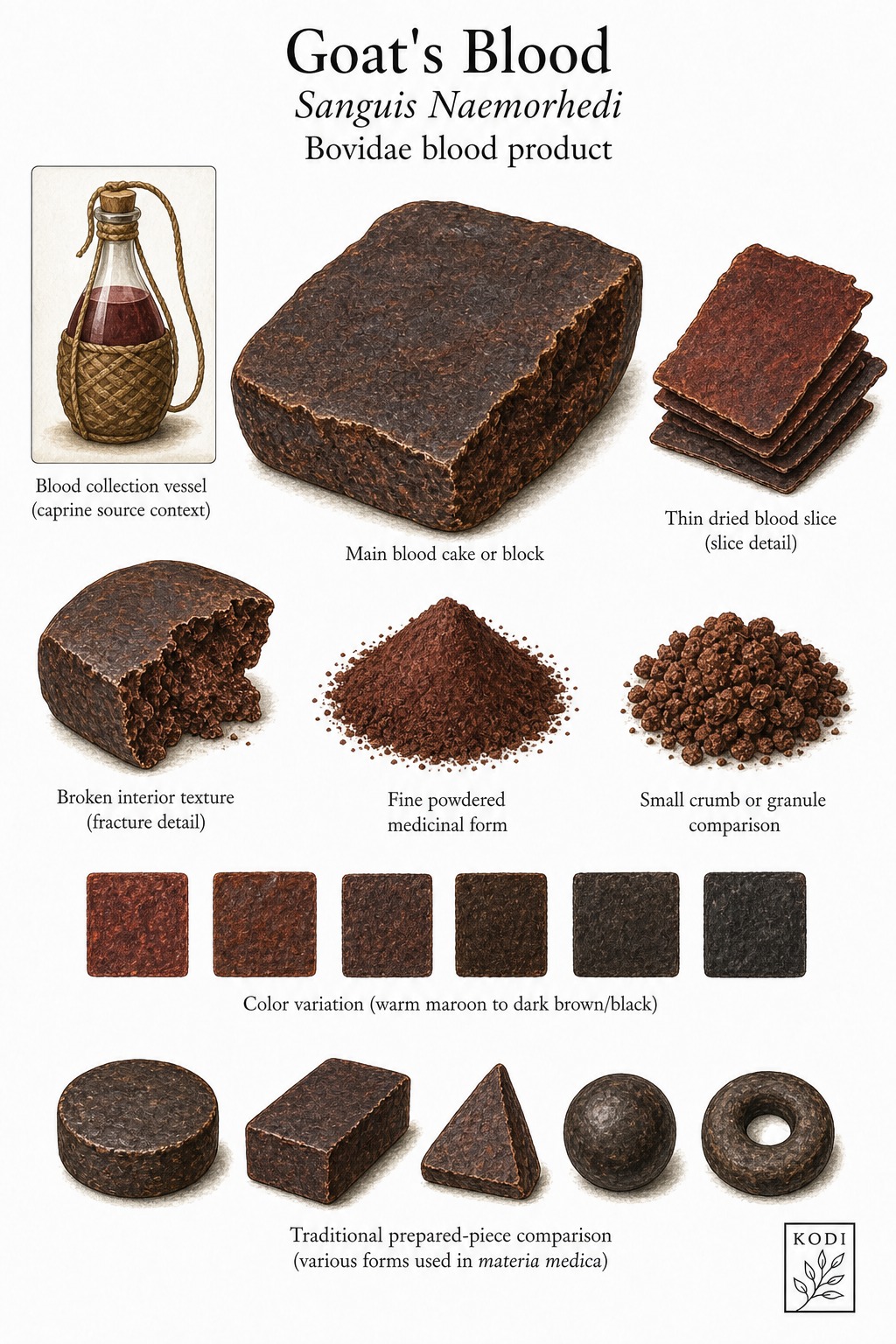
Known in TCM as Shan Yang Xue (山羊血), this salty, hot herb enters the Heart and Liver. Traditionally, it activates Blood and dispels Blood stasis - used for traumatic injury, fixed pain, and lingering obstruction after bruising or impact, most often applied for traumatic injury, hematuria, and joint pain. Modern research has identified Hemoglobin among its active constituents.
Part used: Blood
Also Known As
Latin: Sanguis Naemorhedi | Pinyin: Shan Yang Xue | Chinese: 山羊血
TCM Properties
- Taste
- salty
- Temperature
- hot
- Channels
- Heart, Liver
Traditional Use
Primary Actions
- Activates Blood and dispels Blood stasis - used for traumatic injury, fixed pain, and lingering obstruction after bruising or impact.
- Dredges the collaterals - applied when stasis and obstruction contribute to lumbar pain, arthralgia, or aching sinews and vessels.
- Removes toxicity - traditionally used for sores, boils, and toxic swelling patterns in which stasis and heat-toxin combine.
- Addresses bleeding from stasis or damaged collaterals in selected traditional contexts, including blood in the urine or stool when the presentation is not simple deficiency bleeding.
Secondary Actions
- This import slug says sheep, but the Chinese name Shan Yang Xue and TCM reference literature identify the medicinal more directly as goat's blood.
- The herb appears more often in regional or folk trauma practice, medicated wines, and powder-pill traditions than in famous mainstream textbook formulas.
Classical References
- TCM Wiki lists Shan Yang Xue as salty and hot, entering the Liver and Heart channels to activate Blood, dissipate stasis, dredge collaterals, and remove toxicity.
- Traditional indications include traumatic injury, hematuria, nosebleed, hematochezia, hematemesis, sores and boils, and arthralgia or myalgia from obstructed collaterals.
- IMPORT NOTE: The retained Latin label suggests a mountain-goat or goral lineage rather than literal sheep, but the Chinese medicinal identity remains Shan Yang Xue (goat's blood).
Modern Research
Active Compounds
- Hemoglobin and heme iron - major oxygen-carrying and iron-rich blood components
- Plasma proteins and peptides - broad protein fractions that may contribute to nutritional or biochemical activity
- Phospholipids and cell-membrane lipids - structural blood-cell constituents
- Trace minerals and micronutrients - variable animal-derived nutrient components dependent on source and processing
Studied Effects
- No clear herb-specific PubMed pharmacology literature was identified for Shan Yang Xue as a TCM medicinal; indexed modern literature is sparse and tends to focus on general animal-blood biochemistry or nutrition rather than traditional therapeutic use.
- As a result, modern evidence for this substance in TCM remains largely traditional and ethnomedical rather than clinical or mechanistic.
Safety & Interactions
Contraindications
- Yin deficiency with Blood-Heat
- Use without clear Blood-stasis, toxic-swelling, or traumatic-obstruction rationale
Cautions
- Animal-blood medicinals require careful sourcing, hygienic processing, and practitioner supervision because contamination and spoilage risks are significant
- Patients who avoid animal blood products for medical, cultural, or religious reasons should review formula ingredients carefully
- MSK page not found - drug interaction data not available from Memorial Sloan Kettering integrative medicine database
Conditions
- Traumatic Injury Traditional ★★★☆☆ JSON
- Hematuria Traditional ★★☆☆☆ JSON
- Joint Pain Traditional ★★☆☆☆ JSON
Frequently Asked Questions
What is Goat's Blood used for?
Goat's Blood is traditionally used to Activates Blood and dispels Blood stasis - used for traumatic injury, fixed pain, and lingering obstruction after bruising or impact., Dredges the collaterals - applied when stasis and obstruction contribute to lumbar pain, arthralgia, or aching sinews and vessels., Removes toxicity - traditionally used for sores, boils, and toxic swelling patterns in which stasis and heat-toxin combine., Addresses bleeding from stasis or damaged collaterals in selected traditional contexts, including blood in the urine or stool when the presentation is not simple deficiency bleeding.. Research has investigated its effects on: No clear herb-specific PubMed pharmacology literature was identified for Shan Yang Xue as a TCM medicinal; indexed modern literature is sparse and tends to focus on general animal-blood biochemistry or nutrition rather than traditional therapeutic use.; As a result, modern evidence for this substance in TCM remains largely traditional and ethnomedical rather than clinical or mechanistic..
What are other names for Goat's Blood?
Goat's Blood is also known as Naemorhedi. In TCM: 山羊血 (Shan Yang Xue); Sanguis Naemorhedi.
Is Goat's Blood safe during pregnancy?
The safety of Goat's Blood during pregnancy has not been established. Consult a qualified healthcare provider before use.
What are the contraindications for Goat's Blood?
Goat's Blood should not be used in: Yin deficiency with Blood-Heat; Use without clear Blood-stasis, toxic-swelling, or traumatic-obstruction rationale. Consult a qualified healthcare provider before use.