Beautiful Sweetgum Resin
- Chinese
- 枫香脂
- Pinyin
- Feng Xiang Zhi
- Latin
- Liquidambaris Resina
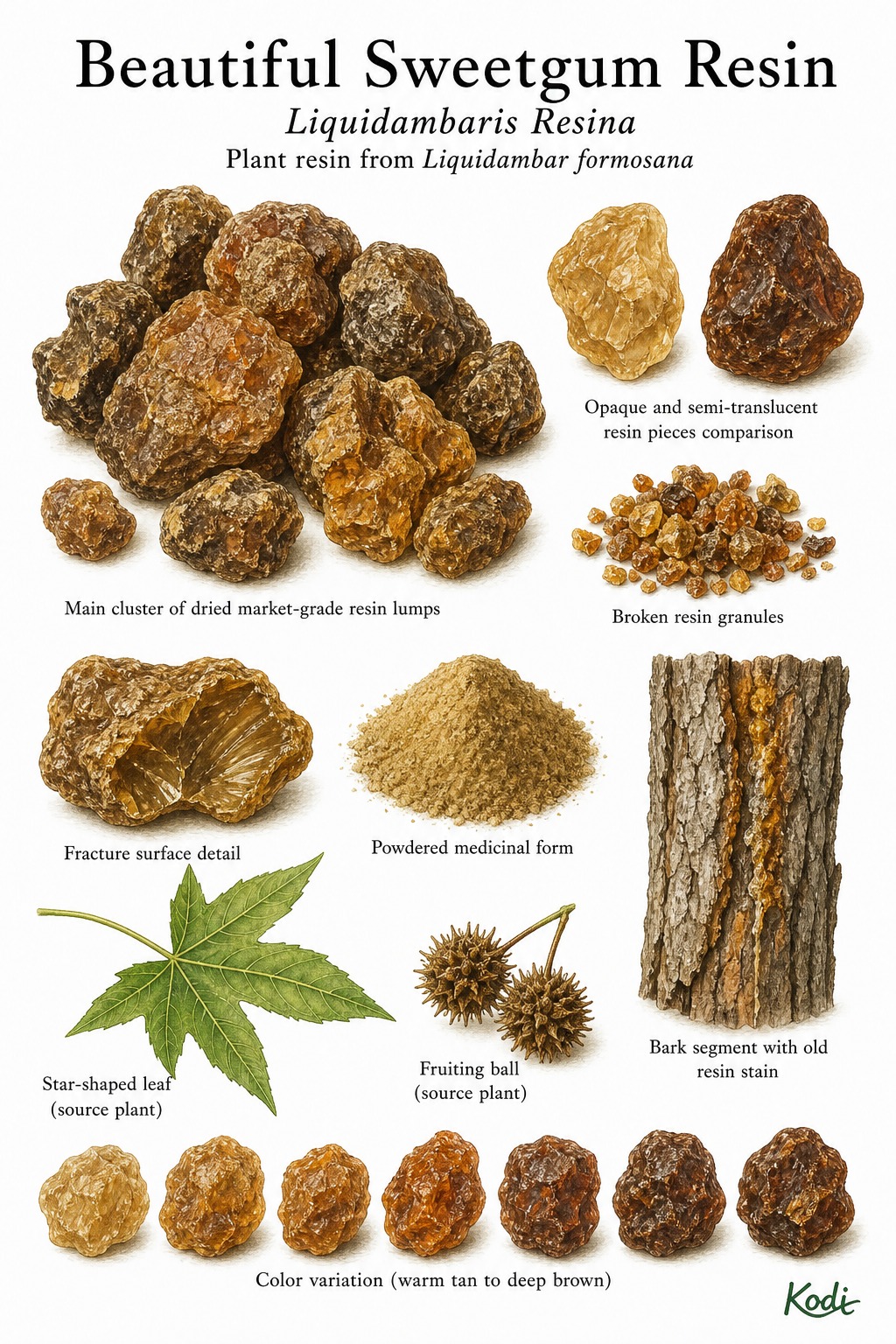
Known in TCM as Feng Xiang Zhi (枫香脂), this acrid and bitter, neutral herb enters the Spleen, Lung, and Liver. Traditionally, it activates Blood and alleviates pain - used for fixed painful swellings, traumatic pain, and stubborn masses where resinous blood movement helps disperse obstruction, most often applied for traumatic injury, oral ulcers, and breast abscess. Modern research has identified Liquidambaric among its active constituents.
Part used: Resin
Also Known As
Latin: Liquidambaris Resina | Pinyin: Feng Xiang Zhi | Chinese: 枫香脂
TCM Properties
- Taste
- acrid, bitter
- Temperature
- neutral
- Channels
- Spleen, Lung, Liver
Traditional Use
Primary Actions
- Activates Blood and alleviates pain - used for fixed painful swellings, traumatic pain, and stubborn masses where resinous blood movement helps disperse obstruction.
- Resolves toxin and dissipates nodules - classically chosen for scrofula, boils, carbuncles, and ulcerative lesions marked by pain, swelling, and chronicity.
- Cools Blood and helps stop bleeding - extended to nosebleed, vomiting blood, and bleeding external wounds when heat and blood damage complicate the pattern.
- Promotes tissue regeneration with topical use - incorporated into pastes and powders for ulcerated or incised lesions that need both pain relief and support for flesh generation.
Secondary Actions
- This Feng Xiang Zhi entry represents the same sweetgum resin as Bai Jiao Xiang; the duplicated slug is preserved only because the import source separated the synonym names.
- Clinically it belongs more to external medicine, trauma, and painful toxic swelling practice than to everyday digestive or tonic prescribing.
Classic Formulas
- Xiao Jin Dan (小金丹) - from Wai Ke Zheng Zhi Quan Shu Ji, where Feng Xiang Zhi or Bai Jiao Xiang participates in moving qi and blood, dispersing phlegm-stasis masses, and relieving pain in deep fixed swellings.
Classical References
- TCM Wiki lists Feng Xiang Zhi, Bai Jiao Xiang, and the related Chinese-character variants as the same resin of sweetgum, with pungent-bitter neutral properties and entry to the Spleen, Lung, and Liver channels.
- Traditional indications include deep-rooted boils, ulcers, scrofula, dental pain, epistaxis, and hematemesis, with use as decoction, powder, pill, or topical paste.
- IMPORT NOTE: This file is not a distinct herb from beautiful-sweetgum-resin; it is the same medicinal resin preserved as a second record because the spreadsheet used the alternate pinyin Feng Xiang Zhi.
- Trade and older herb references may use Resina Liquidamberis Taiwanianae or Resina Liquidamberis Formosanae as Latinized variants for the same substance.
Modern Research
Active Compounds
- Liquidambaric acid (oleanane triterpenoid) - a signature resin constituent studied in pathway-focused pharmacology work
- Oleanolic acid (oleanane triterpenoid) - a common pentacyclic triterpene isolated from sweetgum resin fractions
- Liquidambaric lactone (triterpenoid lactone) - part of the anti-angiogenic sweetgum-resin constituent set
- Liquidambolide A and liquiditerpenoic acids A and B (diterpenoids) - newer diterpenoid constituents reported from the resin
- Cinnamic acid ester derivatives (phenylpropanoid esters) - minor but pharmacognostically useful constituents identified in recent chemistry studies
Studied Effects
- Anti-angiogenic potential - multiple pentacyclic triterpenes from sweetgum resin inhibited VEGF-stimulated endothelial proliferation and migration in vitro (PMID 33556839)
- Blood-moving chemistry in modern assays - isolated triterpenes showed antiplatelet aggregation effects and cytotoxic activity in experimental screening models (PMID 21605635)
- Inflammation-related signaling effects - resin oleanane triterpenoids inhibited NFAT transcription factor activity, a plausible mechanistic bridge to traditional swollen toxic lesion use (PMID 14993816)
- Ongoing phytochemical discovery - additional diterpenoids and cinnamic acid ester derivatives continue to be reported from Liquidambaris Resina, supporting a broader modern constituent profile (PMID 23962240; PMID 37802781)
PubMed References
- Pentacyclic Triterpenes from the resin of Liquidambar formosana have anti-angiogenic properties. (2021)
- Pentacyclic triterpenes from the resin of Liquidambar formosana. (2011)
- Oleanane triterpenoids with inhibitory activity against NFAT transcription factor from Liquidambar formosana. (2004)
- Three new diterpenoids from the resin of Liquidambar formosana. (2014)
- [A new cinnamic acid ester derivative from Liquidambaris Resina]. (2023)
Safety & Interactions
Contraindications
- Pregnancy
- Bleeding from qi deficiency or cold deficiency without toxic heat or blood stasis
Cautions
- As a Blood-moving resin traditionally contraindicated in pregnancy, it should be reserved for appropriate stasis or toxic-swelling patterns
- Because resin products are prone to adulteration and contamination, reliable sourcing matters more than the English common name suggests
- MSK page not found - drug interaction data not available from Memorial Sloan Kettering integrative medicine database
Conditions
- Traumatic Injury Traditional ★★★☆☆ JSON
- Oral Ulcers Traditional ★★☆☆☆ JSON
- Breast Abscess Traditional ★★☆☆☆ JSON
Frequently Asked Questions
What is Beautiful Sweetgum Resin used for?
Beautiful Sweetgum Resin is traditionally used to Activates Blood and alleviates pain - used for fixed painful swellings, traumatic pain, and stubborn masses where resinous blood movement helps disperse obstruction., Resolves toxin and dissipates nodules - classically chosen for scrofula, boils, carbuncles, and ulcerative lesions marked by pain, swelling, and chronicity., Cools Blood and helps stop bleeding - extended to nosebleed, vomiting blood, and bleeding external wounds when heat and blood damage complicate the pattern., Promotes tissue regeneration with topical use - incorporated into pastes and powders for ulcerated or incised lesions that need both pain relief and support for flesh generation.. Research has investigated its effects on: Anti-angiogenic potential - multiple pentacyclic triterpenes from sweetgum resin inhibited VEGF-stimulated endothelial proliferation and migration in vitro (PMID 33556839); Blood-moving chemistry in modern assays - isolated triterpenes showed antiplatelet aggregation effects and cytotoxic activity in experimental screening models (PMID 21605635).
What are other names for Beautiful Sweetgum Resin?
Beautiful Sweetgum Resin is also known as Liquidambaris. In TCM: 枫香脂 (Feng Xiang Zhi); Liquidambaris Resina.
Is Beautiful Sweetgum Resin safe during pregnancy?
Beautiful Sweetgum Resin is not recommended during pregnancy. As a Blood-moving resin traditionally contraindicated in pregnancy, it should be reserved for appropriate stasis or toxic-swelling patterns
What are the contraindications for Beautiful Sweetgum Resin?
Beautiful Sweetgum Resin should not be used in: Pregnancy; Bleeding from qi deficiency or cold deficiency without toxic heat or blood stasis. Consult a qualified healthcare provider before use.