Bark of Chinaberry Tree
- Chinese
- 苦楝皮
- Pinyin
- Ku Lian Pi
- Latin
- Cortex Meliae
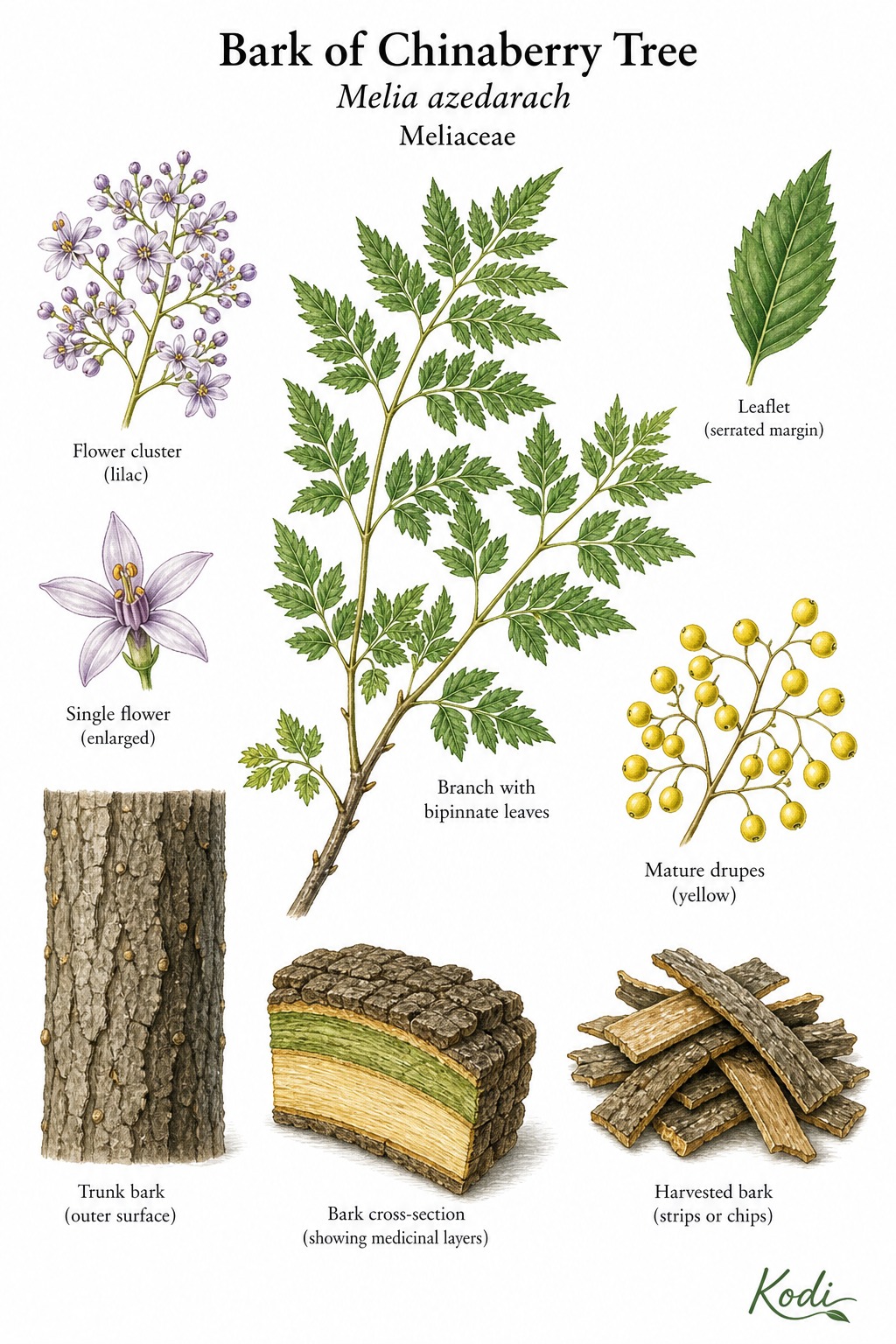
Known in TCM as Ku Lian Pi (苦楝皮), this bitter, cold herb enters the Liver, Spleen, and Stomach. Traditionally, it strongly expels intestinal parasites - classically used for roundworm, pinworm, hookworm, and mixed helminth patterns when abdominal pain, irritability, anal itching, or worm expulsion indicate a significant parasitic burden, most often applied for intestinal parasites, fungal infection, and eczema. Modern research has identified Toosendanin among its active constituents.
Part used: Bark
Also Known As
Latin: Cortex Meliae | Pinyin: Ku Lian Pi | Chinese: 苦楝皮
TCM Properties
- Taste
- bitter
- Temperature
- cold
- Channels
- Liver, Spleen, Stomach
Traditional Use
Primary Actions
- Strongly expels intestinal parasites - classically used for roundworm, pinworm, hookworm, and mixed helminth patterns when abdominal pain, irritability, anal itching, or worm expulsion indicate a significant parasitic burden.
- Kills parasites and relieves itching externally - powdered or decocted topical use addresses tinea, scabies, eczema, and vulvovaginal itching when damp-heat and parasites combine at the skin surface.
- Clears damp-heat from localized toxic lesions - its bitter coldness helps dry dampness and reduce inflammatory itching when hot, weeping, or foul lesions accompany fungal or parasitic skin disease.
- Acts as a harsh short-course eliminant rather than a daily tonic herb - traditionally reserved for defined excess conditions and usually combined with supportive or harmonizing herbs to reduce the burden of its toxicity.
Secondary Actions
- Traditional internal use may extend to trichomonas-type vaginal itching and damp-heat leukorrhea, especially when combined with external washing methods.
- Because Ku Lian Pi is cold and toxic, classical practice often limits the treatment course and balances it with digestive support rather than prescribing it as a long-term single herb.
Classic Formulas
- Hua Chong Wan (化虫丸) - traditional worm-expelling pill in which Ku Lian Pi is combined with Shi Jun Zi, Bing Lang, and other antiparasitic herbs for stubborn intestinal parasite accumulation.
- Lian Liu Er Pi Yin (楝榴二皮饮) - a regional decoction pairing Ku Lian Pi with Shi Liu Gen Pi for hookworm and related intestinal parasite presentations.
- External Ku Lian Pi powder or wash preparations mixed with vinegar, oil, or fat are repeatedly recorded in materia medica practice for scabies, tinea, and itching skin lesions.
Classical References
- Ming Yi Bie Lu and later materia medica list Ku Lian Pi as a cold, bitter, toxic bark that powerfully expels worms and should not be overused because of its harsh nature.
- TCM Wiki and related educational materia medica emphasize its dual internal-external role: strong antiparasitic action internally and damp-heat itching relief externally.
- The classical cautions to decoct thoroughly and avoid prolonged or excessive dosing reflect longstanding recognition that therapeutic value and toxicity sit close together in this herb.
Modern Research
Active Compounds
- Toosendanin (trichilin-class limonoid) - the best-known bioactive marker in medicinal Melia species and a major driver of both pharmacologic activity and toxicity concern
- Meliatoxins A and B (limonoid toxins) - mammalian toxic constituents important for quality control and overdose risk assessment
- Melianone and related limonoids (tetranortriterpenoids) - contribute antiparasitic, cytotoxic, and metabolic research interest
- Cedrelone-class limonoids (limonoids) - associated with anti-inflammatory and antiproliferative activity in genus-level Melia research
- Sterols and triterpenoids from bark extracts - minor constituents that broaden the phytochemical profile beyond the limonoid fraction
Studied Effects
- A recent review of Melia limonoids highlights anti-cancer, insecticidal, antiparasitic, and anti-botulism activities while also stressing non-negligible toxic effects, especially around toosendanin-class constituents (PMID 35140606)
- Human poisoning has been documented after Melia azedarach exposure, with neurologic and systemic symptoms occurring after medicinal use, confirming that clinical toxicity is not merely theoretical (PMID 18763152)
- Chemical analysis of bark isolates identified multiple constituents with protein tyrosine phosphatase 1B inhibitory activity, showing that the bark remains pharmacologically active beyond its classical antiparasitic role (PMID 32081038)
- A bark hexane fraction showed experimental anticancer activity but required parallel toxicity evaluation, illustrating the narrow therapeutic window that complicates modern development (PMID 24278590)
PubMed References
- Limonoids From the Genus Melia (Meliaceae): Phytochemistry, Synthesis, Bioactivities, Pharmacokinetics, and Toxicology (2022)
- Human Melia azedarach poisoning (2008)
- Chemical constituents from the barks of Melia azedarach and their PTP1B inhibitory activity (2020)
- The Toxicity and Anti-cancer Activity of the Hexane Layer of Melia azedarach L. var. japonica Makino's Bark Extract (2012)
Safety & Interactions
Contraindications
- Pregnancy
- Children or frail patients without direct practitioner supervision
- Spleen and Stomach deficiency-cold, chronic diarrhea, or non-parasitic itching disorders
Cautions
- Ku Lian Pi is a toxic herb with limonoid constituents close to the edge of therapeutic and overdose ranges; prolonged, excessive, or unsupervised internal use is inappropriate
- Human poisoning reports describe neurologic and systemic symptoms after exposure, and classical texts likewise warn against large doses or long courses
- Use topically with care on broken or highly inflamed skin, and avoid treating it as a general wellness antifungal or parasite cleanse
- MSK page not found - drug interaction data not available from Memorial Sloan Kettering integrative medicine database
Conditions
- Intestinal Parasites Traditional ★★★★★ JSON
- Fungal Infection Traditional ★★★★☆ JSON
- Eczema Traditional ★★★☆☆ JSON
- Leukorrhea Traditional ★★☆☆☆ JSON
Frequently Asked Questions
What is Bark of Chinaberry Tree used for?
Bark of Chinaberry Tree is traditionally used to Strongly expels intestinal parasites - classically used for roundworm, pinworm, hookworm, and mixed helminth patterns when abdominal pain, irritability, anal itching, or worm expulsion indicate a significant parasitic burden., Kills parasites and relieves itching externally - powdered or decocted topical use addresses tinea, scabies, eczema, and vulvovaginal itching when damp-heat and parasites combine at the skin surface., Clears damp-heat from localized toxic lesions - its bitter coldness helps dry dampness and reduce inflammatory itching when hot, weeping, or foul lesions accompany fungal or parasitic skin disease., Acts as a harsh short-course eliminant rather than a daily tonic herb - traditionally reserved for defined excess conditions and usually combined with supportive or harmonizing herbs to reduce the burden of its toxicity.. Research has investigated its effects on: A recent review of Melia limonoids highlights anti-cancer, insecticidal, antiparasitic, and anti-botulism activities while also stressing non-negligible toxic effects, especially around toosendanin-class constituents (PMID 35140606); Human poisoning has been documented after Melia azedarach exposure, with neurologic and systemic symptoms occurring after medicinal use, confirming that clinical toxicity is not merely theoretical (PMID 18763152).
What are other names for Bark of Chinaberry Tree?
Bark of Chinaberry Tree is also known as Melia. In TCM: 苦楝皮 (Ku Lian Pi); Cortex Meliae.
Is Bark of Chinaberry Tree safe during pregnancy?
Bark of Chinaberry Tree is not recommended during pregnancy.
What are the contraindications for Bark of Chinaberry Tree?
Bark of Chinaberry Tree should not be used in: Pregnancy; Children or frail patients without direct practitioner supervision; Spleen and Stomach deficiency-cold, chronic diarrhea, or non-parasitic itching disorders. Consult a qualified healthcare provider before use.