Apple
- Chinese
- 苹果
- Pinyin
- Ping Guo
- Latin
- Fructus Mali Pumilae
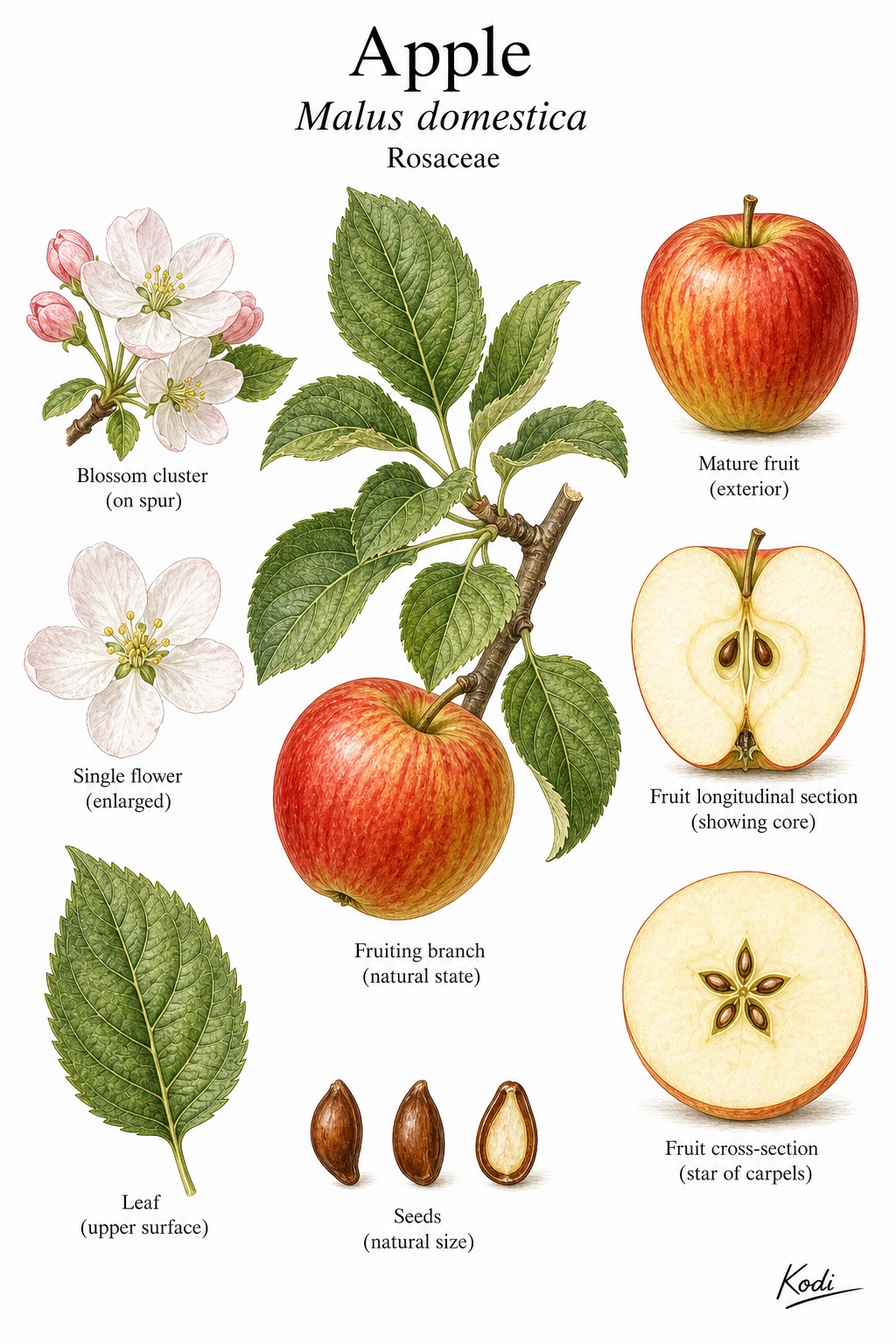
Known in TCM as Ping Guo (苹果), this sweet and sour, cool herb enters the Spleen, Stomach, and Lung. Traditionally, it generates Fluids and quenches thirst, most often applied for constipation, diabetes, and hypertension. Modern research has identified Quercetin-3-glucoside and quercetin-3-rutinoside (flavonols; antioxidant, anti-inflammatory, cardioprotective among its active constituents.
Part used: Fruit
Also Known As
Latin: Fructus Mali Pumilae | Pinyin: Ping Guo | Chinese: 苹果
TCM Properties
- Taste
- sweet, sour
- Temperature
- cool
- Channels
- Spleen, Stomach, Lung
Traditional Use
Primary Actions
- Generates Fluids and quenches thirst … Lung and Stomach dryness with dry mouth, thirst, dry cough, and summer Heat fluid depletion; the fresh sour-sweet juice moistens and cools without the cold heaviness of stronger Yin tonics
- Strengthens the Spleen and harmonises the Stomach … poor appetite, indigestion, mild diarrhea, and constipation; apple pectin acts bidirectionally … adsorbs toxins and firms stools in diarrhea while lubricating the bowels in dryness-constipation; the definitive Spleen-harmonising food-medicine
- Clears Summer Heat … refreshing, cooling dietary therapy for summer Heat patterns with fatigue and thirst; one of the classical summer foods in Chinese dietary medicine
Secondary Actions
- Nourishes Yin and moistens dryness … Lung Yin Deficiency with dry cough and dry skin; sweet-cool nature replenishes fluid without creating Dampness
- Calms the Heart and quiets the Spirit … mild dietary calming effect; Chinese folk medicine uses apple congee (Ping Guo Zhou) for mild insomnia, anxiety, and restlessness at the level of dietary therapy
Classic Formulas
- Ping Guo Zhou (苹果粥) … apple congee for Spleen deficiency with poor digestion and mild diarrhea; cooked apple with white rice harmonises the Stomach and supplements the Spleen Qi; classical dietary therapy for convalescent patients
- Fresh apple juice … taken at room temperature for summer Heat quenching; combined with pear juice (Li Zhi) and sugarcane juice (Zhe Jiang) for the classical 'Five Juices Drink' variant to generate Fluids in febrile disease recovery
Classical References
- Ben Cao Shuo Yao (supplementary materia medica, Qing dynasty): 'Ping Guo (苹果) … sweet and sour, cool; nourishes Yin, generates Fluids, harmonises the Stomach and Spleen; eaten raw for thirst and summer Heat; cooked for digestive weakness; the most widely consumed fruit-medicine in China'
- BOTANICAL NOTE: Ping Guo (苹果) refers to the cultivated European apple Malus pumila Mill. (syn. Malus domestica Borkh.) … introduced to China from Central Asia in the late Ming dynasty and widespread from the Qing dynasty onwards; older Ben Cao references to Ping Guo or Lin Qin may refer to native Chinese apple species (Malus asiatica Nakai, Malus spectabilis); the modern cultivated apple entered the TCM food-medicine lexicon relatively recently and is primarily a dietary therapeutic (shi liao, food therapy) rather than a formal drug.
Modern Research
Active Compounds
- Quercetin-3-glucoside and quercetin-3-rutinoside (flavonols; antioxidant, anti-inflammatory, cardioprotective … concentrated in peel)
- Chlorogenic acid and caffeic acid (hydroxycinnamic acids; antioxidant, antidiabetic)
- Phloridzin (apple-specific dihydrochalcone; SGLT inhibition; structural precursor to synthetic SGLT2 inhibitors gliflozins)
- Procyanidins B1 and B2 (condensed tannins; antioxidant, antimicrobial, anti-diarrheal)
- Apple pectin (soluble dietary fibre; prebiotic; cholesterol-lowering; gel-forming antidiarrheal)
- Malic acid and citric acid (organic acids; digestive stimulation, mild antimicrobial)
- Ursolic acid and oleanolic acid (triterpenoids in peel; anti-inflammatory, anticancer in vitro)
Studied Effects
- Cardiovascular: systematic reviews of apple consumption epidemiology consistently show inverse correlation with cardiovascular events, LDL oxidation, and hypertension; quercetin and pectin mechanisms validated; a 2013 BMJ modelling study estimated that one apple per day prevents ~8,500 cardiovascular deaths annually in the UK; the 'an apple a day' folk saying has genuine epidemiological validation
- Antidiabetic and glycaemic: phloridzin (peel) inhibits intestinal glucose absorption via SGLT1 and is the natural prototype for the pharmaceutical SGLT2 inhibitor drug class (dapagliflozin, empagliflozin); dietary quercetin inhibits α-glucosidase; apple consumption reduces postprandial blood glucose in T2DM subjects; validates the classical Xiao Ke (wasting-thirst/diabetes) dietary therapy indication
- Gut microbiome: apple pectin is one of the best-characterised prebiotics … selectively increases Bifidobacterium, Lactobacillus, and Ruminococcus species; forms a protective gel coating on intestinal epithelium; the bidirectional effect (anti-diarrheal via gel formation, pro-motility via fermentation gases) validates the classical Spleen-harmonising both-direction action
Safety & Interactions
Contraindications
- Spleen-Stomach Deficiency Cold with excessive Dampness … the cool, moist nature of apple may worsen Cold-Damp patterns with loose stools, bloating, and nausea if consumed in excess
- Diabetes mellitus with strict glucose control … apple juice (without fibre) has a significant glycaemic load; whole apple with peel and fibre preferred; avoid apple juice in controlled diabetics
Cautions
- Standard dietary dose: 1–3 medium apples per day as food therapy; decoction not typical; cooked apple in porridge for digestive weakness
- Apple seeds: contain amygdalin (cyanogenic glucoside) … hydrolysed to hydrogen cyanide by gut bacteria; whole fruit consumption is safe; do not consume large quantities of ground seeds or seed extract
- Pesticide residue: apple is consistently among the highest-pesticide fruits in residue monitoring; choose organic or wash thoroughly; peel removal reduces pesticide exposure but also removes phloridzin and quercetin which are concentrated in the peel
- Considered entirely safe at dietary doses; classified as a dietary therapeutic (shi liao 食疗) rather than a formal drug in TCM
Conditions
- Constipation Research ★★★☆☆ JSON
- Diabetes Research ★★☆☆☆ JSON
- Hypertension Research ★★☆☆☆ JSON
- Diarrhea Traditional ★★☆☆☆ JSON
- Common Cold Traditional ★☆☆☆☆ JSON
Frequently Asked Questions
What is Apple used for?
Apple is traditionally used to Generates Fluids and quenches thirst … Lung and Stomach dryness with dry mouth, thirst, dry cough, and summer Heat fluid depletion; the fresh sour-sweet juice moistens and cools without the cold heaviness of stronger Yin tonics, Strengthens the Spleen and harmonises the Stomach … poor appetite, indigestion, mild diarrhea, and constipation; apple pectin acts bidirectionally … adsorbs toxins and firms stools in diarrhea while lubricating the bowels in dryness-constipation; the definitive Spleen-harmonising food-medicine, Clears Summer Heat … refreshing, cooling dietary therapy for summer Heat patterns with fatigue and thirst; one of the classical summer foods in Chinese dietary medicine. Research has investigated its effects on: Cardiovascular: systematic reviews of apple consumption epidemiology consistently show inverse correlation with cardiovascular events, LDL oxidation, and hypertension; quercetin and pectin mechanisms validated; a 2013 BMJ modelling study estimated that one apple per day prevents ~8,500 cardiovascular deaths annually in the UK; the 'an apple a day' folk saying has genuine epidemiological validation; Antidiabetic and glycaemic: phloridzin (peel) inhibits intestinal glucose absorption via SGLT1 and is the natural prototype for the pharmaceutical SGLT2 inhibitor drug class (dapagliflozin, empagliflozin); dietary quercetin inhibits α-glucosidase; apple consumption reduces postprandial blood glucose in T2DM subjects; validates the classical Xiao Ke (wasting-thirst/diabetes) dietary therapy indication.
What are other names for Apple?
Apple is also known as Mali. In TCM: 苹果 (Ping Guo); Fructus Mali Pumilae.
Is Apple safe during pregnancy?
Apple is generally considered safe during pregnancy in normal amounts. Therapeutic or concentrated doses should be discussed with a qualified healthcare provider before use.
What are the contraindications for Apple?
Apple should not be used in: Spleen-Stomach Deficiency Cold with excessive Dampness … the cool, moist nature of apple may worsen Cold-Damp patterns with loose stools, bloating, and nausea if consumed in excess; Diabetes mellitus with strict glucose control … apple juice (without fibre) has a significant glycaemic load; whole apple with peel and fibre preferred; avoid apple juice in controlled diabetics. Consult a qualified healthcare provider before use.