Stringy Stonecrop Herb
- Chinese
- 垂盆草
- Pinyin
- Chui Pen Cao
- Latin
- Herba Sedi Sarmentosi
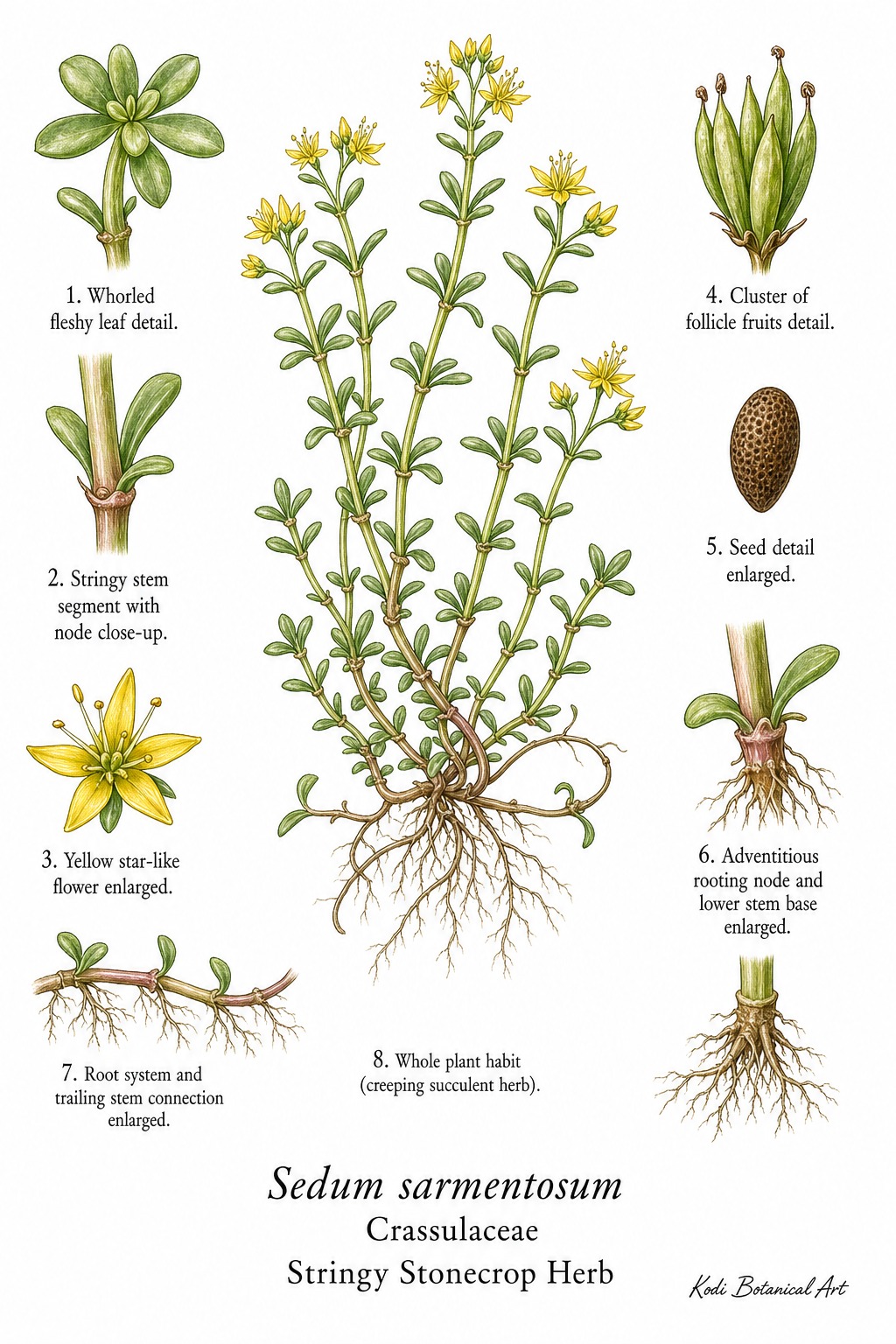
Known in TCM as Chui Pen Cao (垂盆草), this sweet and slightly sour, cool herb enters the Liver, Gallbladder, and Small Intestine. Traditionally, it clears Heat and resolves toxicity, most often applied for hepatitis, jaundice, and urinary tract infection. Modern research has identified Sarmentosin among its active constituents.
Part used: Whole herb
Also Known As
Latin: Herba Sedi Sarmentosi | Pinyin: Chui Pen Cao | Chinese: 垂盆草
TCM Properties
- Taste
- sweet, slightly sour
- Temperature
- cool
- Channels
- Liver, Gallbladder, Small Intestine
Traditional Use
Primary Actions
- Clears Heat and resolves toxicity … hepatitis, jaundice, carbuncles, burns, snake bite, and throat abscess
- Reduces liver enzymes … specifically used in TCM clinical practice for elevated ALT/AST in viral hepatitis, drug-induced liver injury, and alcohol hepatitis
- Promotes urination … urinary tract infection, hematuria, and dysuria from Damp-Heat
- Cools Blood and reduces swelling … external use for burns, scalds, and infected wounds
Secondary Actions
- External application … fresh herb pounded and applied as a poultice for burns, carbuncles, insect bites, and skin ulcers; one of the most commonly used topical emergency herbs in China
- Mild laxative … slightly loosens stool in Damp-Heat accumulation patterns
Classic Formulas
- Dan Bi Fang (单比方) … single-herb concentrated decoction of Chui Pen Cao (30–60 g dried or 60–120 g fresh) for acute viral hepatitis with elevated transaminases; widely used in modern Chinese hepatology as a standardised preparation (e.g., Chuipen tablets/granules in the Chinese Pharmacopoeia)
- Combined with Yin Chen Hao (茵陈蒿) and Zhi Zi (栀子) in formulas for Damp-Heat jaundice with fever and markedly elevated liver enzymes
Classical References
- Ben Cao Gang Mu Shi Yi (本草纲目拾遗): records Chui Pen Cao for resolving fire toxins, treating burns, throat swellings, and snake bite … 'applied fresh to burns, it immediately cools and stops pain; taken internally, it clears liver heat'
- Zhong Yao Zhi (中药志): documents modern clinical use of Chui Pen Cao specifically for lowering serum transaminases in viral hepatitis … one of the earliest Chinese references to the hepatoprotective application; the official Chuipen preparation is a standardised extract listed in the Chinese Pharmacopoeia 2020
Modern Research
Active Compounds
- Sarmentosin (cyanogenic glucoside; principal hepatoprotective compound; inhibits hepatocyte injury)
- N-methylisoleucine (unusual amino acid; immunomodulatory)
- Quercetin, kaempferol, and luteolin (flavonoids; anti-inflammatory, hepatoprotective, antioxidant)
- Isocoumarins (anti-inflammatory)
- Alkaloids (minor amounts; anti-inflammatory)
- Succinic acid, malic acid (organic acids; metabolic support)
Studied Effects
- Hepatoprotective and ALT-lowering: multiple randomised controlled trials in China demonstrate significant reduction of serum ALT and AST in patients with chronic viral hepatitis B following standardised Chui Pen Cao extract treatment; sarmentosin inhibits CCl4-induced hepatocyte necrosis and restores hepatic glutathione in animal models … the most extensively clinically validated hepatoprotective Chinese herb after Yin Chen Hao
- Anti-inflammatory: flavonoid fraction from S. sarmentosum inhibits NF-κB and COX-2 in LPS-stimulated macrophages; aqueous extract reduces IL-6, TNF-α, and hepatic stellate cell activation markers in fibrotic liver models … supports the broad Heat-toxin resolving indications beyond hepatitis
- Wound healing and anti-infective: fresh herb poultice and decoction wash demonstrate accelerated wound healing, reduced bacterial contamination, and anti-inflammatory activity in burn wound models … validates the extensive traditional topical burn and abscess applications
Safety & Interactions
Contraindications
- Spleen-Stomach Deficiency Cold … cool-sour nature impairs digestive Yang; avoid with chronic loose stools, cold abdomen, and weak digestion
- Cold-pattern jaundice (pale stools, cold body, absence of fever or thirst) … cool herb would worsen Yang-deficiency jaundice
Cautions
- Standard dose: 15–30 g dried herb in decoction; 30–60 g fresh herb; standardised extract (Chuipen tablets): as directed by product labelling
- Sarmentosin is a cyanogenic glucoside that can release hydrogen cyanide upon hydrolysis … at standard therapeutic doses in decoction form, this is not a clinical concern as heat and dilution minimise cyanide release; avoid consuming very large quantities of raw fresh herb
- Prolonged high-dose use: monitor liver function in patients with pre-existing liver disease, as very high doses in animal models show transient enzyme elevation after initial reduction; standard doses are hepatoprotective
- Pregnancy: cool-natured herb with acid-bitter properties; traditionally used with caution in pregnancy; insufficient formal teratogenicity data
Conditions
Frequently Asked Questions
What is Stringy Stonecrop Herb used for?
Stringy Stonecrop Herb is traditionally used to Clears Heat and resolves toxicity … hepatitis, jaundice, carbuncles, burns, snake bite, and throat abscess, Reduces liver enzymes … specifically used in TCM clinical practice for elevated ALT/AST in viral hepatitis, drug-induced liver injury, and alcohol hepatitis, Promotes urination … urinary tract infection, hematuria, and dysuria from Damp-Heat, Cools Blood and reduces swelling … external use for burns, scalds, and infected wounds. Research has investigated its effects on: Hepatoprotective and ALT-lowering: multiple randomised controlled trials in China demonstrate significant reduction of serum ALT and AST in patients with chronic viral hepatitis B following standardised Chui Pen Cao extract treatment; sarmentosin inhibits CCl4-induced hepatocyte necrosis and restores hepatic glutathione in animal models … the most extensively clinically validated hepatoprotective Chinese herb after Yin Chen Hao; Anti-inflammatory: flavonoid fraction from S. sarmentosum inhibits NF-κB and COX-2 in LPS-stimulated macrophages; aqueous extract reduces IL-6, TNF-α, and hepatic stellate cell activation markers in fibrotic liver models … supports the broad Heat-toxin resolving indications beyond hepatitis.
What are other names for Stringy Stonecrop Herb?
Stringy Stonecrop Herb is also known as Sedi. In TCM: 垂盆草 (Chui Pen Cao); Herba Sedi Sarmentosi.
Is Stringy Stonecrop Herb safe during pregnancy?
The safety of Stringy Stonecrop Herb during pregnancy has not been established. Consult a qualified healthcare provider before use.
What are the contraindications for Stringy Stonecrop Herb?
Stringy Stonecrop Herb should not be used in: Spleen-Stomach Deficiency Cold … cool-sour nature impairs digestive Yang; avoid with chronic loose stools, cold abdomen, and weak digestion; Cold-pattern jaundice (pale stools, cold body, absence of fever or thirst) … cool herb would worsen Yang-deficiency jaundice. Consult a qualified healthcare provider before use.