Spanish Needles Herb
- Chinese
- 鬼针草
- Pinyin
- Gui Zhen Cao
- Latin
- Herba Bidentis
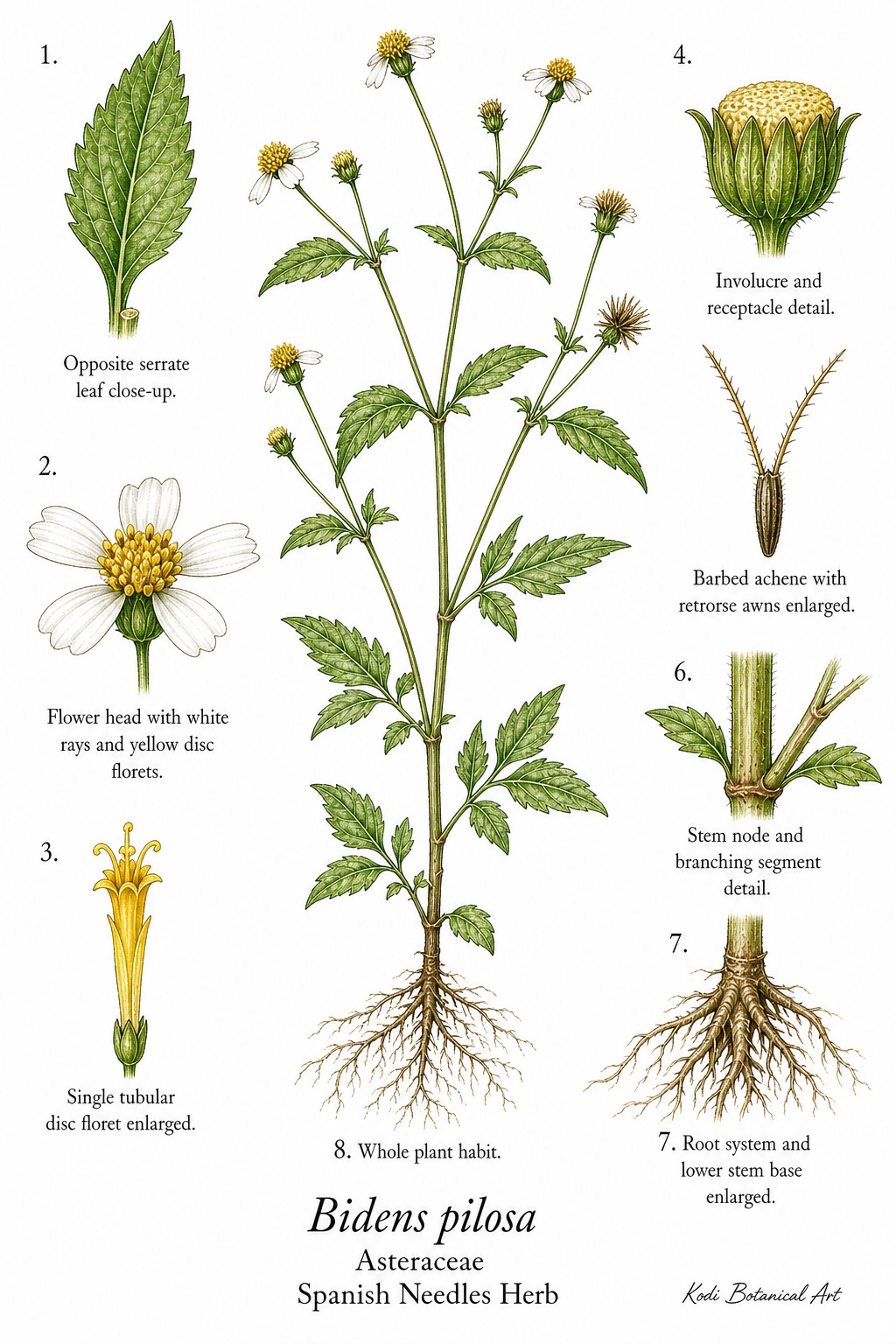
Known in TCM as Gui Zhen Cao (鬼针草), this bitter, cool herb enters the Liver, Lung, and Large Intestine. Traditionally, it clears Heat and resolves toxicity, most often applied for hypertension, diabetes, and appendicitis. Modern research has identified Luteolin, among its active constituents.
Part used: Whole herb
Also Known As
Latin: Herba Bidentis | Pinyin: Gui Zhen Cao | Chinese: 鬼针草
TCM Properties
- Taste
- bitter
- Temperature
- cool
- Channels
- Liver, Lung, Large Intestine
Traditional Use
Primary Actions
- Clears Heat and resolves toxicity … febrile illness, appendicitis, tonsillitis, pharyngitis, dysentery, and snake or insect bite
- Dispels Wind-Heat, releases the exterior … common cold with fever, headache, and sore throat from Wind-Heat invasion
- Anti-inflammatory, stops pain … abdominal pain from appendix inflammation, intestinal abscess, traumatic injury
- Cools Blood and stops bleeding … hematuria, epistaxis, and bloody dysentery from Blood Heat
Secondary Actions
- Antihypertensive … widely used in southern China and Taiwan folk medicine for hypertension; flavonoids and phenolic acids act on multiple vascular pathways
- Antidiabetic … folk use for blood glucose control validated in multiple modern studies; one of the most well-researched Chinese folk herbs for metabolic syndrome
Classical References
- Ben Cao Gang Mu Shi Yi (本草纲目拾遗; Supplement to the Compendium, Zhao Xuemin): records Gui Zhen Cao ('ghost needle herb', named for the barbed achene seeds that cling like needles) for Heat-toxin patterns including intestinal abscess and venomous bites … not in the main Ben Cao Gang Mu as it is a more recently documented folk herb
- Guang Zhou Min Jian Cao Yao (广州民间草药): documents extensive use of Gui Zhen Cao (Bidens pilosa) in Guangzhou and south China folk practice for appendicitis, dysentery, hypertension, and diabetes … one of the most commonly used folk herbs across tropical and subtropical China
Modern Research
Active Compounds
- Luteolin, quercetin, kaempferol (flavonoids; anti-inflammatory, antioxidant, antidiabetic)
- Luteolin-7-glucoside and quercetin-3-glucoside (flavonoid glycosides; bioavailable forms)
- Chlorogenic acid, caffeic acid, and 3,5-dicaffeoylquinic acid (phenolic acids; antioxidant, antidiabetic, anti-inflammatory)
- Polyacetylenes (1-phenylhepta-1,3,5-triyne and related compounds; anti-inflammatory, cytotoxic)
- Cytopiloyne (polyacetylene glucoside; antidiabetic … pancreatic β-cell protective)
- Bidensyneoside and related chalcones (anti-inflammatory, antimicrobial)
- Polysaccharides (immunostimulatory)
Studied Effects
- Antidiabetic: cytopiloyne from Bidens pilosa stimulates insulin secretion from pancreatic β-cells, protects β-cells from cytokine-mediated destruction, and improves glucose tolerance in streptozotocin-induced diabetic mice; mechanism involves Ca2+/calmodulin signalling and NF-κB inhibition … one of the most mechanistically detailed validations of a traditional antidiabetic folk herb (PMID 17525406)
- Antihypertensive and vasodilatory: flavonoid fraction from B. pilosa inhibits ACE activity and relaxes vascular smooth muscle via NO/cGMP pathway; clinical observational data from Taiwan support the traditional hypertension use; luteolin-7-glucoside identified as a principal active component in vascular relaxation assays
- Anti-inflammatory and immunomodulatory: aqueous extract of B. pilosa significantly inhibits LPS-induced NF-κB activation, COX-2 expression, and TNF-α/IL-6 production in macrophages; in vivo anti-inflammatory efficacy demonstrated in multiple rodent models of acute and chronic inflammation … mechanistic basis for the Heat-toxin and appendicitis traditional applications
PubMed References
Safety & Interactions
Contraindications
- Spleen-Stomach Deficiency Cold … cool-bitter nature will impair digestive Yang with prolonged use
- Cold-Damp patterns without Heat signs
Cautions
- Standard dose: 15–30 g dried herb in decoction; 30–60 g fresh herb; topical: fresh herb poultice for snake bite and wounds
- Antidiabetic medications (insulin, metformin, sulfonylureas): additive glucose-lowering effect via cytopiloyne and flavonoids; monitor blood glucose if consuming regularly in quantity
- Antihypertensive drugs: additive blood-pressure-lowering effect; monitor in patients on antihypertensives
- Generally considered safe at therapeutic doses; widely consumed as a tea and vegetable in tropical folk medicine cultures worldwide
- Asteraceae allergy: rare contact dermatitis possible in Asteraceae-sensitised individuals
Drug Interactions
- Antidiabetic medications … additive hypoglycemic effect via cytopiloyne; monitor blood glucose
- Antihypertensive drugs … additive blood-pressure lowering via ACE inhibition and NO pathway; monitor
Conditions
- Hypertension Traditional ★★★★☆ JSON
- Diabetes Research ★★★★☆ JSON
- Appendicitis Traditional ★★★☆☆ JSON
- Dysentery Traditional ★★★☆☆ JSON
- Upper Respiratory Infection Traditional ★★★☆☆ JSON
Frequently Asked Questions
What is Spanish Needles Herb used for?
Spanish Needles Herb is traditionally used to Clears Heat and resolves toxicity … febrile illness, appendicitis, tonsillitis, pharyngitis, dysentery, and snake or insect bite, Dispels Wind-Heat, releases the exterior … common cold with fever, headache, and sore throat from Wind-Heat invasion, Anti-inflammatory, stops pain … abdominal pain from appendix inflammation, intestinal abscess, traumatic injury, Cools Blood and stops bleeding … hematuria, epistaxis, and bloody dysentery from Blood Heat. Research has investigated its effects on: Antidiabetic: cytopiloyne from Bidens pilosa stimulates insulin secretion from pancreatic β-cells, protects β-cells from cytokine-mediated destruction, and improves glucose tolerance in streptozotocin-induced diabetic mice; mechanism involves Ca2+/calmodulin signalling and NF-κB inhibition … one of the most mechanistically detailed validations of a traditional antidiabetic folk herb (PMID 17525406); Antihypertensive and vasodilatory: flavonoid fraction from B. pilosa inhibits ACE activity and relaxes vascular smooth muscle via NO/cGMP pathway; clinical observational data from Taiwan support the traditional hypertension use; luteolin-7-glucoside identified as a principal active component in vascular relaxation assays.
What are other names for Spanish Needles Herb?
Spanish Needles Herb is also known as Bidentis. In TCM: 鬼针草 (Gui Zhen Cao); Herba Bidentis.
Is Spanish Needles Herb safe during pregnancy?
The safety of Spanish Needles Herb during pregnancy has not been established. Consult a qualified healthcare provider before use.
What are the contraindications for Spanish Needles Herb?
Spanish Needles Herb should not be used in: Spleen-Stomach Deficiency Cold … cool-bitter nature will impair digestive Yang with prolonged use; Cold-Damp patterns without Heat signs. Consult a qualified healthcare provider before use.
Does Spanish Needles Herb interact with any medications?
Spanish Needles Herb may interact with: Antidiabetic medications … additive hypoglycemic effect via cytopiloyne; monitor blood glucose; Antihypertensive drugs … additive blood-pressure lowering via ACE inhibition and NO pathway; monitor. Always inform your healthcare provider of any herbal supplements you are taking.