Russian Wormwood Herb
- Chinese
- 万年蒿
- Pinyin
- Wan Nian Hao
- Latin
- Herba Artemisiae
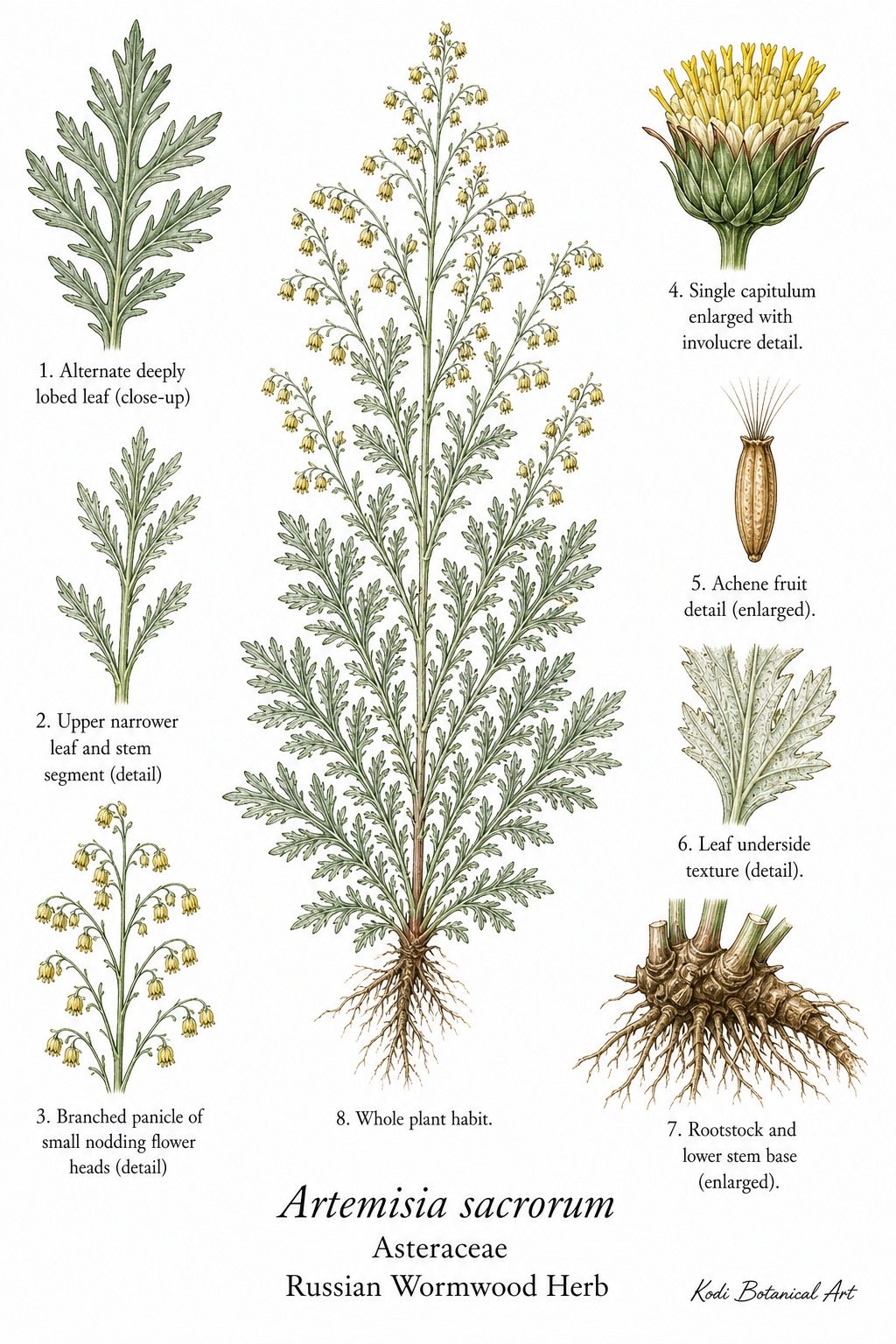
Known in TCM as Wan Nian Hao (万年蒿), this bitter and pungent, cool herb enters the Liver, Gallbladder, and Stomach. Traditionally, it clears Liver and Gallbladder Heat, dries Dampness, most often applied for jaundice, cholecystitis, and hepatitis. Modern research has identified Eupatilin (5,7-dihydroxy-3',4',6-trimethoxyflavone among its active constituents.
Part used: Whole herb
Also Known As
Latin: Herba Artemisiae | Pinyin: Wan Nian Hao | Chinese: 万年蒿
TCM Properties
- Taste
- bitter, pungent
- Temperature
- cool
- Channels
- Liver, Gallbladder, Stomach
Traditional Use
Primary Actions
- Clears Liver and Gallbladder Heat, dries Dampness … jaundice, cholecystitis, and Damp-Heat patterns in the Liver-Gallbladder axis
- Clears Heat and dispels Wind … fever, headache, and summer-heat patterns with heaviness and malaise
- Anti-inflammatory, stops pain … rheumatic aches, muscle soreness, hepatitis-related abdominal discomfort
- Charred form stops bleeding … hematochezia and other bleeding due to Heat in the Blood
Secondary Actions
- Folk antimalarial … bitter Artemisia species traditionally used for intermittent fever across northeast Asia; action weaker than Qing Hao (A. annua) but documented in Mongolian and Manchurian folk medicine
- External use: decoction wash for skin infections, rashes, and insect bites
Classical References
- SPECIES NOTE: Herba Artemisiae is a generic Latin name shared by multiple TCM Artemisia drugs. Wan Nian Hao (万年蒿) refers specifically to Artemisia sacrorum Ledeb. … distinct from Qing Hao (青蒿, A. annua … anti-malarial), Yin Chen Hao (茵陈蒿, A. capillaris … liver jaundice), and Ai Ye (艾叶, A. argyi … moxibustion). Wan Nian Hao is primarily a northeast China and Inner Mongolia regional folk herb; not found in classical Song/Ming-era formularies but documented in regional materia medica of the Qing dynasty and modern Mongolian medicine texts
Modern Research
Active Compounds
- Eupatilin (5,7-dihydroxy-3',4',6-trimethoxyflavone … characteristic flavone of A. sacrorum; anti-inflammatory, gastroprotective, anticancer)
- Jaceosidin (polymethoxyflavone; anti-inflammatory, apoptosis-inducing in cancer cell lines)
- Artabsin (sesquiterpene lactone; bitter tonic, antiparasitic)
- Essential oil: camphor, 1,8-cineole, thujone, borneol (antimicrobial, analgesic)
- Chlorogenic acid and caffeic acid (phenolic acids; antioxidant, anti-inflammatory)
- Tannins (astringent; haemostatic basis for charred form)
Studied Effects
- Anti-inflammatory: eupatilin from Artemisia sacrorum inhibits NF-κB, COX-2, and iNOS expression in LPS-stimulated macrophages and reduces carrageenan-induced paw edema in rodent models; anti-inflammatory potency comparable to other medicinal Artemisia flavonoids … mechanistic basis for the Liver-Heat and Damp-Heat clearing applications
- Hepatoprotective: eupatilin and jaceosidin protect hepatocytes against oxidative injury in CCl4-induced liver damage models, reducing ALT/AST elevation and restoring hepatic glutathione … supports traditional cholecystitis and jaundice applications in Chinese folk medicine
- Antimicrobial: essential oil components (camphor, cineole) and chlorogenic acid from A. sacrorum show in vitro activity against Staphylococcus aureus, Escherichia coli, and Candida albicans; consistent with the external use for skin infections in northeast China folk practice
Safety & Interactions
Contraindications
- Cold-Damp jaundice or liver disease (cold pattern with pale stools, aversion to cold) … cool-bitter nature contraindicated
- Spleen-Stomach Deficiency Cold … bitter-cool herb may further impair digestive Yang
Cautions
- Standard dose: 6–15 g dried herb in decoction
- Contains thujone in small amounts in the essential oil fraction … avoid prolonged high-dose internal use; therapeutic decoction doses are generally safe as thujone is poorly extracted in aqueous preparations
- Not the same herb as Qing Hao (A. annua) … lacks the artemisinin content; do not substitute for anti-malarial treatment
- Pregnancy: Artemisia genus is traditionally associated with emmenagogue activity; use with caution in pregnancy as a category-level precaution even though A. sacrorum has lower alkaloid content than the more potent Artemisia species
Conditions
Frequently Asked Questions
What is Russian Wormwood Herb used for?
Russian Wormwood Herb is traditionally used to Clears Liver and Gallbladder Heat, dries Dampness … jaundice, cholecystitis, and Damp-Heat patterns in the Liver-Gallbladder axis, Clears Heat and dispels Wind … fever, headache, and summer-heat patterns with heaviness and malaise, Anti-inflammatory, stops pain … rheumatic aches, muscle soreness, hepatitis-related abdominal discomfort, Charred form stops bleeding … hematochezia and other bleeding due to Heat in the Blood. Research has investigated its effects on: Anti-inflammatory: eupatilin from Artemisia sacrorum inhibits NF-κB, COX-2, and iNOS expression in LPS-stimulated macrophages and reduces carrageenan-induced paw edema in rodent models; anti-inflammatory potency comparable to other medicinal Artemisia flavonoids … mechanistic basis for the Liver-Heat and Damp-Heat clearing applications; Hepatoprotective: eupatilin and jaceosidin protect hepatocytes against oxidative injury in CCl4-induced liver damage models, reducing ALT/AST elevation and restoring hepatic glutathione … supports traditional cholecystitis and jaundice applications in Chinese folk medicine.
What are other names for Russian Wormwood Herb?
Russian Wormwood Herb is also known as Artemisia. In TCM: 万年蒿 (Wan Nian Hao); Herba Artemisiae.
Is Russian Wormwood Herb safe during pregnancy?
The safety of Russian Wormwood Herb during pregnancy has not been established. Consult a qualified healthcare provider before use.
What are the contraindications for Russian Wormwood Herb?
Russian Wormwood Herb should not be used in: Cold-Damp jaundice or liver disease (cold pattern with pale stools, aversion to cold) … cool-bitter nature contraindicated; Spleen-Stomach Deficiency Cold … bitter-cool herb may further impair digestive Yang. Consult a qualified healthcare provider before use.