Purslane Herb
- Chinese
- 马齿苋
- Pinyin
- Ma Chi Xian
- Latin
- Herba Portulacae
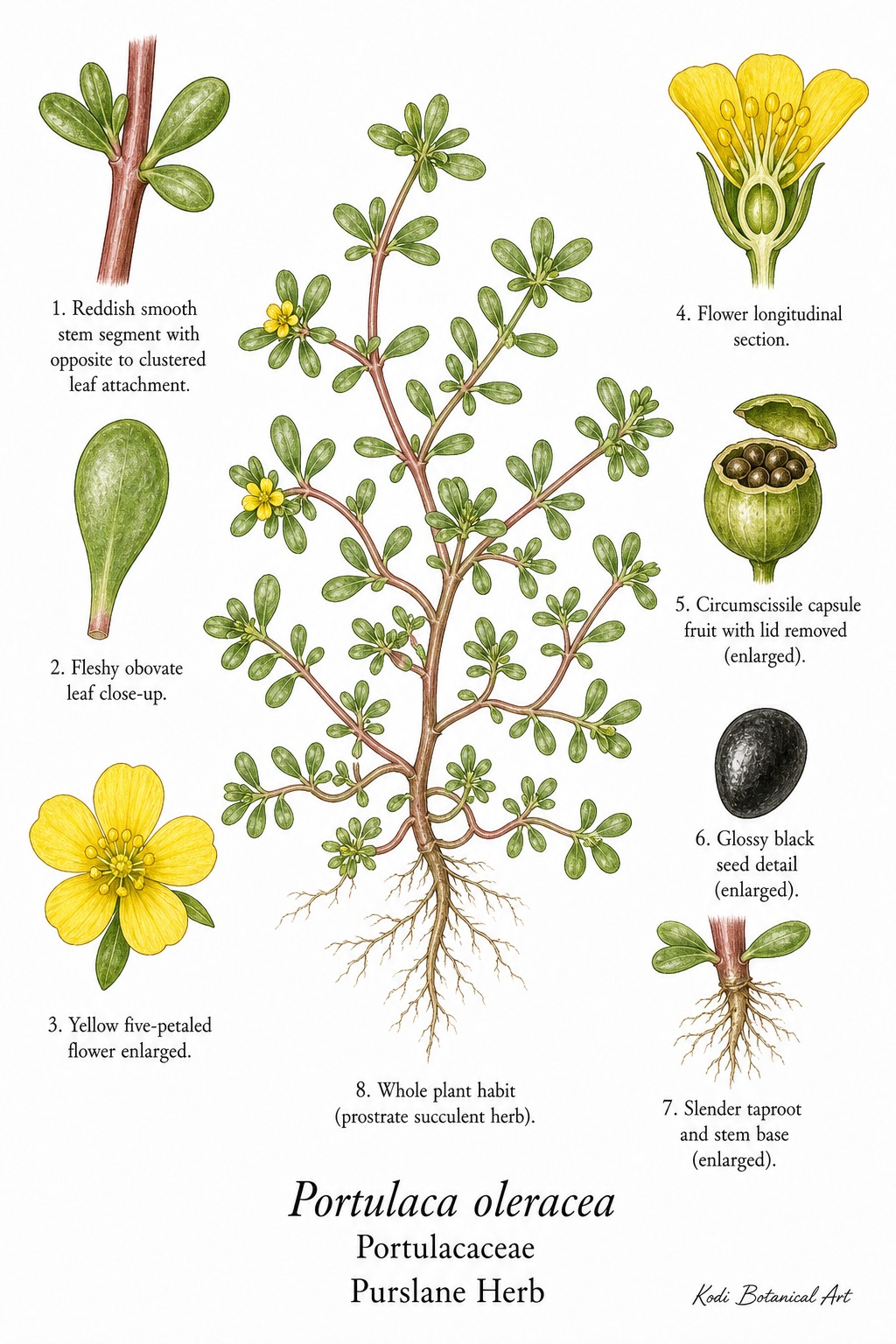
Known in TCM as Ma Chi Xian (马齿苋), this sour, cold herb enters the Liver and Large Intestine. Traditionally, it clears Heat and resolves toxicity, most often applied for dysentery, diarrhea, and urticaria. Modern research has identified Alpha-linolenic among its active constituents.
Part used: Whole herb
Also Known As
Latin: Herba Portulacae | Pinyin: Ma Chi Xian | Chinese: 马齿苋
TCM Properties
- Taste
- sour
- Temperature
- cold
- Channels
- Liver, Large Intestine
Traditional Use
Primary Actions
- Clears Heat and resolves toxicity … principal herb for hot dysentery and diarrhea
- Cools Blood and stops bleeding … hematochezia, uterine bleeding, hemorrhoids
- Anti-inflammatory for skin disorders … eczema, urticaria, carbuncles, insect bites
- Treats bacterial dysentery and enteritis
Secondary Actions
- Detoxifies snake and insect bites … external application of fresh herb
- Edible medicinal food … consumed raw or cooked in Chinese, Southeast Asian, and Mediterranean cuisine; nutritional supplementation
Classic Formulas
- Ma Chi Xian Dan (马齿苋单方) … single-herb decoction of fresh purslane for bacillary dysentery; classic folk formula still cited in modern TCM emergency texts
- Combined with Bai Tou Weng (白头翁) and Huang Lian (黄连) in formulas for hot bloody dysentery
Classical References
- Ben Cao Gang Mu (Li Shizhen): 'Ma Chi Xian (horse-tooth amaranth, named for the leaf shape) cools blood, clears heat, resolves sores, treats dysentery and diarrhea, expels toxicity, and eliminates carbuncles … it is an herb of longevity if eaten regularly'
- Shen Nong Ben Cao Jing: documents Ma Chi Xian for treating cardiac pain and removing evil Qi … later commentaries clarified the cardiac reference as a metaphor for reducing excessive Heat from the Heart channel
Modern Research
Active Compounds
- Alpha-linolenic acid (ALA; one of the highest plant sources of omega-3 fatty acids)
- Quercetin, luteolin, kaempferol (flavonoids)
- Betacyanins and betaxanthins (pigments; antioxidant)
- Noradrenaline (catecholamine; present in leaves)
- Melatonin (highest plant-source concentration among edible vegetables)
- Polysaccharides (immunomodulatory)
- Vitamin C, beta-carotene, and alpha-tocopherol
Studied Effects
- Comprehensive pharmacological review: anti-inflammatory, antioxidant, antimicrobial, antidiabetic, neuroprotective, anti-ulcerogenic, and anticancer activities confirmed; omega-3 ALA content supports anti-inflammatory and cardiovascular benefits consistent with the Blood-cooling, Heat-clearing TCM profile (PMID 25692148)
- Ulcerative colitis: polysaccharides and flavonoids from P. oleracea reduce colonic inflammation in DSS-induced colitis models via NF-κB inhibition and restoration of colonic mucosal barrier integrity … provides mechanistic basis for classical dysentery/intestinal heat application (PMC11646371)
- Antibacterial: new compounds (portulacatol and related dihydrobenzofurans) isolated from P. oleracea show significant activity against enteropathogenic bacteria including Shigella dysenteriae and E. coli … directly validates the bacillary dysentery folk application (PMID 26378504)
PubMed References
- Portulaca oleracea L.: a review of phytochemistry and pharmacological effects (2015)
- Separation and identification of four new compounds with antibacterial activity from Portulaca oleracea L (2015)
- A review on ethnopharmacology, phytochemistry, pharmacology and potential uses of Portulaca oleracea L (2023)
Safety & Interactions
Contraindications
- Cold-Damp dysentery or diarrhea (pale stools, cold abdomen, no fever)
- Spleen-Stomach Deficiency Cold with loose stools
- Pregnancy … cooling and Blood-moving properties; traditional caution against use in pregnancy
Cautions
- Standard dose 9–15g dried herb; 30–60g fresh herb
- Considered safe at food and therapeutic doses based on centuries of culinary and medicinal use across multiple cultures
- High oxalate content in fresh herb … caution in patients with kidney stones (calcium oxalate type) or hyperoxaluria; cooking reduces oxalate load
- Melatonin content: may have mild sedative synergy with central nervous system depressants; clinically minor at standard doses
Conditions
Frequently Asked Questions
What is Purslane Herb used for?
Purslane Herb is traditionally used to Clears Heat and resolves toxicity … principal herb for hot dysentery and diarrhea, Cools Blood and stops bleeding … hematochezia, uterine bleeding, hemorrhoids, Anti-inflammatory for skin disorders … eczema, urticaria, carbuncles, insect bites, Treats bacterial dysentery and enteritis. Research has investigated its effects on: Comprehensive pharmacological review: anti-inflammatory, antioxidant, antimicrobial, antidiabetic, neuroprotective, anti-ulcerogenic, and anticancer activities confirmed; omega-3 ALA content supports anti-inflammatory and cardiovascular benefits consistent with the Blood-cooling, Heat-clearing TCM profile (PMID 25692148); Ulcerative colitis: polysaccharides and flavonoids from P. oleracea reduce colonic inflammation in DSS-induced colitis models via NF-κB inhibition and restoration of colonic mucosal barrier integrity … provides mechanistic basis for classical dysentery/intestinal heat application (PMC11646371).
What are other names for Purslane Herb?
Purslane Herb is also known as Portulaca. In TCM: 马齿苋 (Ma Chi Xian); Herba Portulacae.
Is Purslane Herb safe during pregnancy?
Purslane Herb is not recommended during pregnancy.
What are the contraindications for Purslane Herb?
Purslane Herb should not be used in: Cold-Damp dysentery or diarrhea (pale stools, cold abdomen, no fever); Spleen-Stomach Deficiency Cold with loose stools; Pregnancy … cooling and Blood-moving properties; traditional caution against use in pregnancy. Consult a qualified healthcare provider before use.