Mile Swertia Herb
- Chinese
- 青叶胆
- Pinyin
- Qing Ye Dan
- Latin
- Herba Swertiae
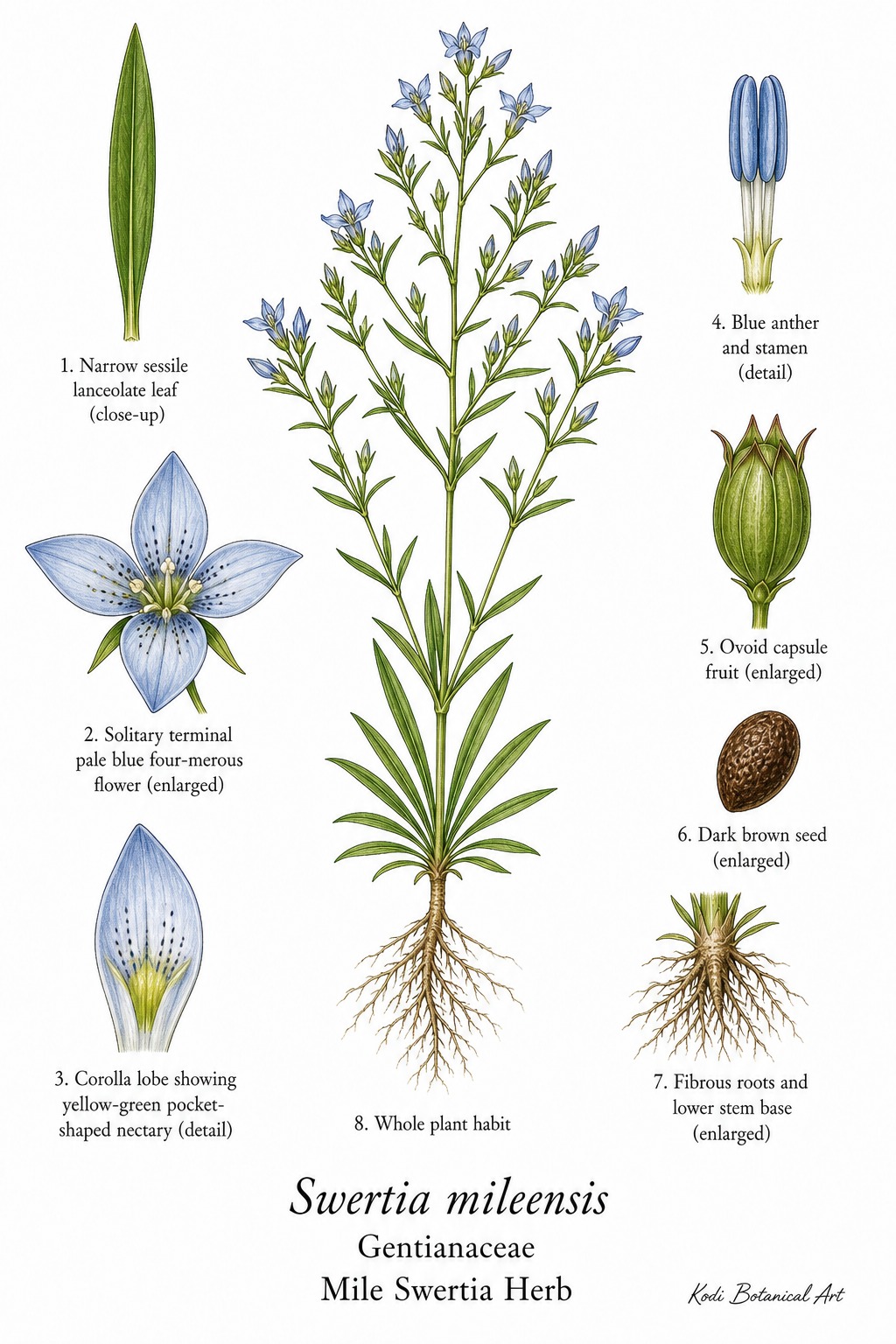
Known in TCM as Qing Ye Dan (青叶胆), this bitter, cold herb enters the Liver, Gallbladder, and Stomach. Traditionally, it clears Damp-Heat from the Liver and Gallbladder, most often applied for hepatitis, jaundice, and cholecystitis. Modern research has identified Swerilactones among its active constituents.
Part used: Whole herb
Also Known As
Latin: Herba Swertiae | Pinyin: Qing Ye Dan | Chinese: 青叶胆
TCM Properties
- Taste
- bitter
- Temperature
- cold
- Channels
- Liver, Gallbladder, Stomach
Traditional Use
Primary Actions
- Clears Damp-Heat from the Liver and Gallbladder … primary herb for infectious and viral hepatitis
- Reduces jaundice and promotes bile flow in cholecystitis
- Clears Heat and resolves toxicity
- Cools the Stomach and relieves Stomach Heat … bitter, cold, and drying
Secondary Actions
- Anti-hepatitis B … swerilactone constituents inhibit HBsAg and HBeAg secretion
- Hypoglycemic … swerchirin stimulates insulin release; folk use for diabetes
Classical References
- Qing Ye Dan (青叶胆, 'Blue-Leaf Bile Herb') … named for its intensely bitter, bile-like taste and its primary Liver-Gallbladder Damp-Heat indication; used in Yunnan provincial medicine and listed in the Chinese Pharmacopoeia
- NOTE: Swertia mileensis is now listed as a nationally protected and at-risk plant in China due to over-harvesting for medicinal use; commercially available preparations must use sustainably cultivated or pharmacopoeial-substitute material (S. cincta or other approved species)
Modern Research
Active Compounds
- Swerilactones A–P (novel pentacyclic and secoiridoid lactones unique to S. mileensis; anti-HBV principal actives)
- Swerchirin (1,8-dihydroxy-3,5-dimethoxyxanthone; hepatoprotective, hypoglycemic, antimalarial xanthone)
- Sweroside (iridoid glycoside; bitter principle)
- Gentiopicroside (iridoid glycoside; shared with gentian)
- Mangiferin (C-glucosyl xanthone; antioxidant, anti-inflammatory)
- Oleanolic acid (triterpenoid; hepatoprotective)
Studied Effects
- Anti-HBV: Swerilactones A and B … novel lactones with an unprecedented 6/6/6/6/6 pentacyclic ring system … showed inhibitory activities against HBsAg and HBeAg secretion in HepG2.2.15 cells; swerilactones C and D confirmed IC50 = 1.24 and 2.96 mM (HBsAg) … provides mechanistic basis for hepatitis B folk application (PMIDs 19673486, 19863146)
- Hepatoprotective: swerchirin significantly reduced paracetamol-induced elevations of AST, ALT, and ALP in mouse models, restoring liver enzyme markers toward normal … consistent with the classical Damp-Heat jaundice indication (PMID 16451758)
- Comprehensive genus review (Swertia L.): 37 species systematically reviewed; xanthones and iridoids confirmed as principal hepatoprotective and antimalarial compound classes; anti-HBV activity of S. mileensis-specific swerilactones highlighted as unique within the genus (PMID 37143212)
PubMed References
- Swerilactones A and B, anti-HBV new lactones from traditional Chinese herb Swertia mileensis (2009)
- Protective effects of swerchirin on paracetamol-induced hepatotoxicity in mice (2006)
- Swertia L.: A comprehensive review of its chemical compositions, pharmacological effects, toxicities, and applications (2023)
Safety & Interactions
Contraindications
- Cold-Damp jaundice or hepatitis (no fever, cold abdomen, pale complexion, watery stools)
- Spleen-Stomach Deficiency Cold … bitter, cold herb; avoid in weak digestive constitutions
Cautions
- Standard dose 6–15g decoction
- Swerchirin may have hypoglycemic effects … monitor blood glucose in diabetic patients or those on antidiabetic medications; potential additive effect
- Conservation status: S. mileensis is a protected species in Yunnan; verify source is from licensed cultivation, not wild harvest
Conditions
Frequently Asked Questions
What is Mile Swertia Herb used for?
Mile Swertia Herb is traditionally used to Clears Damp-Heat from the Liver and Gallbladder … primary herb for infectious and viral hepatitis, Reduces jaundice and promotes bile flow in cholecystitis, Clears Heat and resolves toxicity, Cools the Stomach and relieves Stomach Heat … bitter, cold, and drying. Research has investigated its effects on: Anti-HBV: Swerilactones A and B … novel lactones with an unprecedented 6/6/6/6/6 pentacyclic ring system … showed inhibitory activities against HBsAg and HBeAg secretion in HepG2.2.15 cells; swerilactones C and D confirmed IC50 = 1.24 and 2.96 mM (HBsAg) … provides mechanistic basis for hepatitis B folk application (PMIDs 19673486, 19863146); Hepatoprotective: swerchirin significantly reduced paracetamol-induced elevations of AST, ALT, and ALP in mouse models, restoring liver enzyme markers toward normal … consistent with the classical Damp-Heat jaundice indication (PMID 16451758).
What are other names for Mile Swertia Herb?
Mile Swertia Herb is also known as Swertia. In TCM: 青叶胆 (Qing Ye Dan); Herba Swertiae.
Is Mile Swertia Herb safe during pregnancy?
The safety of Mile Swertia Herb during pregnancy has not been established. Consult a qualified healthcare provider before use.
What are the contraindications for Mile Swertia Herb?
Mile Swertia Herb should not be used in: Cold-Damp jaundice or hepatitis (no fever, cold abdomen, pale complexion, watery stools); Spleen-Stomach Deficiency Cold … bitter, cold herb; avoid in weak digestive constitutions. Consult a qualified healthcare provider before use.